



A freight broker quotes a dry van lane from Dallas to Atlanta at 9:12 on a Monday morning. The shipper replies that the rate is close but asks for a few hours. The broker moves on to six other quotes, a late pickup, and a carrier who will not stop calling about a detention charge. At 3:30 that afternoon, the shipper books the load with a competitor. The broker never learns why, because the quote lives in an email thread, the lane history lives in a spreadsheet, and the customer record in the CRM still says the last contact was three weeks ago. The load was lost twice: once to the competitor, and once to the lack of any record that would have taught the brokerage something.
Freight brokerage is a business of thin margins, fast decisions, and enormous volumes of small transactions. This post focuses on one question that matters to brokerages and third-party logistics firms specifically: how a CRM such as HubSpot or Salesforce should sit alongside the transportation management system so that quotes, loads, shippers, and carriers tell one coherent story.
The Two Systems That Do Not Talk
Most brokerages run two parallel realities. The transportation management system, whether McLeod LoadMaster, Aljex, Tai, Turvo, or a Salesforce-native platform, is the system of record for loads, rates, tenders, tracking, and invoicing. The CRM, if there is one, is where sales representatives record prospects, calls, and pipeline. The two rarely connect. A sales rep cannot see which lanes a shipper actually moves, and an account manager cannot see what a prospect was quoted last quarter. Marketing cannot tell which shipper segments are profitable, because margin lives in the TMS and campaigns live in the CRM.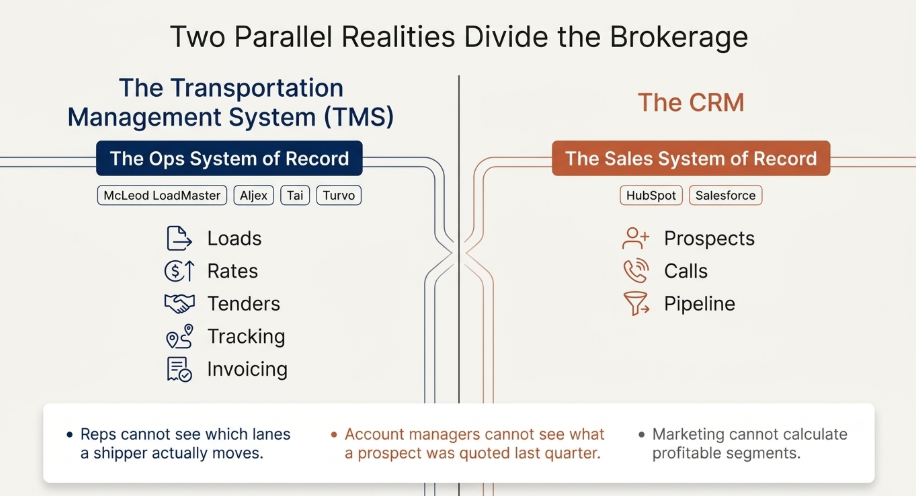
The result is predictable. Reps chase accounts that look attractive but run at low margin. Dormant shippers go uncontacted because nobody sees that their weekly volume dropped off. Quotes that were almost won are never revisited, even though a shipper who asked for a few hours is exactly the contact worth a follow-up the next morning.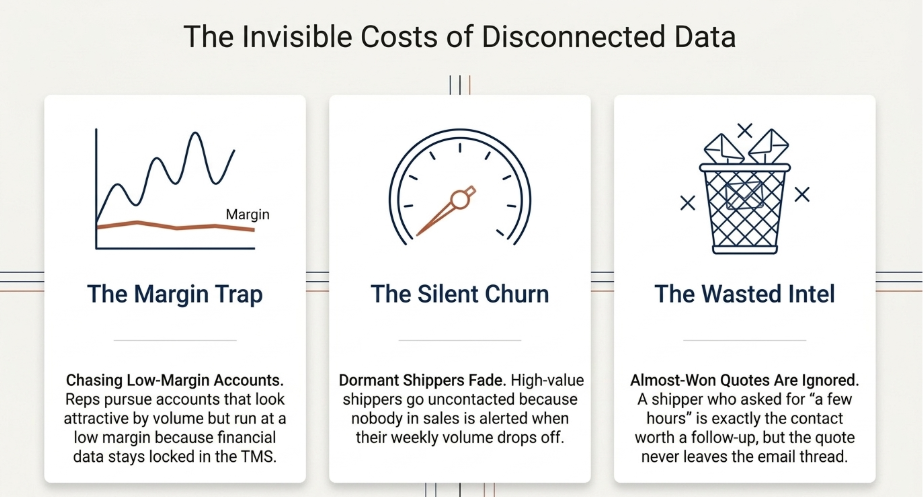
What the CRM Should Own, and What It Should Not
The cleanest design gives each system a clear job. The TMS remains the source of truth for operational and financial data: loads, rates, carrier assignments, and invoices. The CRM owns relationships and revenue development: shippers, consignees, contacts, quotes in progress, pipeline, and activity history. Integration then moves summary data between them on a schedule or in near real time. A shipper record in the CRM can show loads moved in the last ninety days, lanes by frequency, average gross margin, and days since last load, all pulled from the TMS. A quote can be logged in the CRM at the moment it is sent, with the lane, equipment, rate, and expiration date, and marked won or lost when the shipper responds or the quote expires.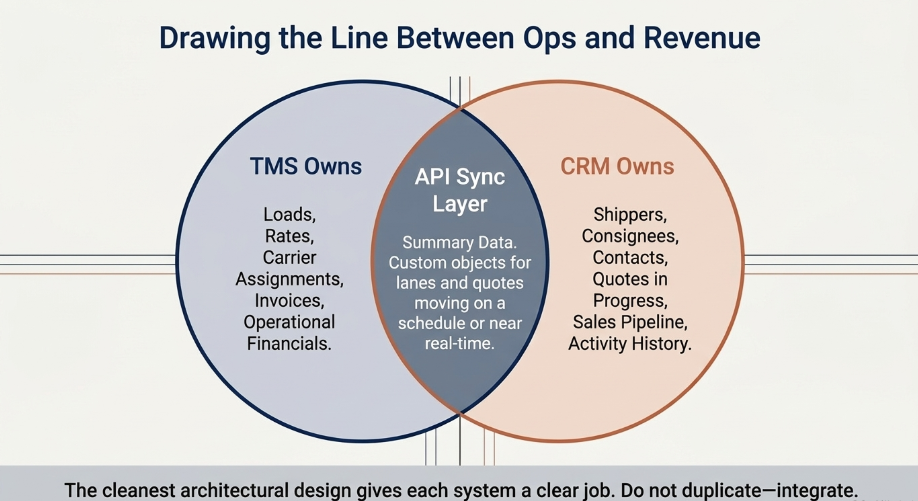
In HubSpot, this typically means custom objects for lanes and quotes associated with company records, with properties fed by the TMS. In Salesforce, it means custom objects or a managed package that already models loads, with reports and dashboards for margin by customer, win rate by lane, and quote-to-load conversion. The tools differ, but the principle is the same: the CRM should answer the questions a sales manager asks on Monday morning without anyone exporting a spreadsheet.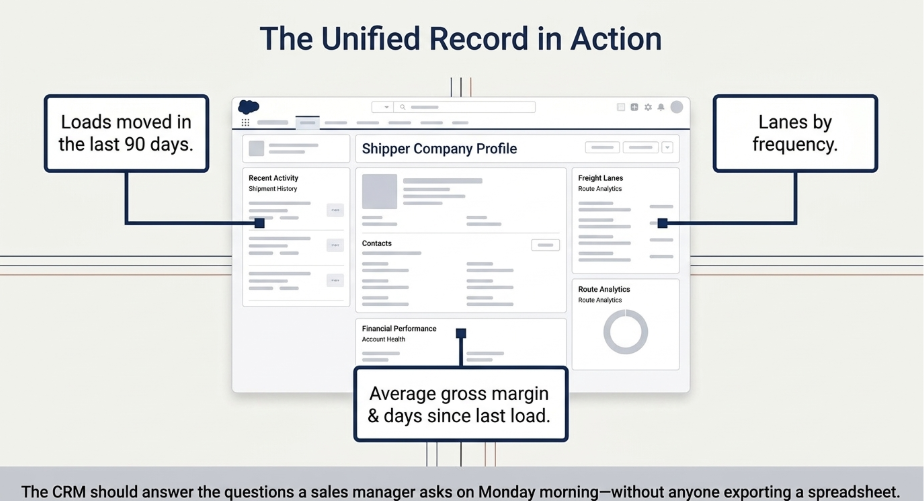
Quote-to-Load Is the Metric That Changes Behavior
Most brokerages measure loads booked and gross margin. Few measure the quotes that never became loads. Once quotes are captured as records, a brokerage can see which lanes it wins consistently, which it loses on price, and which shippers ask for rates constantly but rarely book. That is valuable intelligence for pricing, for carrier procurement, and for deciding where reps should spend time. A rep who sees that a shipper has requested forty quotes this quarter and booked three can have a different conversation than one who only sees three loads.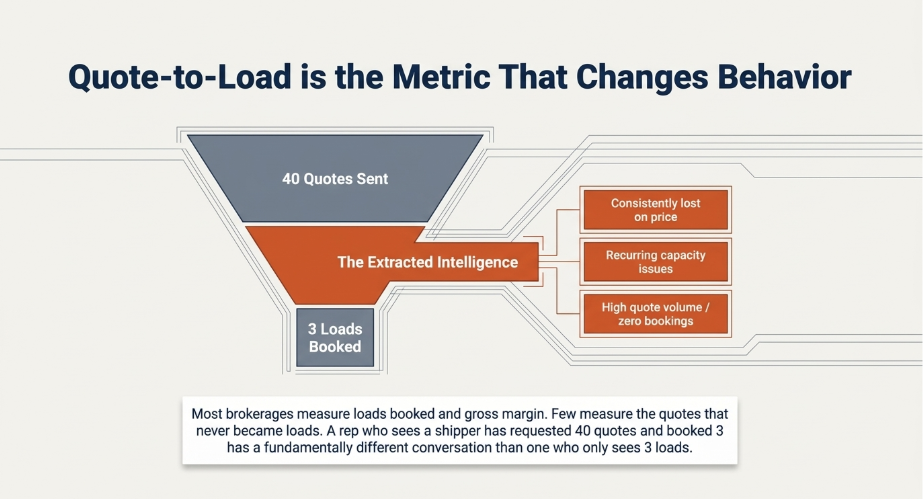
Follow-up rules turn that data into revenue. A quote that expires without a response can open a task for the rep. A shipper whose weekly load count falls below its own average can trigger an alert to the account manager. A lane that a shipper has quoted repeatedly but never booked can be flagged for a carrier-capacity review. None of this requires exotic technology, only clean data and a handful of workflow rules that the team actually trusts.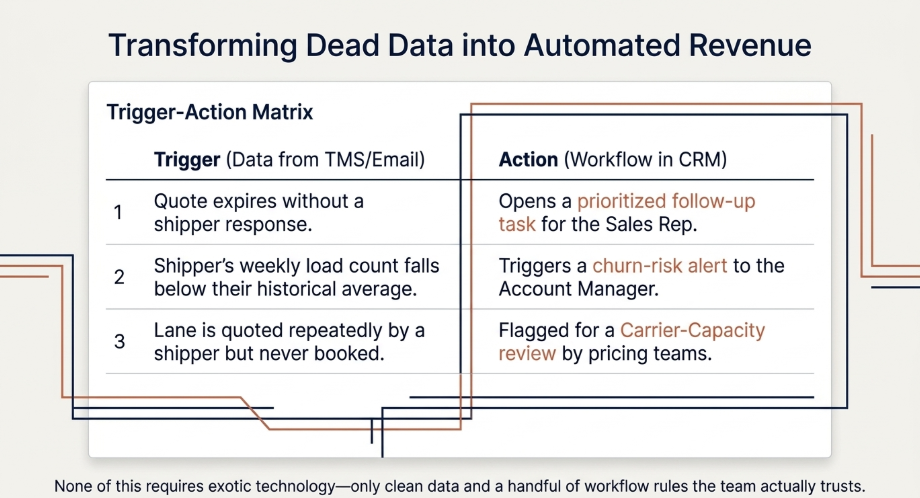
Carriers Are Customers Too
The shipper side gets most of the attention, but a brokerage is only as good as its carrier network. Carrier relationship data belongs in the same CRM thinking: onboarding status, insurance expiration, equipment types, preferred lanes, performance history, and the person on the team who owns the relationship. Carrier onboarding and vetting tools such as Highway or MyCarrierPortal can feed status into the record so a dispatcher sees at a glance whether a carrier is approved, whether its insurance is current, and how it has performed on past loads.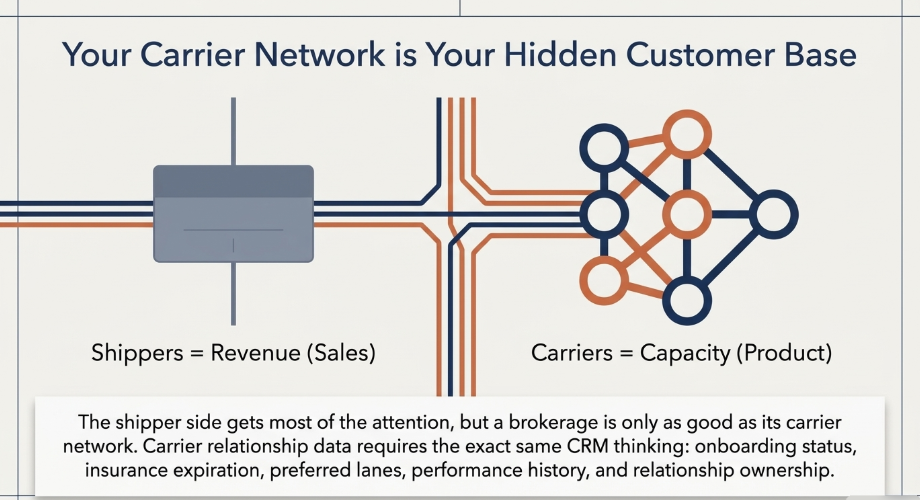
This matters more now than it did a few years ago. Double brokering and identity fraud have pushed brokerages to document how they vet carriers, and the federal regulator has revived its broker transparency rulemaking this year, which keeps record-keeping and disclosure on every brokerage's radar. A brokerage that can show who approved a carrier, when insurance was verified, and what was communicated to the shipper is better prepared for audits, claims, and customer questions. The broker authority and surety bond requirements already in place make the same point: the paper trail is part of the product.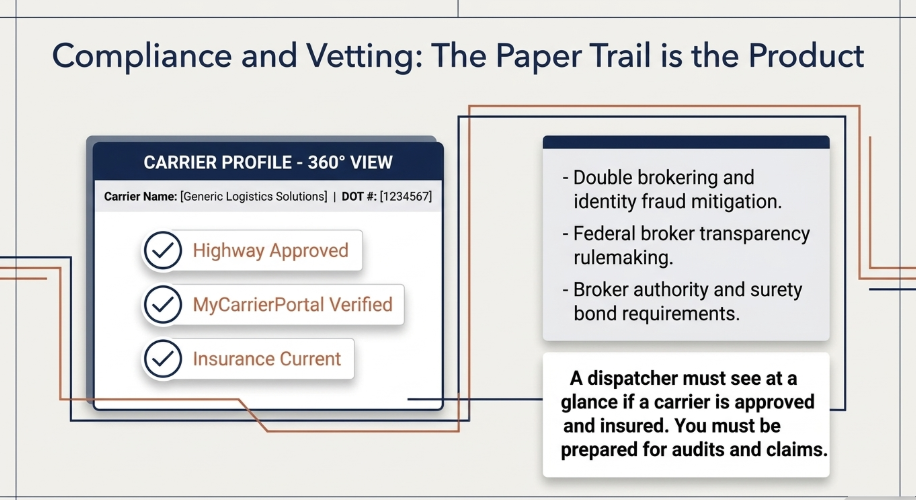
Practical Pitfalls
Three problems appear again and again. The first is duplicate companies. Shippers, parent companies, and individual plants or warehouses often appear as separate records in the TMS and the CRM, and without a matching rule the integration multiplies the mess instead of fixing it. The second is ownership. When both a sales rep and an account manager work a shipper, the CRM needs a clear model for who owns the relationship, who gets credit, and who is notified when something changes. The third is adoption. Brokers live in the TMS and the phone. If logging a quote in the CRM takes more than a few seconds, it will not happen. The best implementations capture quotes from the email or TMS workflow automatically and ask brokers for only the one or two fields that cannot be inferred.
Revenue and margin data also raise a permissions question. Not every sales rep should see every carrier rate or every shipper margin. Role-based access in HubSpot teams or Salesforce profiles should be designed up front, not retrofitted after a sensitive number appears on a dashboard it should not.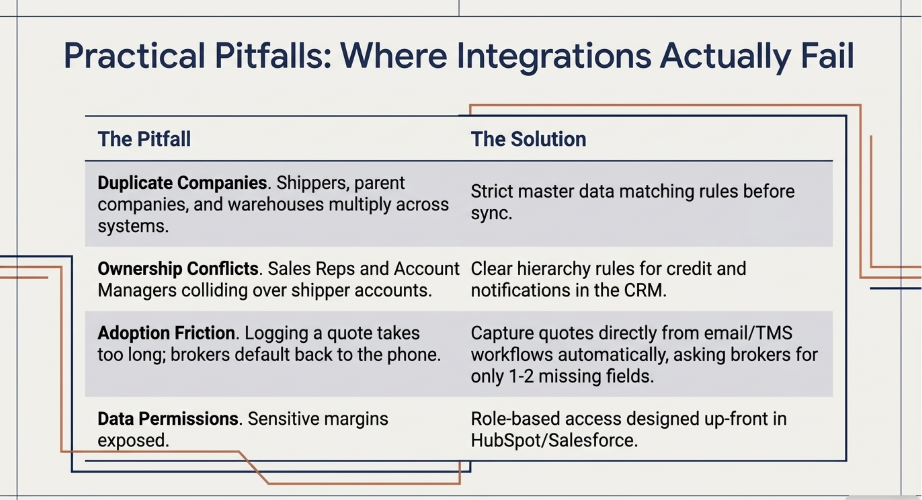
A Phased Way to Start
Brokerages do not need to rebuild everything at once. A sensible first phase cleans up the shipper and carrier records, defines the ownership model, and imports a ninety-day load history from the TMS to give every account a lane and margin summary. A second phase captures quotes as records and builds the quote-to-load report. A third phase adds the follow-up rules, dormant-shipper alerts, and carrier-status feeds. Each phase produces something a sales manager can use, which keeps the team invested.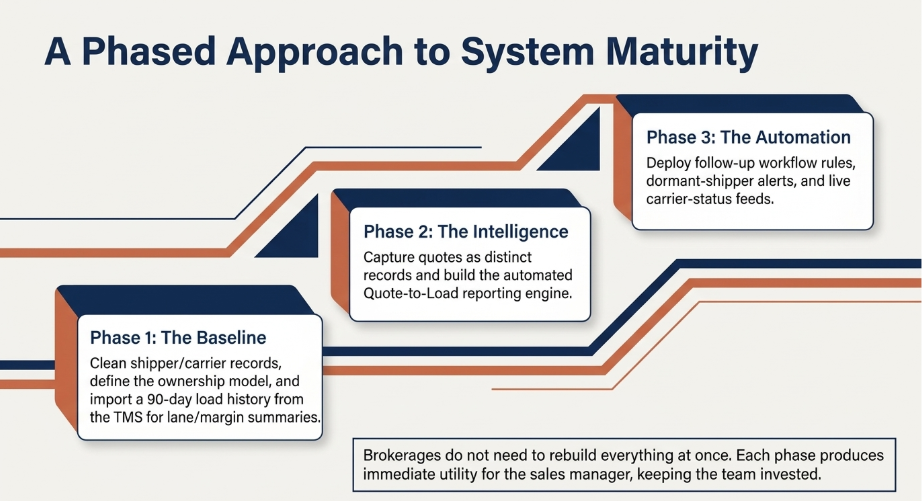
Talk With CETDIGIT
Cetrix Technologies LLC (CETDIGIT) is an AI solutions builder with more than 300 AI and CRM deployments, a Salesforce Crest Partner, and a HubSpot Elite Partner. Logistics and freight firms are an active part of the client base we serve, and we understand how a CRM has to fit around a transportation management system rather than compete with it. If your brokerage is losing quotes it never learns from, or your shipper and carrier data sit in places that do not connect, schedule a consultation with the CETDIGIT team, and we will walk through a phased plan that fits your systems and your team.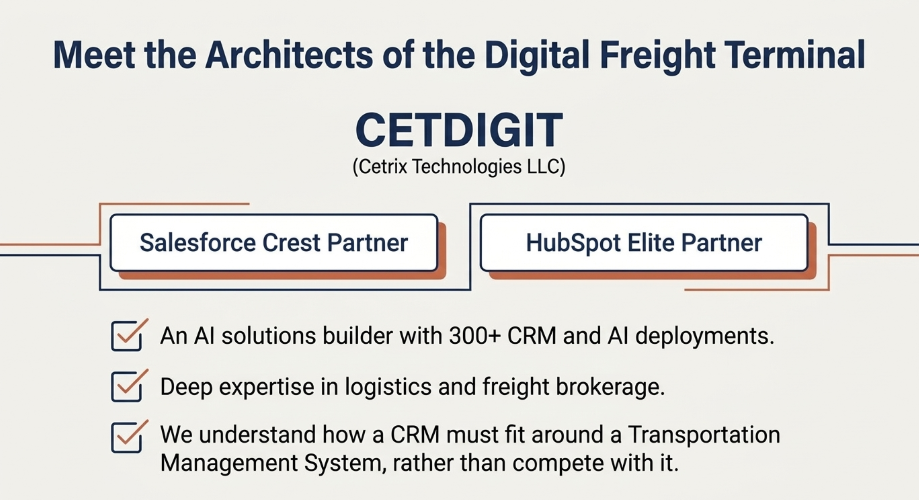
Related Reads
The Deal Lives in a Text Thread: How Produce Brokerages Use Salesforce as a Deal Desk
The Quote That Went Cold: How AI-Connected CRM Helps Custom Manufacturers Win the RFQs They Already Earned
Whose Lead Is It? How Franchise Cleaning and Restoration Brands Use HubSpot to Route Territory Leads and Keep Every Owner Accountable



Leave a Comment