


A water damage call does not wait for a CRM to sort itself out. A homeowner finds an inch of water in the basement at six in the morning, searches on a phone, and fills out the form on the national brand's website. From that moment, the clock belongs to the franchise owner whose territory covers the home, assuming anyone knows who that is. If the lead sits in a shared inbox until nine, the customer has probably already hired whoever answered first.
This is the daily tension inside every franchise cleaning and restoration brand. The franchisor builds the demand: the website, the national call line, the paid campaigns, the partner referrals. The franchisees convert it. Everything between those two sides, the handoff, is where revenue is won or quietly lost, and it is where a well-built HubSpot portal earns its keep.
Three Parties, One Customer
Franchise networks have a structure that ordinary CRM templates do not anticipate. There is the corporate team, which owns the brand, the marketing fund, and the reporting. There are the franchise owners, each an independent business with its own staff, trucks, and habits. And there is the customer, who sees one brand and expects one experience, whether the job is a recurring commercial cleaning contract, a carpet and upholstery appointment, or an emergency mitigation after a pipe burst.
Each party needs a different view of the same facts. Corporate wants to know how quickly leads are contacted and which markets are underperforming. Owners want their leads, their pipeline, and no one else's. Customers want a call back. A CRM that serves only one of those audiences ends up serving none of them.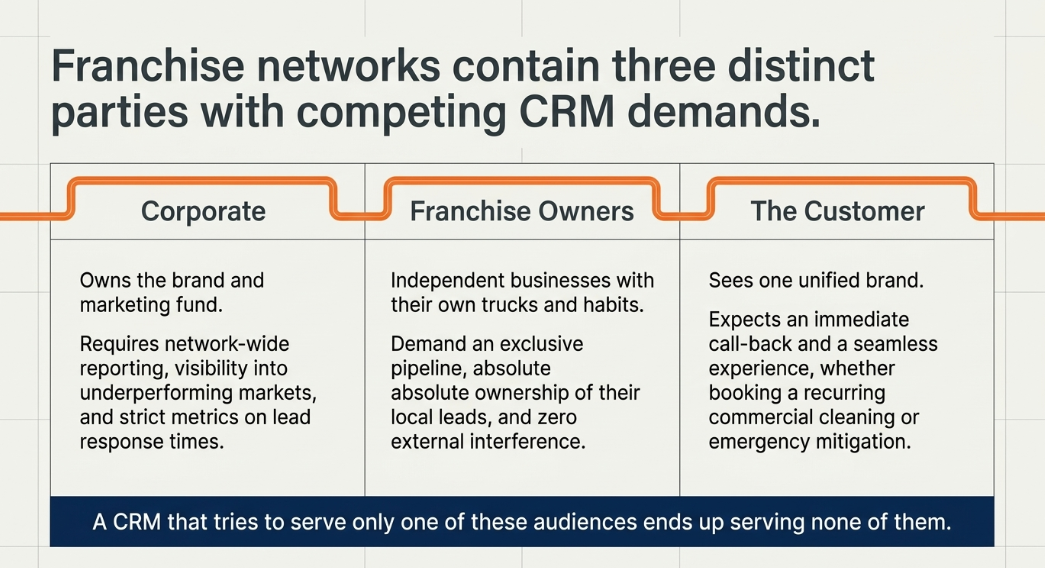
The Territory Table Is the Foundation
The single most important piece of data in a franchise CRM is also the least glamorous: the territory definition. Most brands assign territories by ZIP code, sometimes by county, sometimes by a drive-time radius that was drawn on a map years ago. Over time, owners buy adjacent territories, split them, or sell them. Sister brands under the same parent may share a service area but not a service line. Restoration territories often differ from cleaning territories even for the same owner.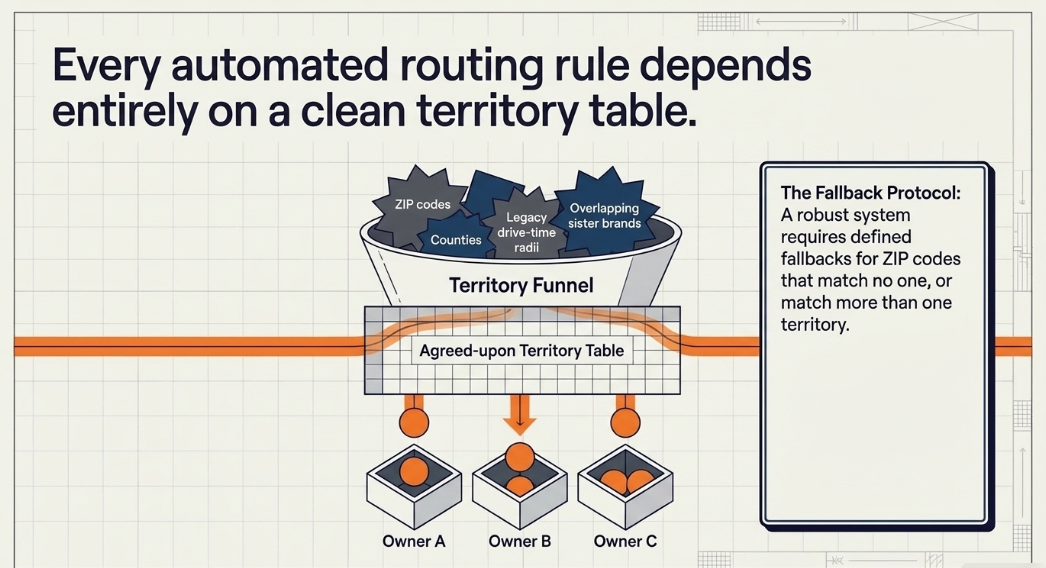
In our experience, the hardest part of a franchise implementation is not configuration. It is getting a clean, current, agreed-upon territory table, because every automated routing rule depends on it. Once it exists, HubSpot can use it well: a lead's ZIP code is matched to a territory record, the territory is associated with the owning franchise company record, and a workflow assigns the lead and notifies the owner, with a defined fallback for ZIP codes that match no one or more than one. Without that table, automation simply routes mistakes faster.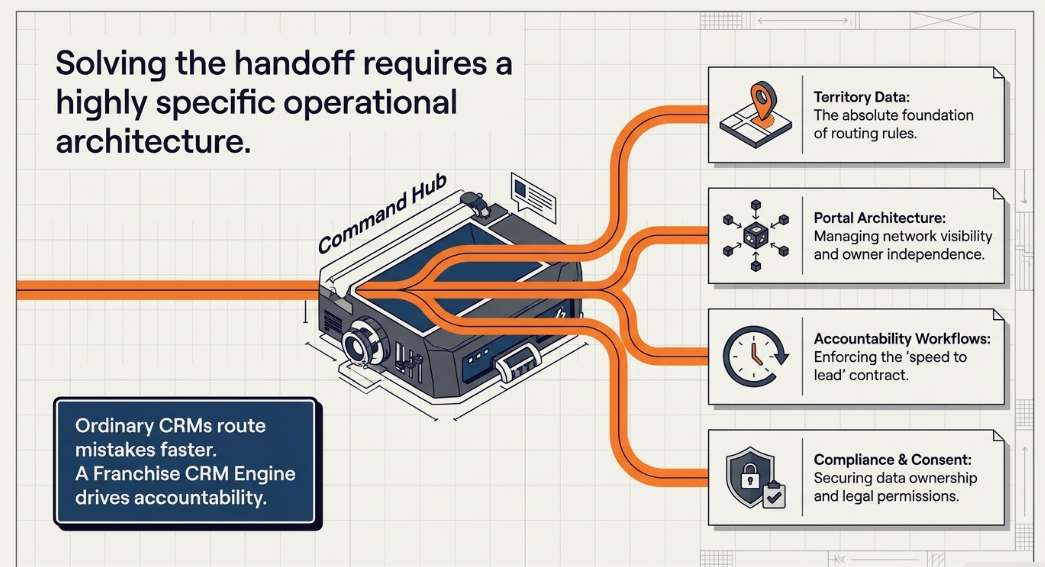
One Portal or Many?
The first architecture decision is whether the whole network lives in a single corporate HubSpot portal or whether each owner runs their own. Neither answer is universally right. A single portal gives corporate consistent data, network-wide reporting, and the ability to see response times across every market. It also requires thoughtful permissions so that each owner sees only their own contacts, deals, and conversations, using team-based access and restricted views. Separate portals give owners independence, but they make reporting a manual exercise and turn every lead handoff into an integration project.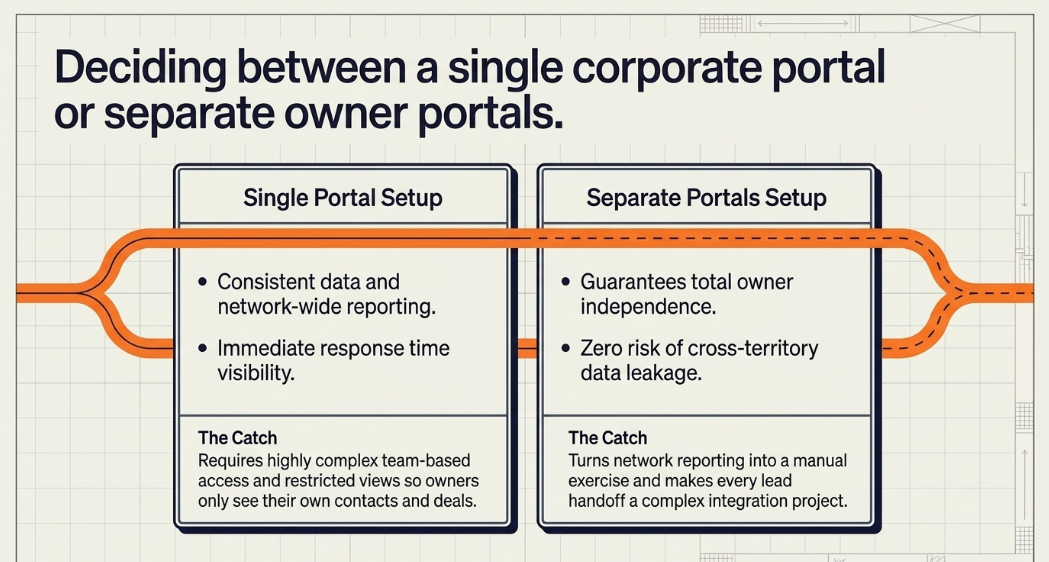
Real networks are rarely uniform. In a recent engagement with a multi-location service franchise, only a minority of locations ran HubSpot at all, while the rest worked from email, spreadsheets, and job software of their own. The practical answer was a hybrid: a corporate portal as the system of record for brand-generated leads, a clear data model for those locations that use HubSpot directly, and email and portal-based delivery for those that do not, so that no owner is left out of the lead flow because of their tooling. Sorting out which owners belong in which group is a discovery task, and it deserves real time.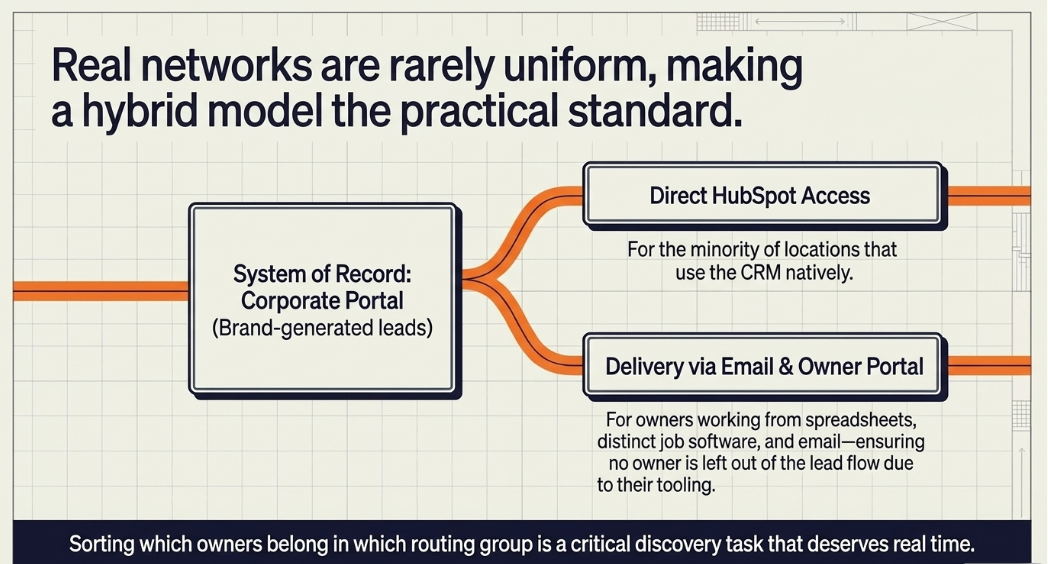
Speed to Lead Is a Contract, Not a Hope
Once routing works, accountability is what keeps it working. A franchisor cannot supervise every owner, but it can measure. HubSpot properties and workflows can record when a lead was created, when it was assigned, and when the owner first made contact, then escalate automatically when the interval runs long. A lead untouched after fifteen minutes can alert the owner again, then a manager, then reroute to a neighboring territory if the franchise agreement allows it. Reporting then becomes a coaching conversation instead of an argument: here is your median response time, here is the network median, and here is what changed in the markets that improved.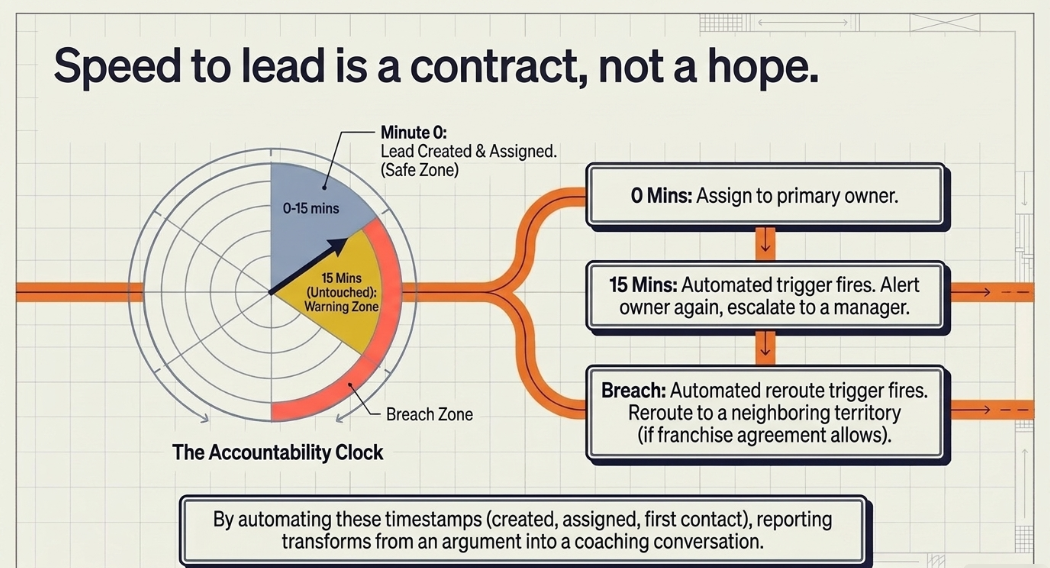
For restoration brands, the interesting leads often come from places other than the website: insurance agents, property managers, plumbers, and third-party claims administrators. A good CRM treats those referral partners as first-class records, so that corporate can see which relationships produce work and owners can see the partners in their own territory.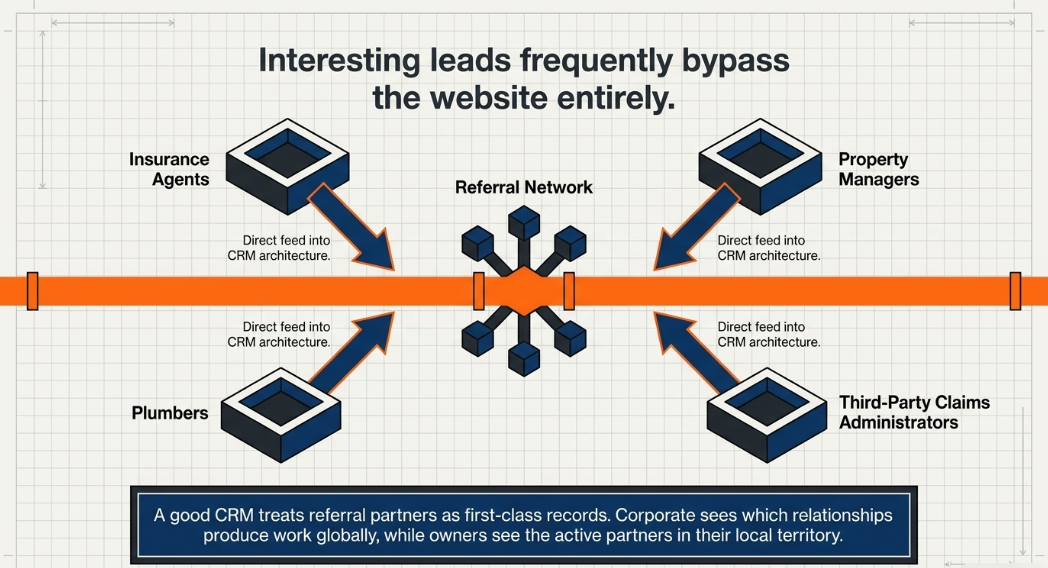
Data Ownership and Consent
Two questions should be settled before any build begins. The first is who owns the data. Franchise agreements typically address customer information, but a CRM makes the answer operational. Corporate and owners both need to know what happens to records when a franchise is sold, transferred, or terminated, and the portal's permissions should reflect that answer. The second is consent. When the brand collects a lead and an independent owner follows up by phone or text, the consent language on the form needs to cover that follow-up, and the consent record needs to travel with the contact. Rules under the Telephone Consumer Protection Act and state privacy laws make this a design requirement, not a footnote, and the franchisor's counsel should review the wording.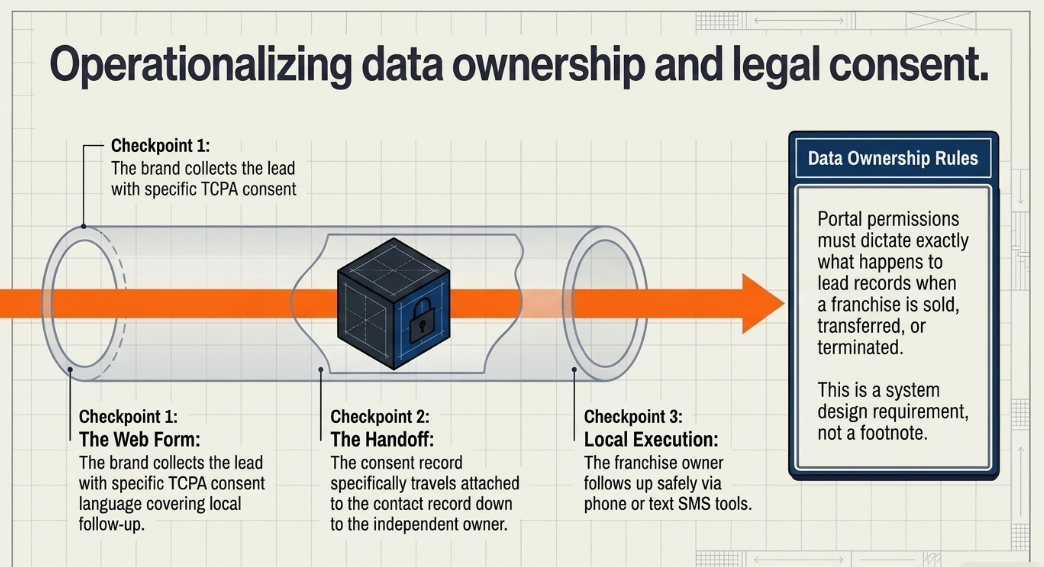
A Phased Path That Owners Will Actually Adopt
Franchise rollouts succeed when owners feel the benefit early. We usually recommend starting with discovery and the territory table, then a pilot with ten to fifteen owners who reflect the network's mix of sizes and tools. The pilot proves the routing, the notifications, and the reporting before anything is announced to the full network. Rollout then proceeds in waves, with a short quick-start guide and a brief live session for each cohort. Owner councils are often the best channel for feedback, and the first reports shown to them should highlight what owners gain, such as fewer lost leads and a clear record of the work corporate sends them, before they highlight what corporate can now see.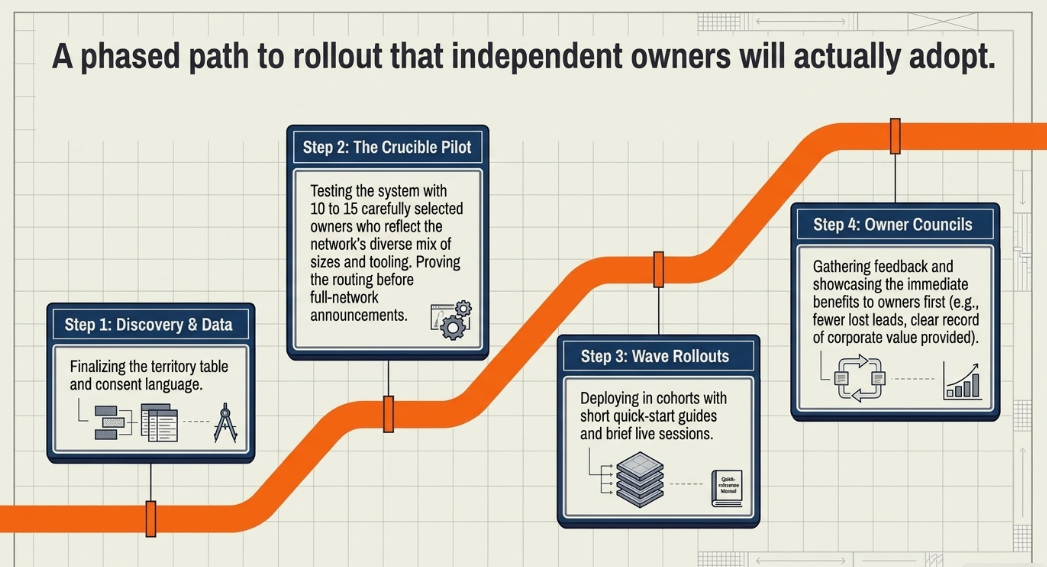
Talk With CETDIGIT
CETDIGIT is a HubSpot Elite Partner and Salesforce Crest Partner with more than 300 AI and CRM deployments, and we build HubSpot portals that fit the way franchise networks really operate, including territory models, permissions, routing, and reporting. If your brand is ready to fix the handoff between corporate demand and owner follow-up, schedule a consultation with CETDIGIT and we will review your territories, your current tools, and a phased plan your owners can adopt.
Related Reads
Cleared for Travel: How Student and Group Tour Operators Use Salesforce and HubSpot to Run Deposits, Forms, and Rosters
The Deal Lives in a Text Thread: How Produce Brokerages Use Salesforce as a Deal Desk
Four Systems, One Client: Why Economic Development Agencies Are Retiring the Spreadsheet Stack

Leave a Comment