


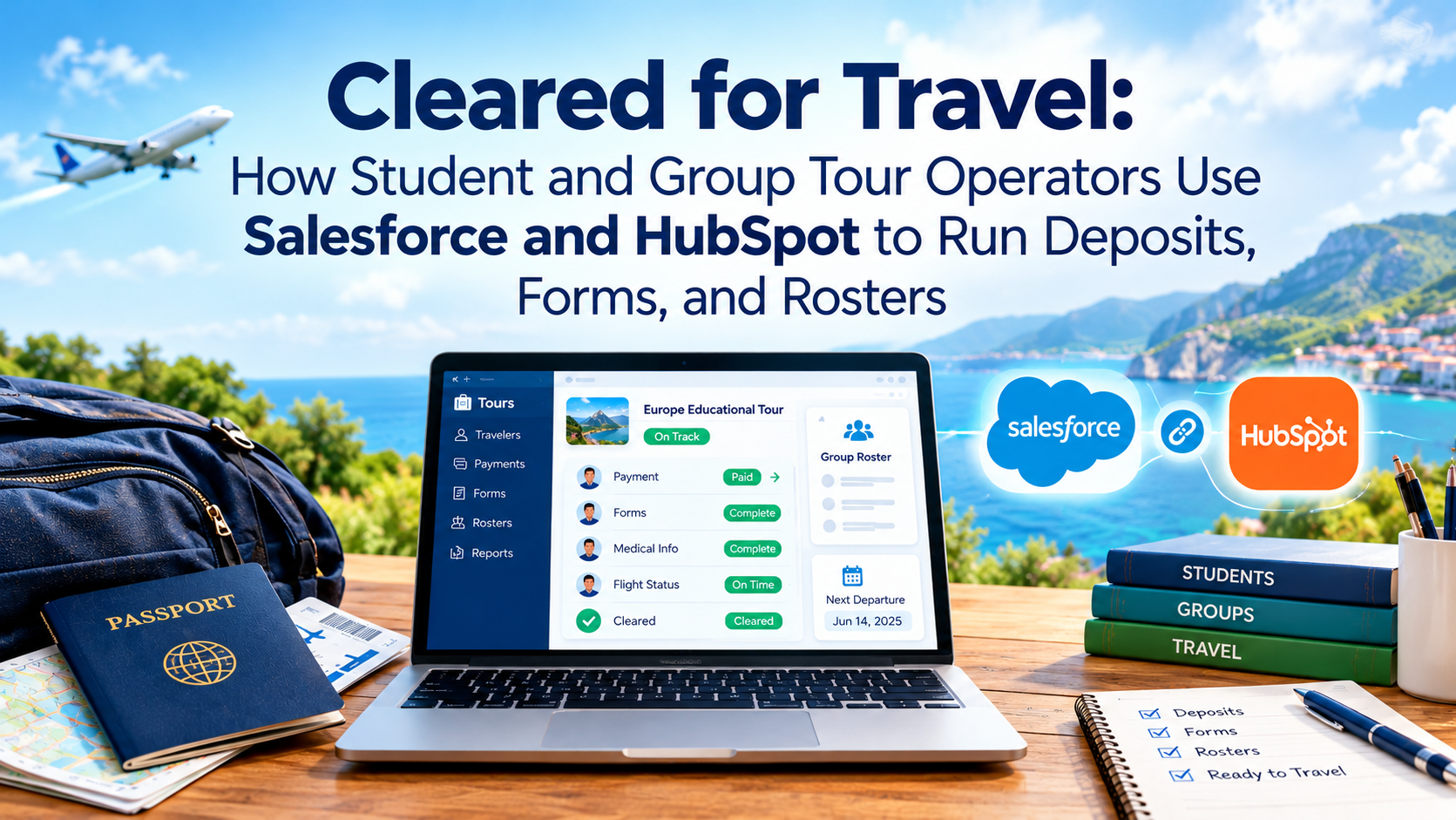
Every educational tour operator has a version of the same Sunday night. The first deposit is due in three weeks, and the program director is sitting with a spreadsheet of registered students, a second spreadsheet of payments exported from the online store, a folder of scanned permission slips, and an inbox full of parents asking whether their child is all set. Nobody can answer that question quickly. Somewhere in those tabs is the truth, but finding it for one family takes ten minutes, and there are three hundred families.
Student and group travel is a business built on readiness. A traveler is not simply a person who paid. A traveler is a person who has paid on schedule, whose parent has signed the agreement, whose medical and emergency information is on file, whose media acknowledgment is complete, and whose flight lands inside the approved arrival window. Miss any one item and the trip becomes a problem for the operator rather than the family. The CRM question for this industry is therefore not how to track leads. It is how to track clearance.
Two Kinds of Customers, One Operational Reality
Tour operators serving schools, youth programs, and community organizations typically run two parallel businesses. In the first, individual families register a student, usually from a program website, and pay a deposit followed by installments. In the second, a group leader such as a teacher, coach, or organization administrator signs a contract and pays on behalf of an entire roster, often with purchase orders, invoices, complimentary chaperone ratios, and rooming lists. The two models share a calendar but almost nothing else. The family needs a phone-friendly experience with reminders. The group leader needs invoices, rosters, and a contract. Staff needs to see both in one place, filtered by tour.
Spreadsheets handle this reasonably until the second or third tour season. Then the cracks show: a payment recorded against the wrong student, a form version that changed mid-year without anyone noting who signed which, a chaperone count calculated by hand, and a reminder that went out to a parent who had already paid. Each error costs staff time and, more importantly, parent confidence.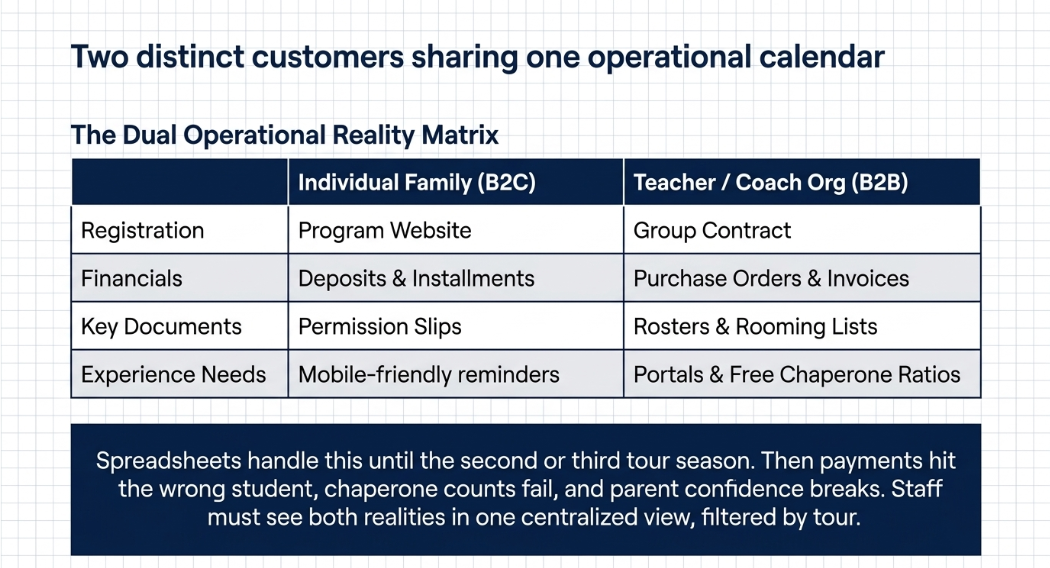
What Belongs in the CRM
A well-designed Salesforce or HubSpot implementation for a tour operator starts with the data model, not the screens. The core records are the tour, the traveler, the family or guardian account, the group organization, and the booking. Each tour carries its own capacity, price, payment schedule, required forms, and arrival window. Each traveler carries a readiness status that is calculated, not typed: paid to date versus due to date, forms complete versus required, and flight status against the window. A single field that reads Cleared or Not Cleared, driven by those underlying rules, is worth more to a program director than any dashboard of vanity metrics.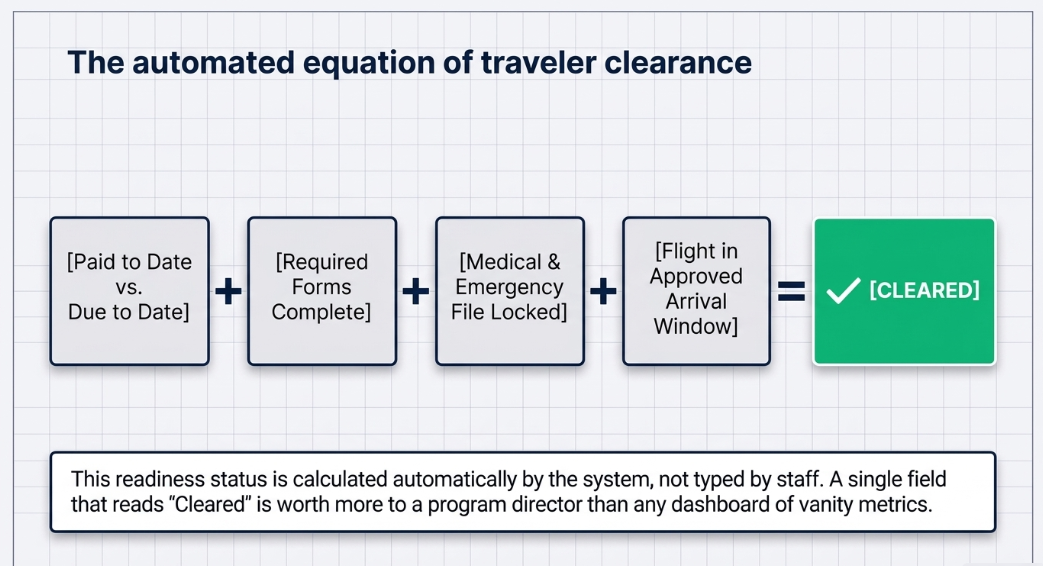
In Salesforce, this maps naturally to custom objects with formula and automation logic, an Experience Cloud site for the parent and group-leader portal, and reports that filter every list by tour. In HubSpot, the same model works with custom objects, workflows, and a customer portal approach for smaller operators who prefer to keep marketing, registration communications, and follow-up in one platform. Which one is right depends on the operator's size, their existing tools, and how much of the operation is sales-led versus registration-led. We help clients decide based on the work, not on preference for a platform.
Payments, Forms, and the Handoff Between Systems
Most operators already have a storefront where families check out, often a Shopify store, a registration plugin, or a payment processor. Replacing it is rarely necessary and often unwise. The better pattern is to leave the processor in charge of card data and connect it to the CRM so that every confirmed payment is applied to the correct traveler and tour automatically, balances update, receipts go out, and staff can record checks and offline payments in the same ledger. Keeping card handling with the processor also keeps the operator's own systems out of most payment card data obligations, which is a sensible design choice for a small team.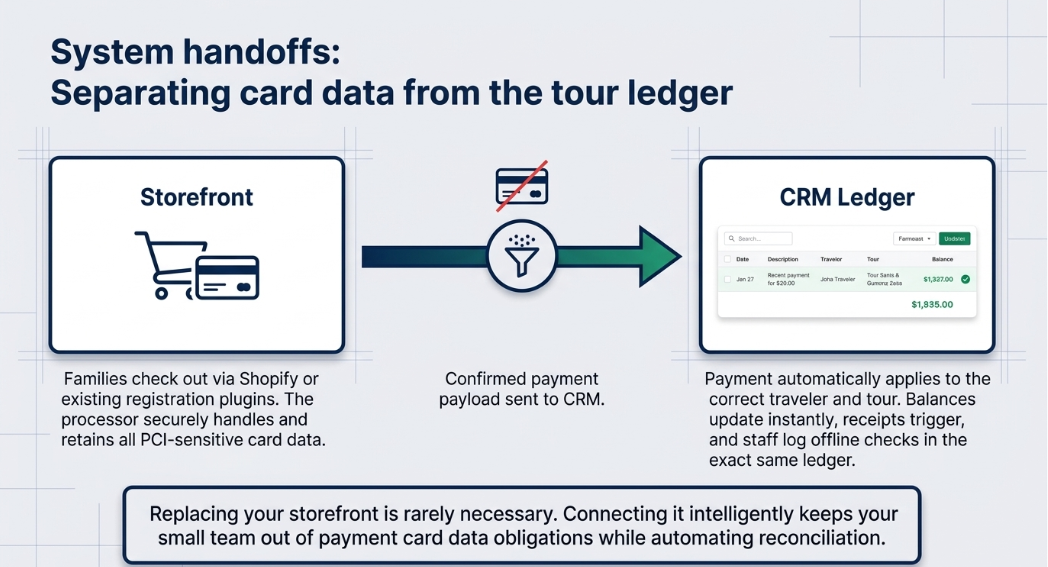
Forms deserve the same care. Electronic signatures are legally recognized in the United States under the federal ESIGN Act and the state versions of the Uniform Electronic Transactions Act, but a signature only protects the operator if the record behind it is complete: who signed, when, and which version of the document they saw. Operators who rely on emailed PDFs often cannot reconstruct that history during a dispute. Building the signature and form version into the traveler record solves the problem and makes the Not Cleared list possible.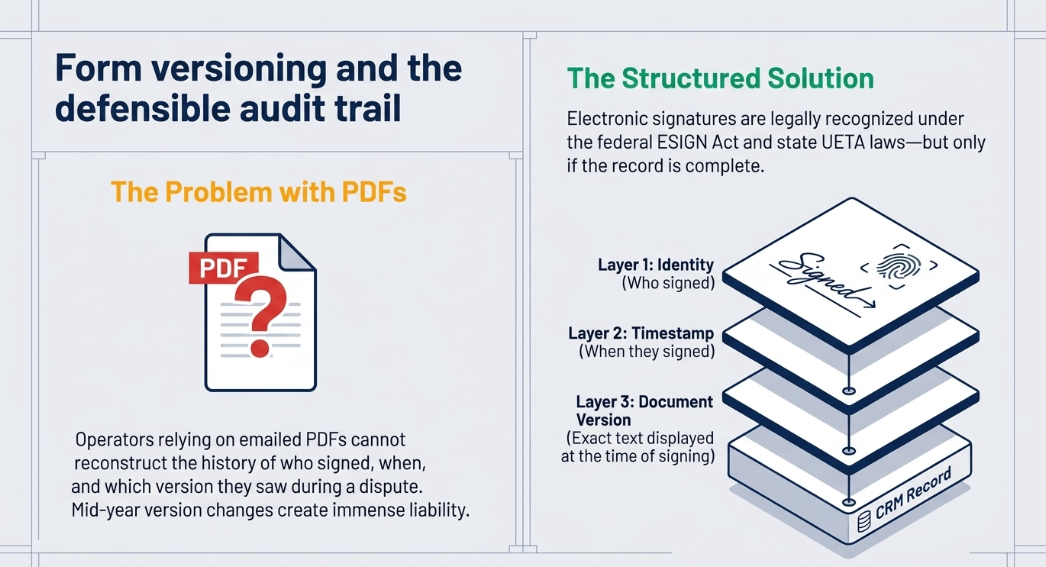
Reminders are the third piece. Automated emails for upcoming payments and incomplete forms save enormous staff time, but only if they stop the moment the item is satisfied. A reminder that arrives after the parent has paid is worse than no reminder, because it signals that the operator does not know its own records.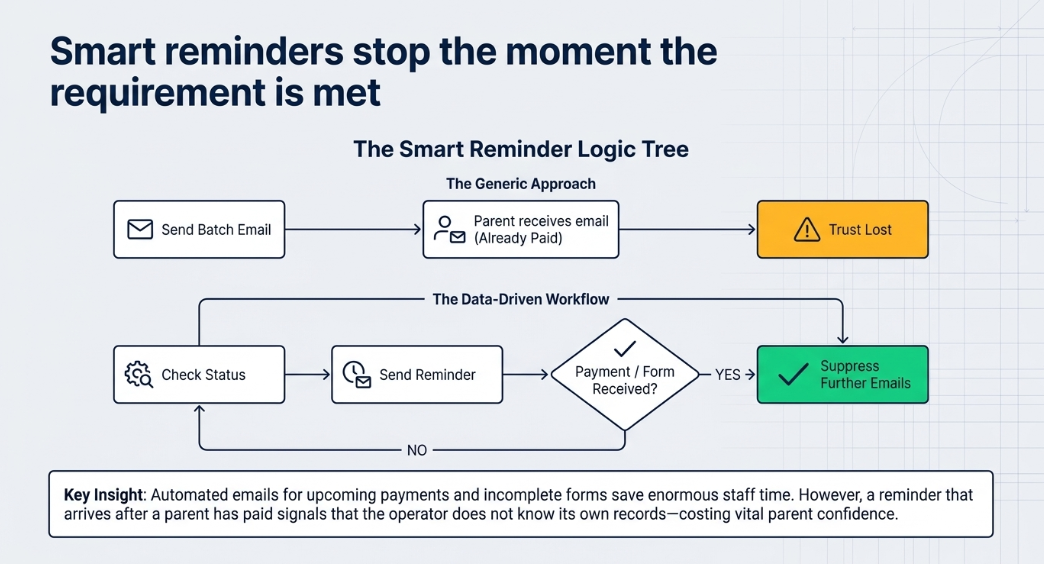
Regulatory and Trust Considerations Specific to Travel
Group and student travel carries obligations that general small businesses do not face. Several states, including California, Florida, Hawaii, and Washington, require sellers of travel to register, and some require customer funds to be handled through designated accounts or bonding, so deposit tracking is not merely a convenience. Operators handling minors' medical and emergency information have a duty to restrict access to those who need it, and an audit trail of who viewed what is good practice. Refund and cancellation terms need to be acknowledged in writing and referenced in the booking record. None of this is exotic, but each item is easier to defend when the CRM captures it as structured data rather than as an attachment.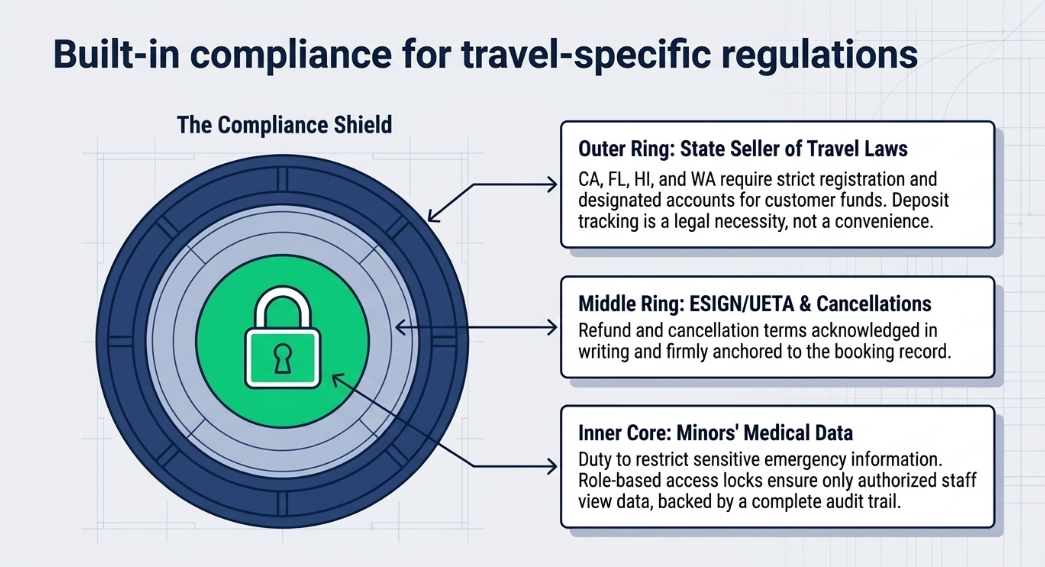
Phasing the Work to Match the Tour Calendar
Operators rarely have the luxury of a long implementation window. The most successful projects we see are phased around the business calendar: first the pieces that must work before the next deposit date, which are payments, parent approvals, and clearance tracking for individual travelers, and then the group-leader portal, rosters, itineraries, flight coordination, and reporting after the peak season ends. That sequencing protects revenue first and avoids asking staff to learn a new system in the middle of a departure week. It also lets the data model be right from the start, so that later phases extend the first rather than replace it.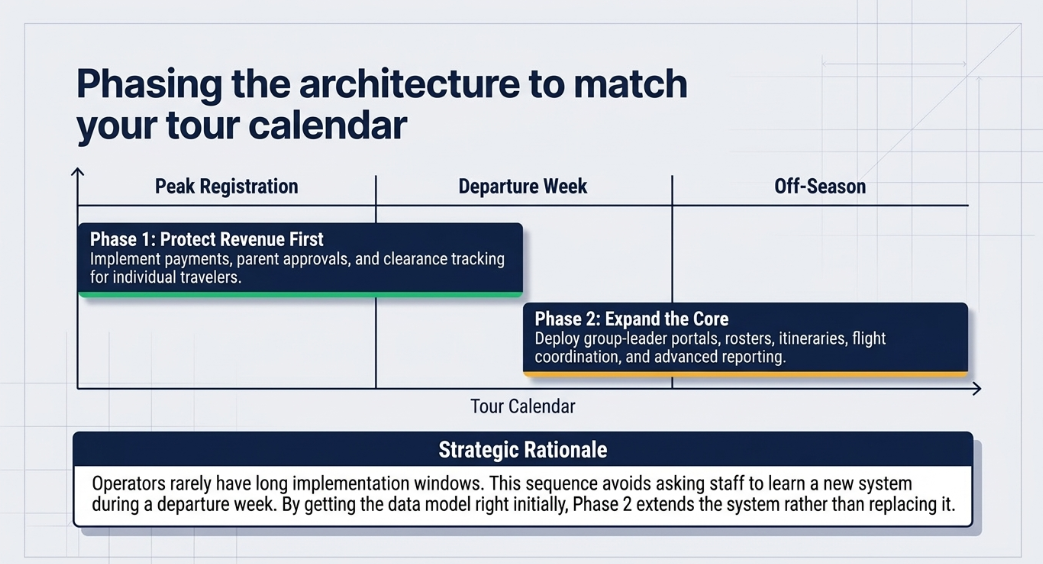
How CETDIGIT Approaches It
CETDIGIT is a Salesforce Crest Partner and a HubSpot Elite Partner with more than 300 CRM and AI deployments, including parent-facing enrollment and communications systems for schools. For tour operators, our work centers on the same few questions: what makes a traveler ready, where does each piece of that readiness live today, and how do we connect the storefront, the signature records, and the staff view so that nobody has to reconcile spreadsheets on a Sunday night. We build in the operator's own cloud environment where ownership of data matters, and we train staff so they can run the system without us.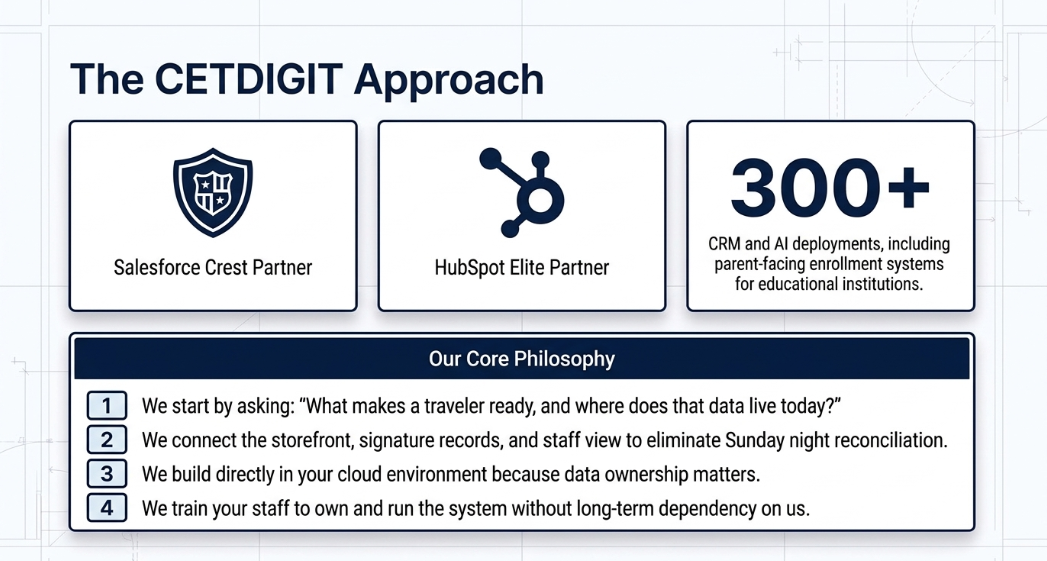
Start With the Question Parents Ask
If you want a quick test of whether your current setup is working, ask a staff member how long it takes to answer the question of whether a specific student is cleared for travel. If the answer involves opening more than one file, a purpose-built CRM workflow will pay for itself in the first season. To talk through your tours, your payment schedule, and the best way to phase an implementation around your calendar, schedule a consultation with CETDIGIT at cetdigit.com. We will review your current process and give you a practical plan before you commit to anything.
Related Reads
The Deal Lives in a Text Thread: How Produce Brokerages Use Salesforce as a Deal Desk
The Proposal Expires Before the Follow-Up: How Solar Companies Use CRM Automation to Win in a High-Cost Market
Four Systems, One Client: Why Economic Development Agencies Are Retiring the Spreadsheet Stack



Leave a Comment