


Your inbound calls go to voicemail because a human-only coverage model has no mechanism to answer calls that arrive outside business hours or when every available line is occupied. That is the coverage failure. For operators, it is something worse: the call happened, the buyer revealed intent, and nothing was captured anywhere in the system. That is Context Collapse, the intelligence failure behind every missed call. Missed calls are not postponed demand. They are demand reallocating in real time.
The Call That Cost You the Deal
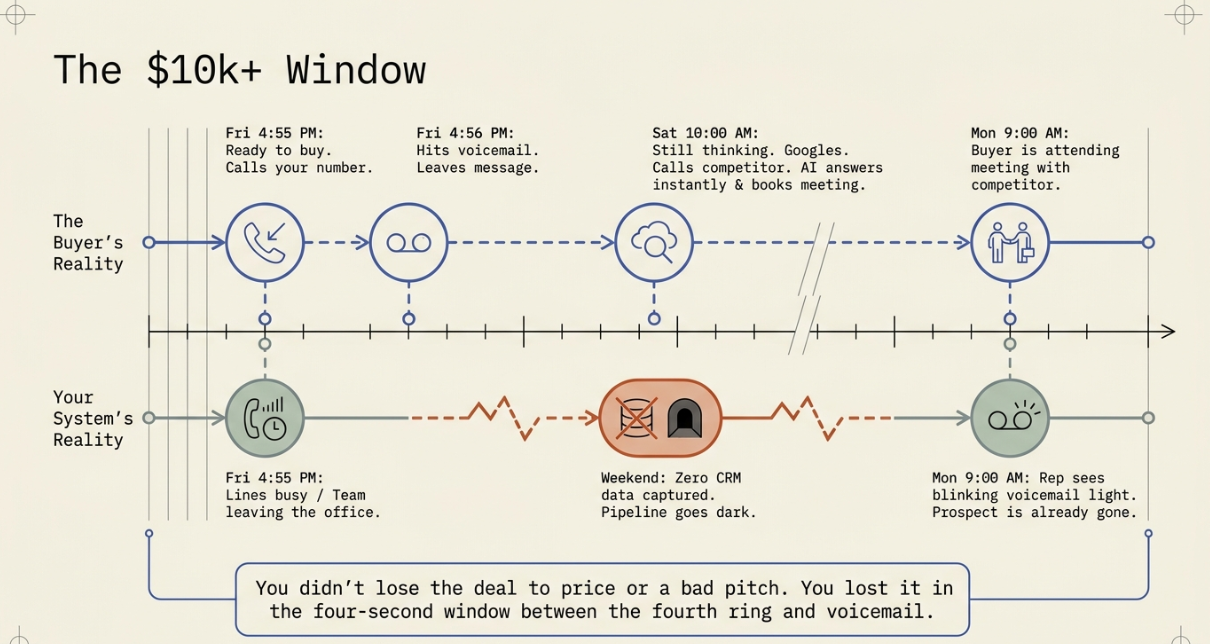
It's 4:55 PM on a Friday.
A buyer has been researching your service for three days. They've read your site, looked at your pricing page, and watched a walkthrough video. They're ready to talk. They pick up the phone and call.
Your phone rings four times. Voicemail.
They leave a message, something like "Hey, I was hoping to speak with someone about pricing. Give me a call back when you can." Then they hang up.
Nobody calls back that day. It's Friday at 5 PM; the team is gone.
Saturday morning, they're still thinking about it. They Google your category again. A competitor's number appears in the results. They call. Someone picks up, not a human, but an AI voice agent that answers immediately, takes their information, qualifies the inquiry, and books a meeting for Monday at 9 AM.
By Monday morning, when your team arrives and sees the voicemail, that buyer already has a 9 AM on their calendar. It's not with you.
You didn't lose that deal because of price. You didn't lose it because of a bad pitch. You lost it in the four-second window between the fourth ring and voicemail.
Why Inbound Calls Go to Voicemail
There are two structural reasons calls go to voicemail. Neither is it about effort. Both are about what a human-only coverage model physically cannot do.
After-hours: when demand doesn't follow business hours
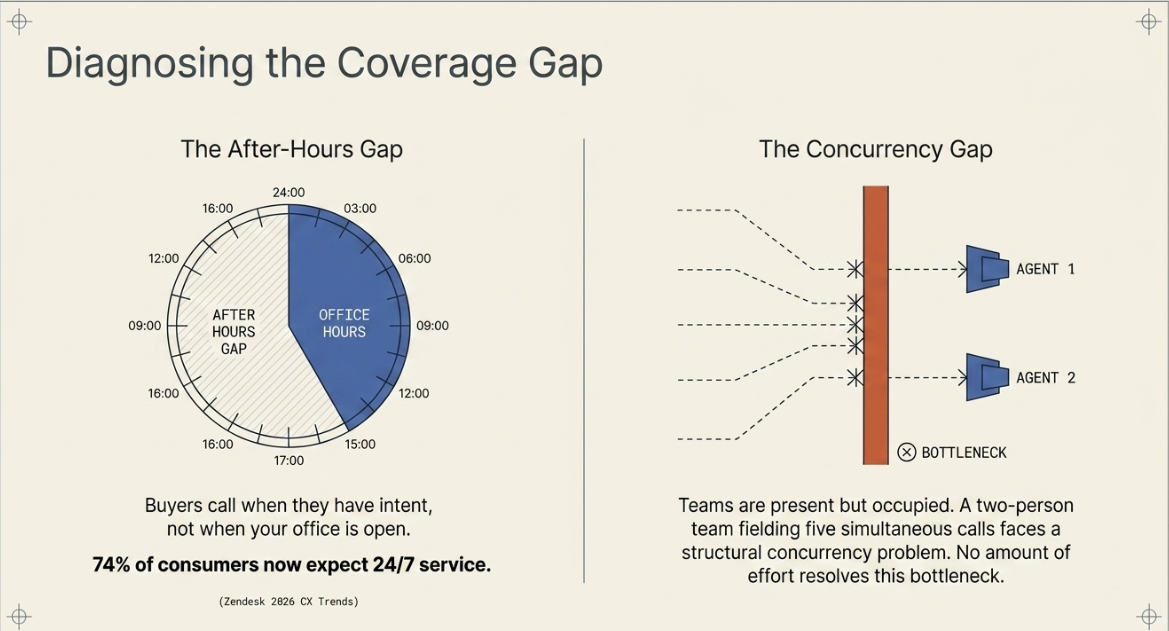
Buyers don't time their calls around your team's schedule. They call when they're thinking about it, during a lunch break, on a Saturday, at 7 PM, after the kids are in bed. According to Zendesk's 2026 CX Trends Report, 74% of consumers now expect service to be available 24 hours a day, driven by the normalization of AI-powered responses. When your coverage ends at 5 PM, you've built a window where demand arrives, and no one is there to catch it.
Concurrent calls: when the team is available but already on the line
This one is less discussed but just as damaging. Your team is in the office, phones in hand, and a call still goes to voicemail because everyone is already on a call. A two-person sales team fielding five simultaneous inbound calls has a structural concurrency problem that no amount of effort resolves.
The combination of these two gaps, after-hours and concurrent, is what creates the pattern. Not bad luck. Not a poor work ethic. A model that was never designed to catch every call.
Whom This Is Actually Costing
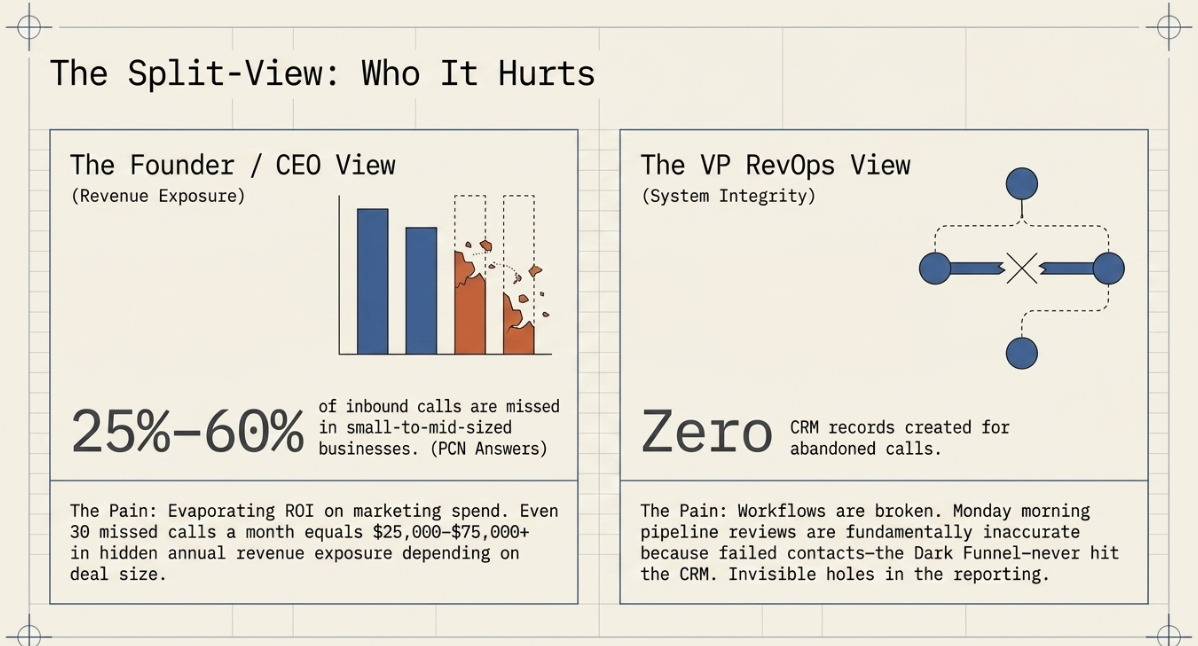
If you're a founder or first sales leader running a company in the $5M–$30M range, this is your problem in its most direct form. You're spending money to generate calls, through ads, SEO, referrals, or a rep's outbound effort, and a meaningful portion of those calls are evaporating before anyone speaks a word. According to the 2026 Small Business Missed Call Revenue Study by PCN Answers, small and mid-sized businesses miss between 25% and 60% of their inbound calls. Even 30 missed calls per month can translate to $25,000–$75,000 or more in annual revenue exposure, depending on your average deal size.
There's a companion failure mode on the website side worth noting: visitors who arrive at your site but never make contact at all represent a different but related coverage gap. This article is about the buyers who did make contact, who called, and still fell through.
If you're a VP Sales or VP RevOps, the problem looks different. You're not just losing revenue you don't know about. You're looking at a workflow that produces invisible holes. A call goes to voicemail. Nobody logs it. No CRM record is created. No follow-up sequence fires. The buyer moves on, and on Monday morning, when your team reviews the pipeline, that call doesn't show up anywhere, because it was never captured.
What Happens After the Voicemail
Here's the part that makes the missed call genuinely expensive rather than just inconvenient.
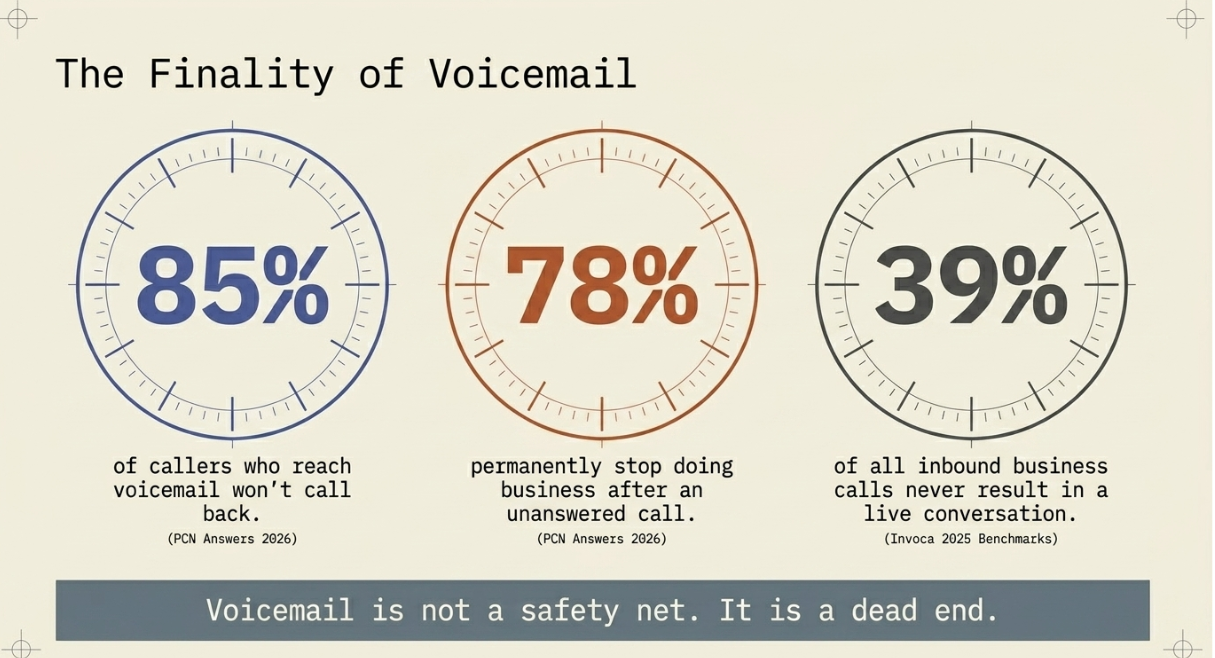
Most callers don't call back. According to the same PCN Answers 2026 study, 85% of callers who reach voicemail won't call back. 78% have permanently stopped doing business with a company after an unanswered call.
Read that again. Not "became less likely to convert." Permanently stopped.
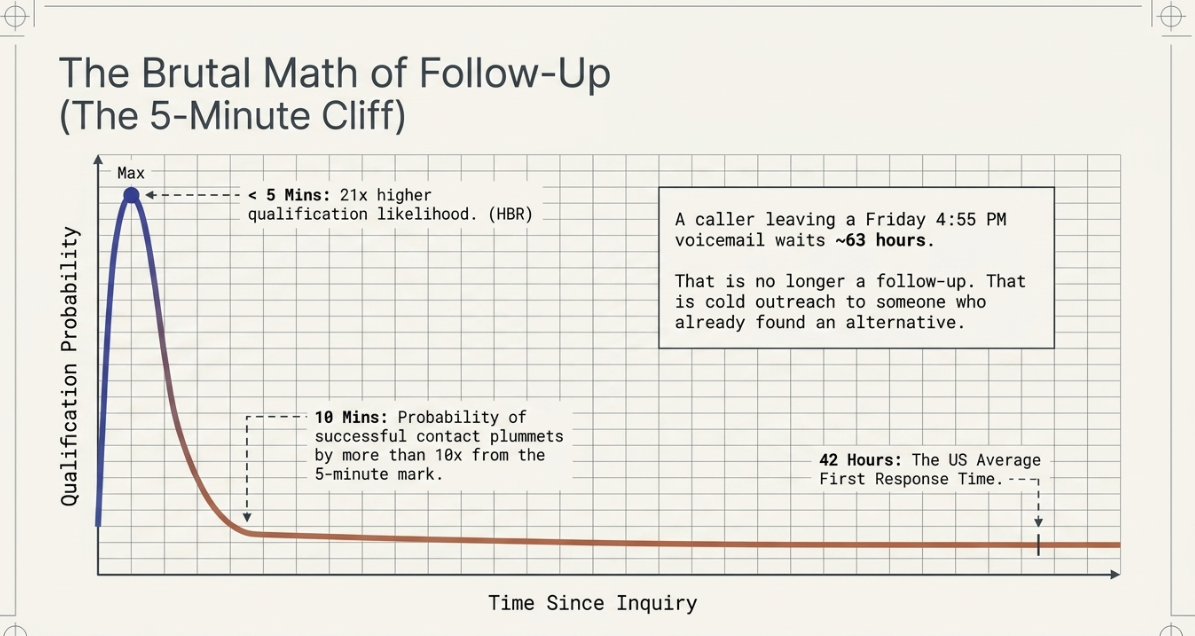
And even when a caller does leave a message, the clock on follow-up is brutal. Harvard Business Review research on lead response time, drawn from an analysis of more than 15,000 leads, found that companies contacting a prospect within 5 minutes of inquiry are 21 times more likely to qualify that lead than companies that wait 30 minutes. The probability of successful contact drops more than 10 times between the 5-minute and 10-minute marks alone. The average first response time in the study? 42 hours.
A caller who left a voicemail at 4:55 PM Friday, who doesn't hear back until Monday morning, has waited approximately 63 hours. That's not a follow-up. That's a cold outreach to someone who has already had the weekend to find an alternative.
The Real Reason Your Calls Go to Voicemail
This section is for operators, the VP Sales or RevOps leader who has already read the coverage failure diagnosis above and knows there's a deeper layer.
Coverage failure: when the model has no answer for after-hours and concurrent calls
Invoca's 2025 Call Conversion Benchmarks report, based on analysis of 60 million phone calls across industries, found that only 61% of callers actually speak to a person. That means 39% of all inbound calls do not result in a live conversation. Across home services, healthcare, financial services, and automotive, call answer rates range from 54% to 69%. The coverage gap is not your company's unique failure. It is a structural feature of how businesses that rely on human-only responses handle inbound volume.
The structural fix requires a first-response layer that operates outside the constraints of a human team.
Intelligence failure: when the call leaves no trace
Here is where coverage failure becomes Context Collapse.
Context Collapse is what happens when a customer interaction takes place across a channel that does not feed intelligence back into the system. The concept is documented in CETDIGIT's canonical analysis of disconnected chat and voice tools, and missed calls are its most costly expression.
Think about what happens when a call goes to voicemail and is never logged. The buyer called. They revealed intent. They may have said something specific about timing, about budget, about why they were calling. And then that information ceased to exist. No CRM record. No follow-up trigger. No conversation history that a rep could use on Monday morning to have a warm call instead of a cold one.
That missed call is also a Dark Funnel event; it happened, it generated pipeline exposure, and it left no trace in any system. Understanding why pipeline goes dark in growing companies means accounting for these invisible contact attempts, not just the leads that made it into the CRM.
The intelligence that would have enabled a real follow-up simply does not exist anywhere in the system. That is Context Collapse. It costs more than the missed call.
How Much Is This Actually Costing You
Use this table to apply the cost framework to your own business.
|
What’s happening |
What it costs |
What to fix first |
|
Calls going to voicemail after 5 PM and on weekends |
Lost revenue from buyers who move to a competitor before Monday |
Deploy a first-response layer that answers every after-hours call, takes the message, and confirms follow-up time |
|
Team on a call when another inbound comes in |
Lost revenue from concurrent callers who hang up and call someone else |
Add a coverage layer that handles concurrent volume; the second ring should never go unanswered |
|
Calls reaching voicemail with no CRM record created |
Invisible pipeline holes, these losses never show up in your reports |
Connect every call attempt (answered or not) to your CRM so follow-up can be triggered |
|
Voicemails followed up more than 24 hours later |
Near-zero conversion probability, the HBR data puts qualification likelihood at a fraction of the same-hour response |
Build a follow-up rule: every voicemail gets a call back within 2 hours, not end-of-day |
For a rough revenue exposure calculation: take your average monthly inbound call volume, multiply by your missed call rate (25%–60% for most service businesses, per Invoca's home services call data), and multiply by your average deal value. The result is the range of revenue lost through the coverage gap every month.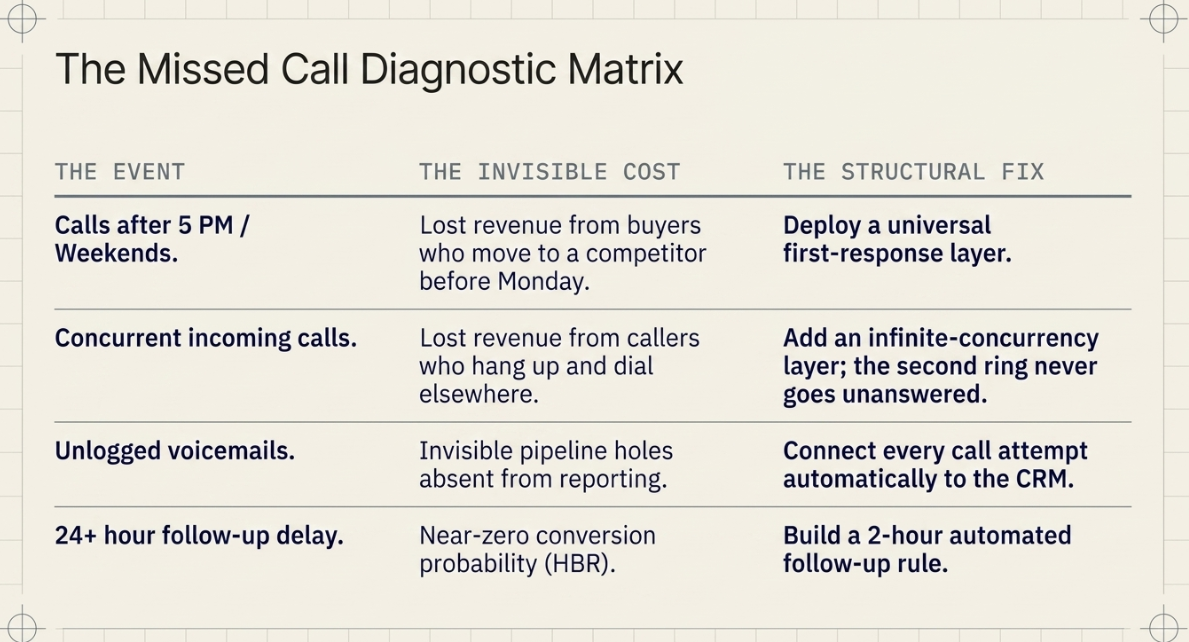
The CETDIGIT Perspective
The framing that matters here is coverage and intelligence together, not one without the other.
A lot of teams try to solve the coverage problem by hiring. Add a person to cover evenings. Add a receptionist. But you're adding a seat cost to a problem that isn't fundamentally a headcount problem; it's an architecture problem. No team of humans is designed to answer every concurrent call, 24 hours a day, and log every contact attempt into a system that triggers the right follow-up.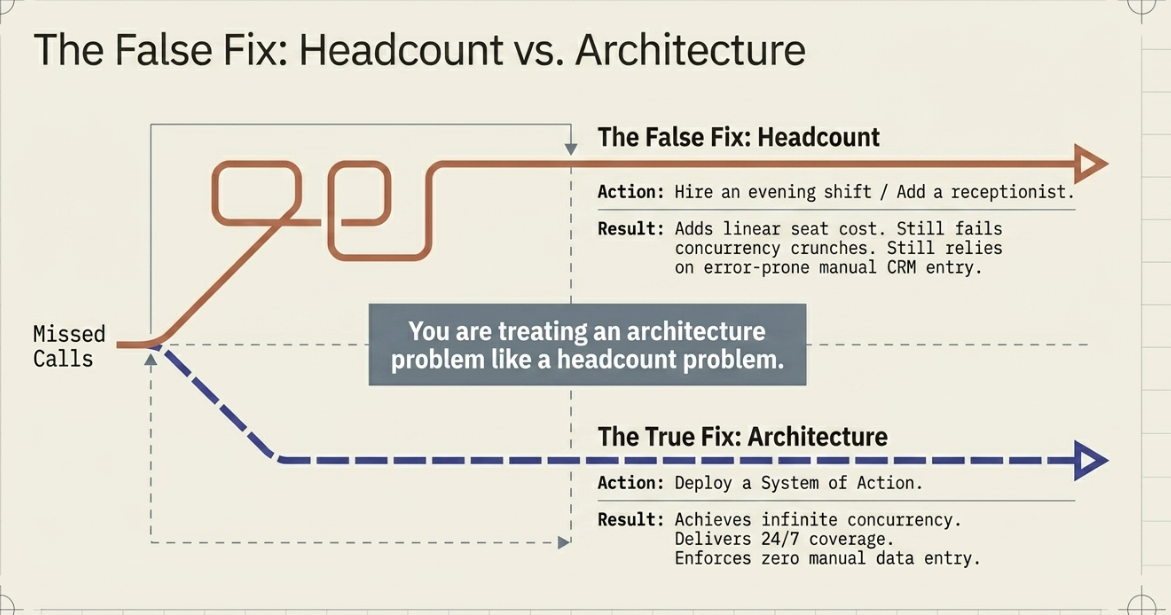
AI voice agents solve the coverage half of this. They answer every inbound call, at 4:55 PM Friday, at 8:30 AM Sunday, during the concurrent-call crunch on Tuesday morning, qualify the inquiry, take the information, and either route or schedule. To understand what an AI voice agent is and when your business needs one, Article #6 in our Voice Agents series covers the foundational definition. This article builds on that.
The intelligence half is the part most deployments miss. When the call is handled by an AI agent, the contact record is created automatically. The buyer's name, number, the time of call, and what they said all of it flows into the CRM. From there, a follow-up sequence can fire. A rep can walk in on Monday morning with a prioritized list of every inbound contact from the weekend, not a voicemail light blinking on a desk phone.
AI voice agents fit within CETDIGIT's broader AI services architecture alongside sales workflow automation and revenue intelligence tooling. The voice layer is not a standalone product. It is one component of a System of Action, a connected set of tools where every customer contact, regardless of channel, creates a record that triggers the appropriate next step.
That is what closes the Context Collapse gap. Not just coverage. Coverage plus capture.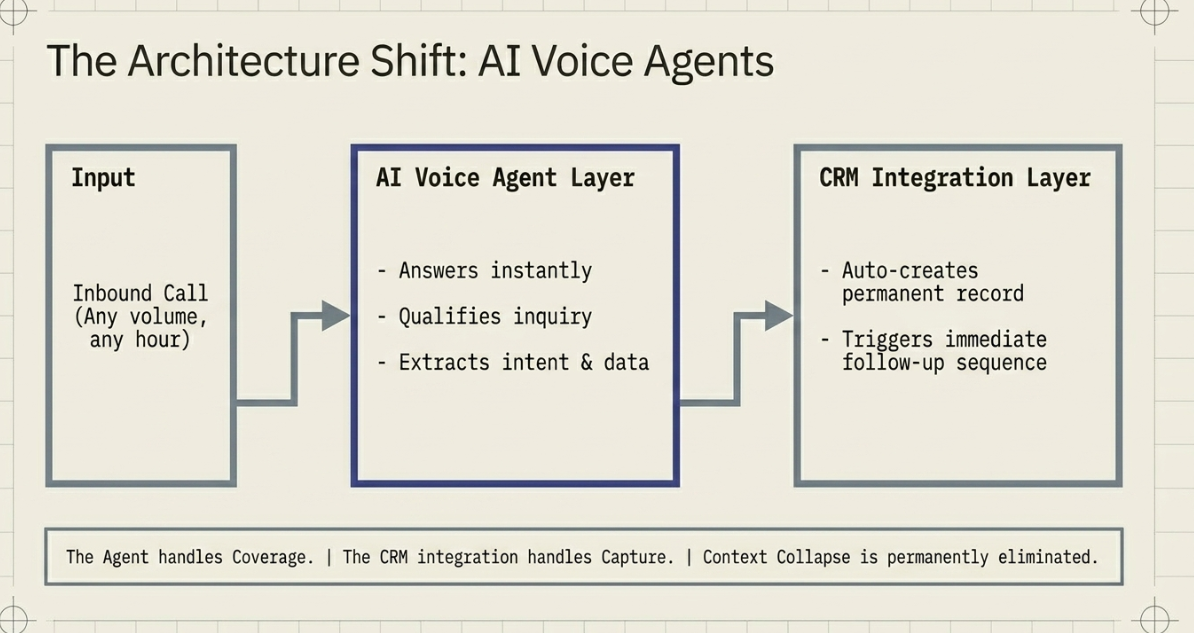
How to Stop Missing Inbound Calls — A Step-by-Step Framework
A Forrester Consulting study on voice AI ROI found that enterprises deploying AI voice coverage achieved payback in under six months and cut call abandonment rates by 50%. The path from problem to fix follows a logical sequence.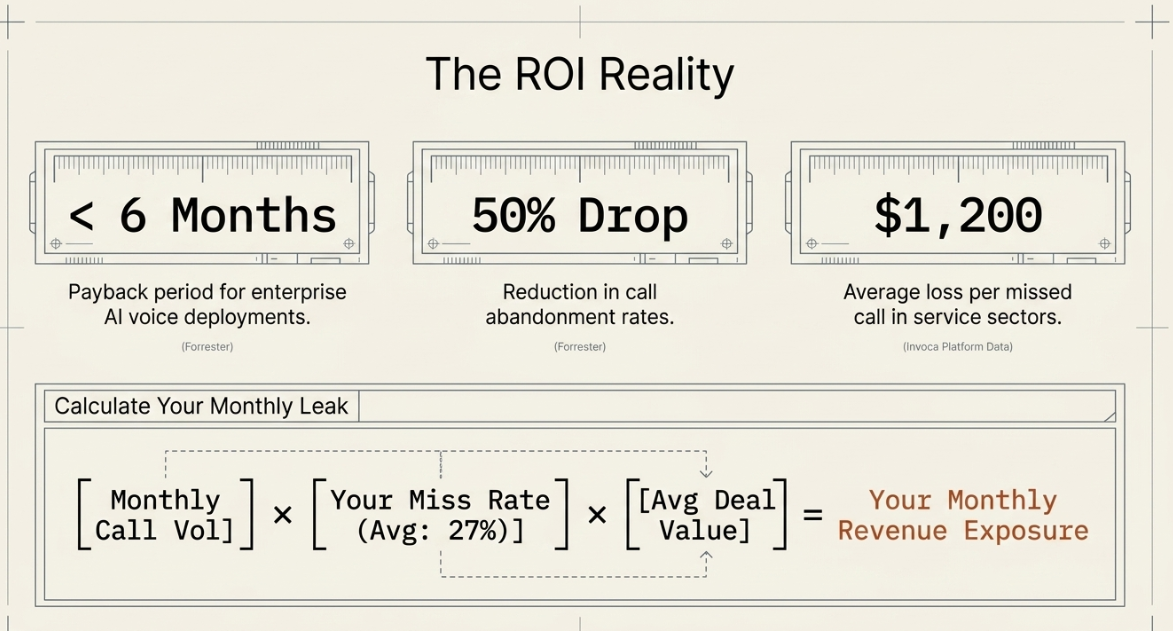
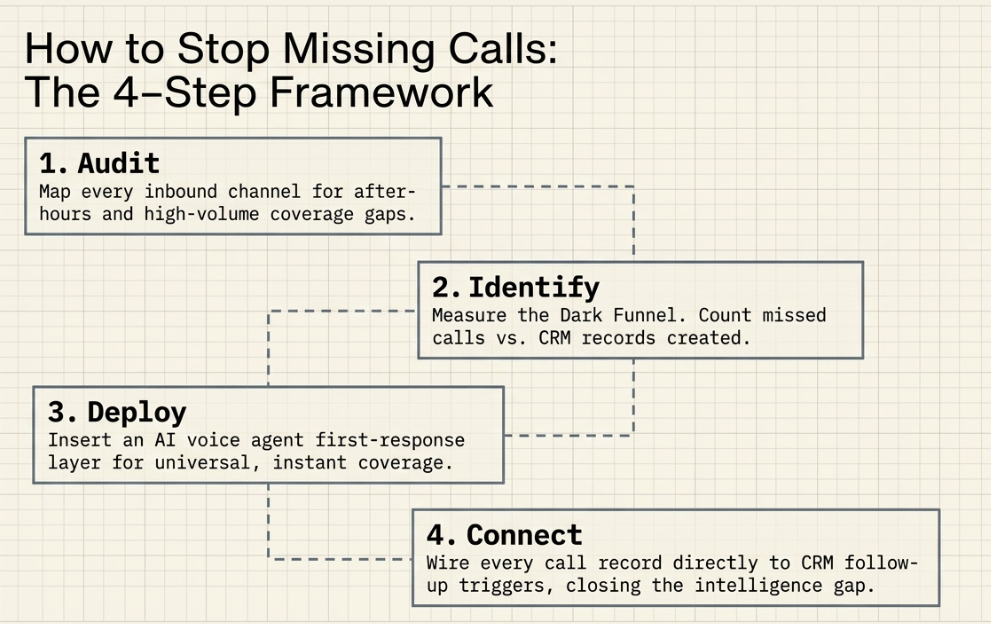
Step 1: Audit every inbound call channel for coverage gaps.
List every number, form, and chat channel where buyers can reach you. For each one, identify what happens to an inbound contact that arrives after 5 PM, on a weekend, or during a high-volume period. If the answer is "goes to voicemail" or "nothing," that is your gap.
Step 2: Identify what happens to an unanswered call. Is it logged anywhere?
Pull a week's worth of call data and count missed calls. Then check your CRM: how many of those missed calls created a record? The gap between calls missed and records created is your Context Collapse exposure. Most teams are shocked by this number.
Step 3: Deploy a first-response layer that answers every call regardless of time or availability. This is where AI voice agents for inbound call coverage enter the workflow. The agent answers, qualifies, and routes. It doesn't replace your sales team; it ensures that no call goes unanswered and no contact goes unlogged.
Step 4: Connect every call record to your CRM, so every contact triggers a follow-up action. Connecting every call record to your sales workflow, so that answered and unanswered calls alike create CRM records and trigger follow-up sequences, closes the intelligence gap that makes Context Collapse possible. A voicemail left on Friday that doesn't get a callback until Monday because nobody saw it is a workflow failure, not a human failure.
Frequently Asked Questions
How much revenue am I losing from missed calls?
Across service businesses, the 2026 PCN Answers Missed Call Revenue Study estimates that 30 missed calls per month produce $25,000–$75,000 or more in annual revenue exposure, depending on deal size. For home services businesses, Invoca's platform data puts the per-missed-call loss at approximately $1,200, with a 27% average miss rate across their customer base. Apply your own deal size and miss rate to get a number specific to your business; the formula is: monthly call volume × miss rate × average deal value × close rate.
What happens when a sales call goes to voicemail? Does the caller ever come back?
The data on this is consistent and discouraging. According to the 2026 PCN Answers study, 85% of callers who reach voicemail won't call back. 78% have permanently ended their relationship with a business after an unanswered call. A voicemail is not a safety net; it is the last contact most callers will ever make.
How do I stop missing inbound sales calls?
The four-step framework in this article outlines the path: audit your coverage gaps, identify how many missed calls are creating zero CRM records, deploy a first-response layer that answers every call regardless of time or availability, and connect those call records to your CRM so follow-up fires automatically. The fix is architectural, not motivational.
Can AI answer inbound calls when my team is unavailable?
Yes, that is the primary function of an AI voice agent for inbound coverage. AI voice agents answer every call at any hour, qualify the inquiry, and route or schedule based on predefined logic. The Zendesk 2026 CX Trends data shows that 74% of consumers already expect 24/7 availability. The consumer is not asking for a human; they're asking for an answer.
What is Context Collapse, and why does it matter for missed calls?
Context Collapse is what happens when a customer interaction takes place across a channel that doesn't feed intelligence back into the system. A missed call that goes to voicemail, is never logged, and triggers no follow-up is a textbook Context Collapse event. The buyer revealed intent. The system captured nothing. That gap, between the call that happened and the record that should exist, is what makes voicemail genuinely costly rather than just inconvenient.
How fast do I need to respond to an inbound call to have a chance at conversion?
Faster than most teams respond. Harvard Business Review research on lead response time found that companies responding within 5 minutes are 21 times more likely to qualify a lead than those waiting 30 minutes. The same study found average first response times of 42 hours across US companies. That's the gap between what buyers expect and what most businesses deliver. An AI voice agent doesn't close the qualification call instantly, but it answers, captures, and queues, so the follow-up happens in minutes rather than the next business day.
Revenue Leak Assessment
Find out exactly which calls and inquiries your team is missing, and what it's costing you in pipeline. Book a 20-minute Revenue Leak Assessment. We'll identify exactly where calls are going unanswered, what happens to those contacts in your system, and what to fix first.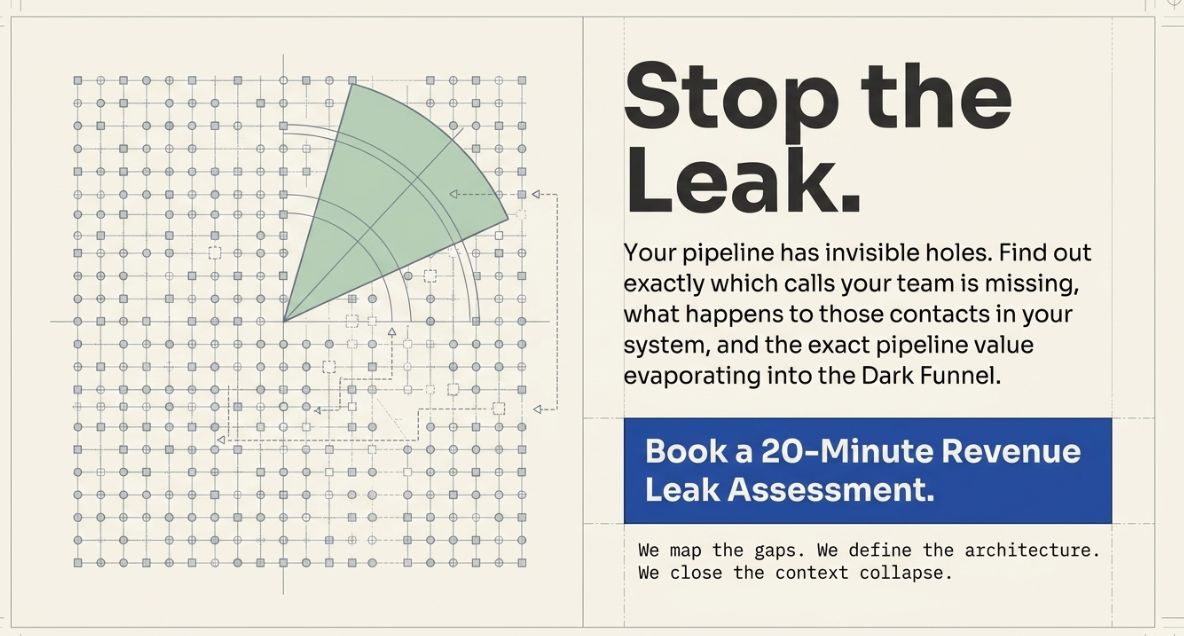


Leave a Comment