


It is the second week of December, and the development office of a mid-sized nonprofit is running on coffee and adrenaline. The year-end appeal dropped last Tuesday. GivingTuesday receipts are still being reconciled. The gala follow-up letters have not gone out. And the phone keeps ringing: a longtime donor whose card failed on her recurring gift and who wants to fix it before the 31st, a retiree who wants to give appreciated stock and does not trust the website form, a family asking whether Saturday's volunteer shift still needs hands, a program participant with a question that has nothing to do with fundraising at all.
Two people are answering all of it. When they are in a donor meeting, on the other line, or gone for the day, those calls go to a voicemail box that everyone intends to check daily, and nobody checks daily in December. Development directors know the uncomfortable truth behind that voicemail light: the donor who calls and reaches no one usually does not call back. She just quietly becomes a lapsed donor in next year's retention report.
The phone is still where the most valuable gifts begin
Online giving gets the attention, but ask anyone who has worked a year-end close: the phone is where the consequential conversations happen. Older donors, who carry a disproportionate share of individual giving, prefer to call. Stock gifts, donor-advised fund grants, qualified charitable distributions from an IRA, memorial gifts, bequest questions- these almost always start as a phone call, because the giver wants a human to confirm the details. A failed recurring card, left unresolved, is one of the largest silent revenue leaks in any sustainer program, and the donors most likely to resolve it are the ones who call.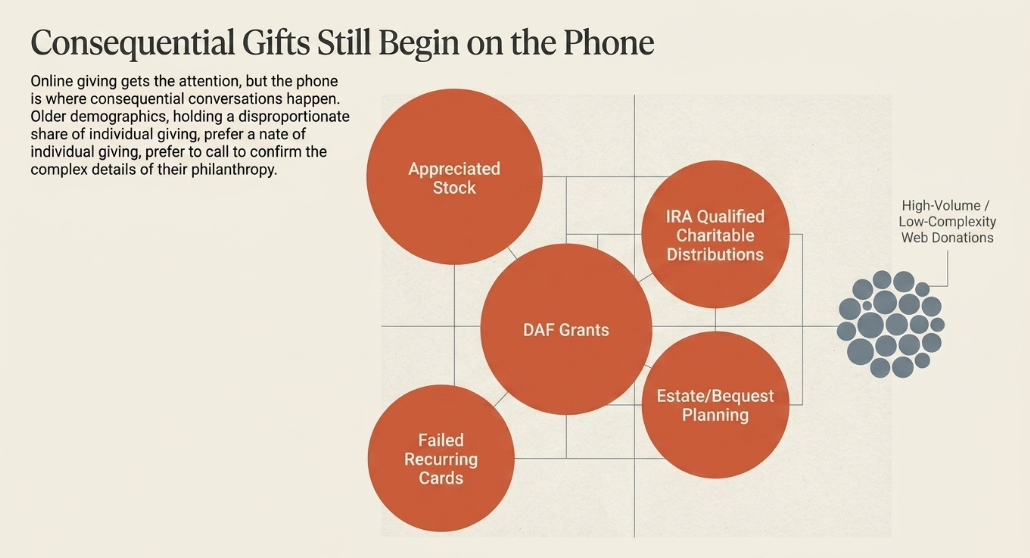
The math of a small shop makes this brutal. A development team of two or three cannot staff a phone line from 7 a.m. to 9 p.m. across time zones, in multiple languages, seven days a week, during the exact six weeks when a third or more of annual revenue arrives. Hiring seasonal staff to answer phones is rarely in the budget, and an outsourced answering service that knows nothing about your programs can do real damage to a relationship a gift officer has spent years building.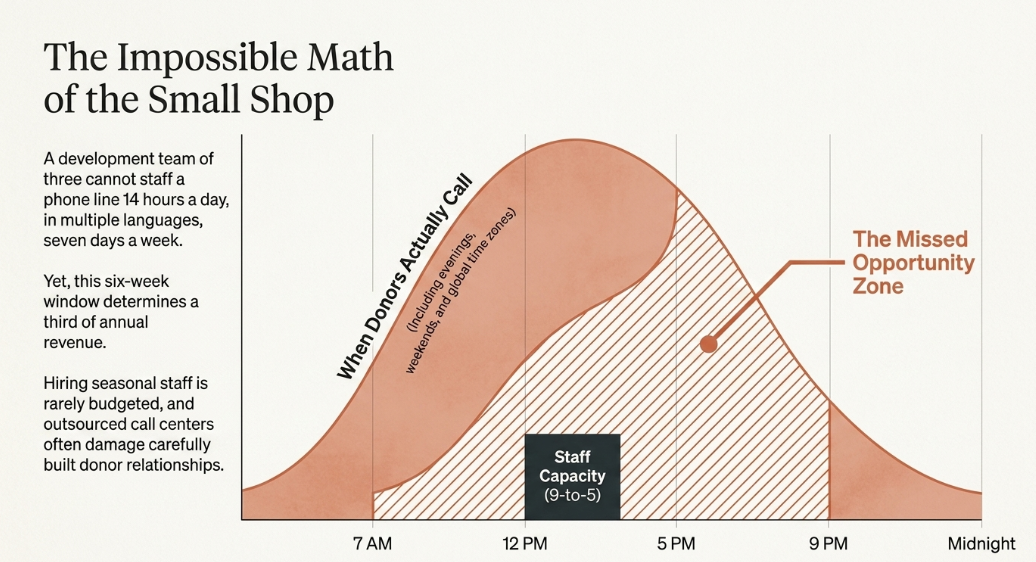
A missed call is really a missing CRM record
Here is the operational lens that often gets missed in conversations about nonprofit phone coverage: the call itself is only half the asset. The other half is what lands in the donor database afterward. Organizations have invested heavily in donor CRMs, Salesforce Nonprofit Cloud and NPSP, Blackbaud Raiser's Edge NXT, Bloomerang, DonorPerfect, Neon CRM, precisely so that every touchpoint enriches the record: who called, why, what they intend to give, what stewardship they need next.
A voicemail transcribed three days later does none of that. It produces no interaction record, no task for the gift officer, no flag on the sustainer whose card failed, no update to the volunteer roster. CETDIGIT recently scoped a Salesforce Nonprofit Cloud transition for a large nonprofit foundation whose prospect team runs on prioritized donor opportunities and propensity scoring inside the CRM; what struck us was how much of that intelligence depends on interactions actually being captured. A donor signal that never enters the system might as well not exist. The phone is, for many organizations, the single leakiest point in that capture chain.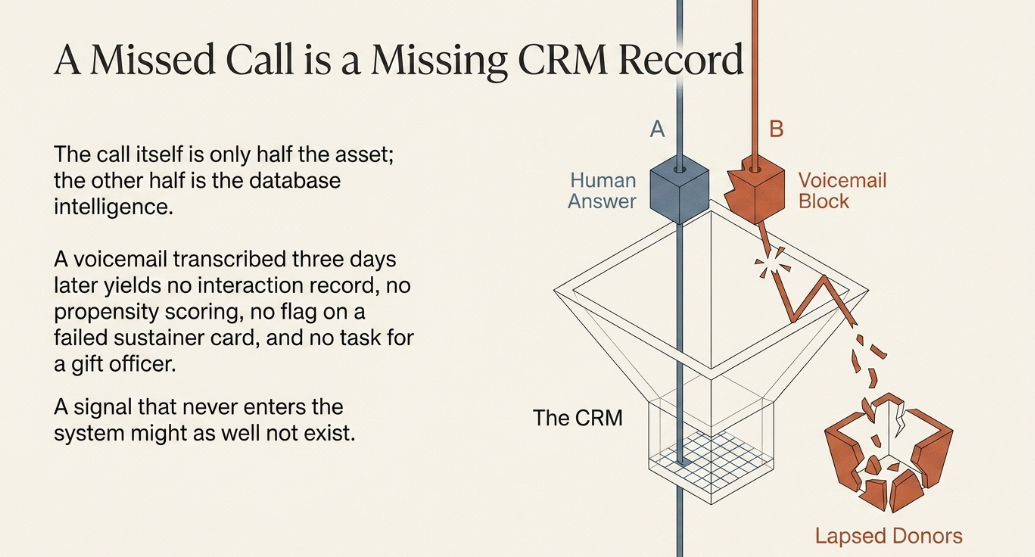
What an AI voice agent changes for a development office
This is where AI voice agents have quietly become practical for nonprofits. A well-implemented agent answers every call on the first ring, at midnight on December 30 as reliably as at 10 a.m. on a Tuesday. It greets the caller in their language, answers the questions that make up the bulk of call volume, office hours, event details, how to give stock, where the mailing address for checks is, whether a gift is tax-deductible, how to update a recurring gift — and it does so from the organization's own documents, not from a generic model's imagination. On CETDIGIT's CETRAI platform, every answer is grounded in the nonprofit's approved content with mandatory source citations, so the agent can only say what the organization has actually published.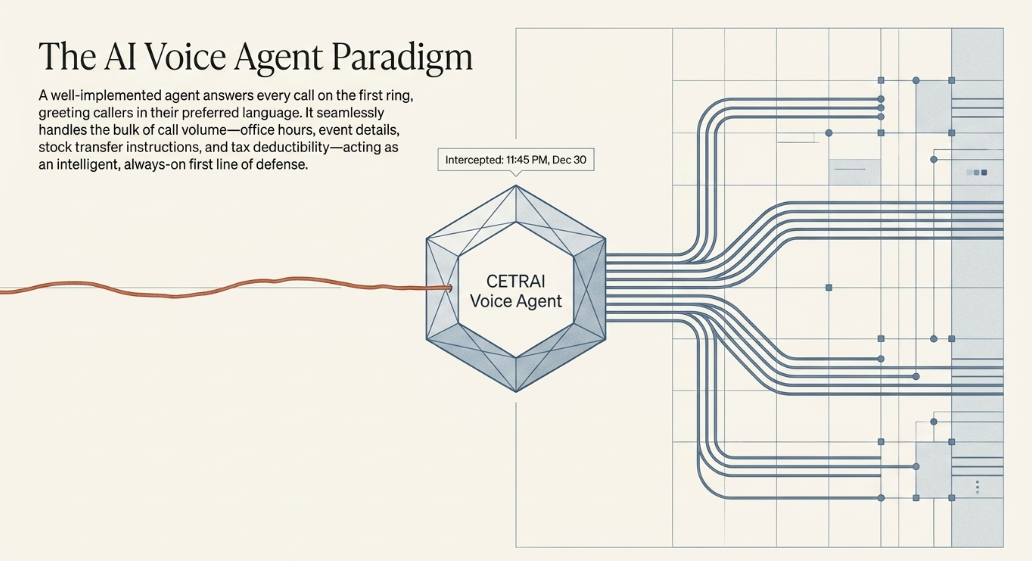
Just as important is what a responsible agent refuses to do. It does not take card numbers over the phone; it sends the caller a secure giving link or schedules a callback, keeping the organization clear of PCI exposure. It does not negotiate a major gift; it recognizes the moment- a caller mentioning stock, a DAF, an estate- and escalates warmly to the right human, with the context already captured. Text follow-ups go only to callers who have consented, keeping the outreach on the right side of TCPA. And every conversation is logged with an audit trail, which matters to boards and finance committees that answer to auditors.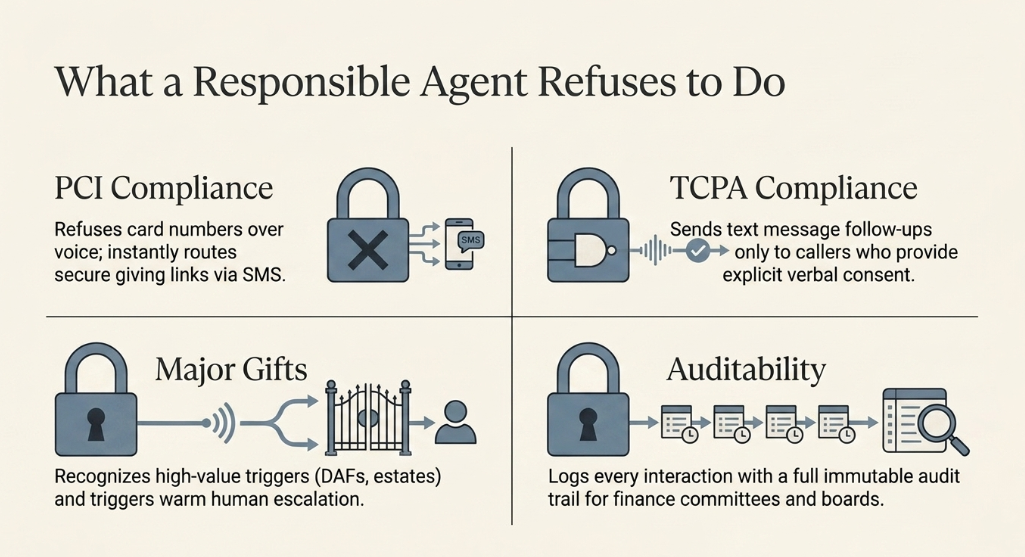
The CRM connection is where the operational value compounds. Each call becomes a structured record in Nonprofit Cloud, NPSP, or whichever system holds the donor file: caller identified, intent classified, interaction logged, and a task routed to the gift officer or volunteer coordinator who needs to act. The sustainer with the failed card gets flagged the night she calls, not discovered in a lapsed-donor query in February. For organizations exploring this model, CETRAI's overview of voice agents for nonprofit organizations at cetrai.com is a useful place to see how after-hours donor coverage works in practice.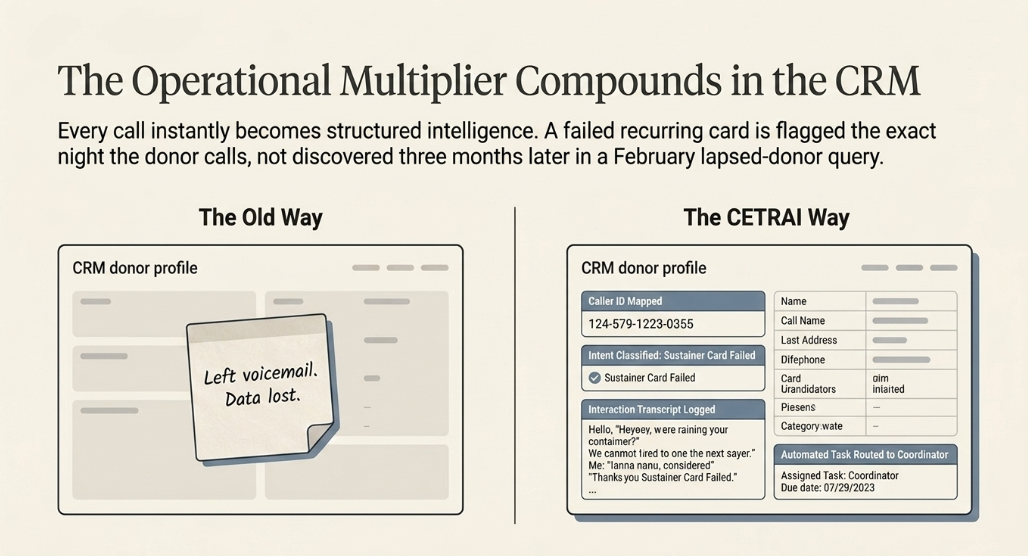
Starting before the year-end crunch
The nonprofits that will feel this difference in December are the ones that start in the fall. The work is not exotic: gather the documents the agent will answer from, define the escalation rules with the development director, connect the CRM so interactions land on the right records, and pilot on after-hours calls first, where today's coverage is zero, and any capture is pure gain. From there, expanding to overflow coverage during business hours is a configuration decision, not a new project.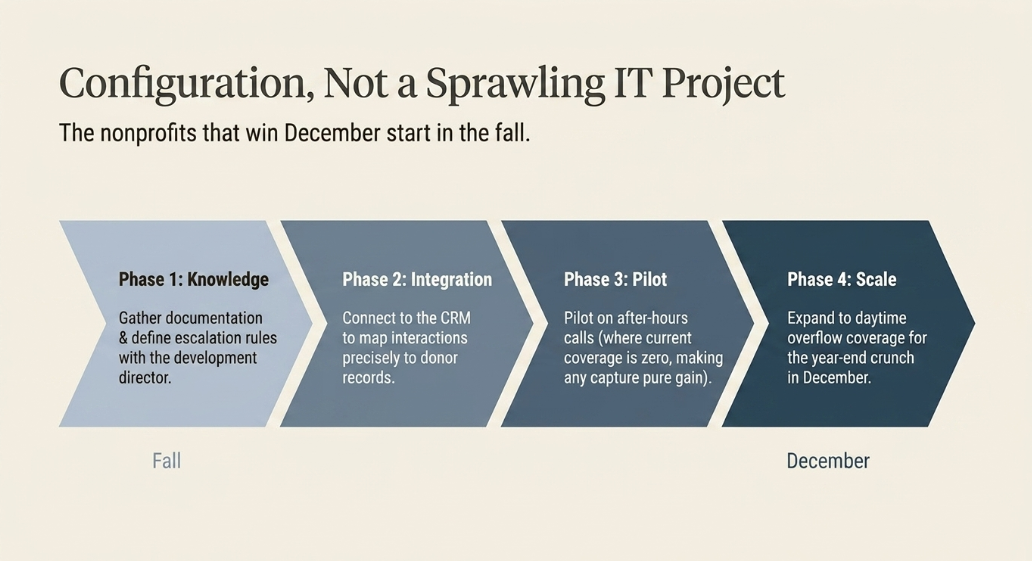
None of this replaces the gift officer. It protects the gift officer's time for the conversations only a human should have, and it makes sure the phone, still the channel where the largest individual gifts begin, is never the reason a donor drifts away.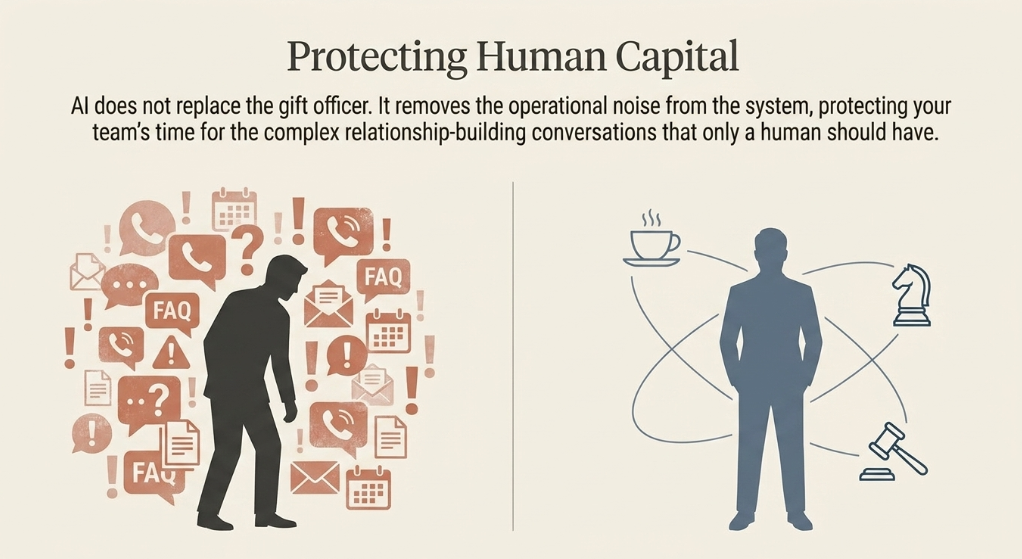
CETDIGIT has delivered more than 300 AI and CRM deployments, is a Salesforce Crest Partner and HubSpot Elite Partner, and works with hundreds of nonprofit organizations on donor systems and AI-supported operations. If your team is heading into giving season knowing that calls are slipping through, we would be glad to walk through what call coverage connected to your donor CRM would look like for your organization. Schedule a consultation with CETDIGIT, and we will map it against your actual call volume and systems.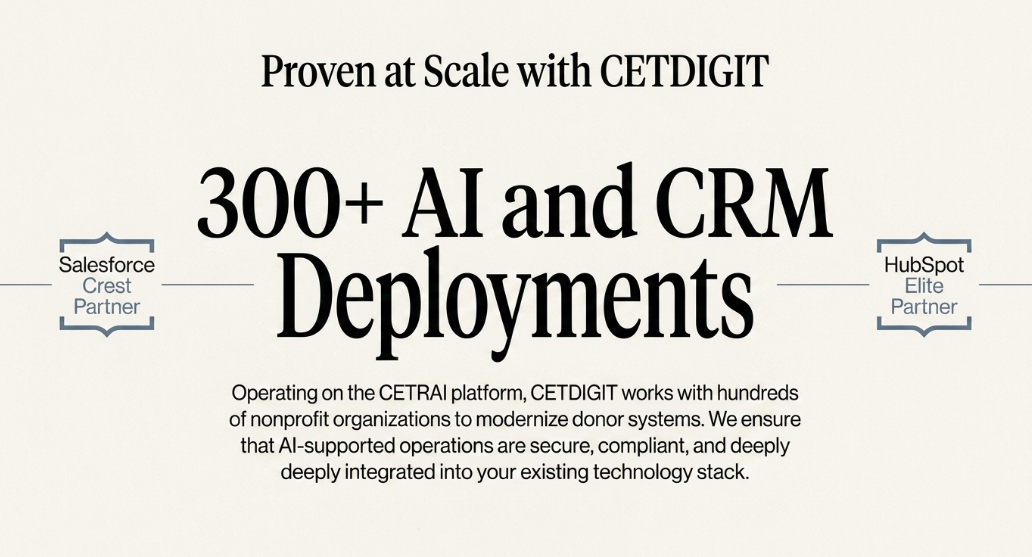
Related Reads
The Missed Call Problem in Healthcare: How AI Voice Agents Give Medical Practices Their Phones Back
Enrollment Week at the Front Office: How AI Voice Agents Help School Districts Answer Every Parent Call
Your CRM Already Knows the Answer: How AI Integration Turns Salesforce into an Intelligent Operating System

Leave a Comment