


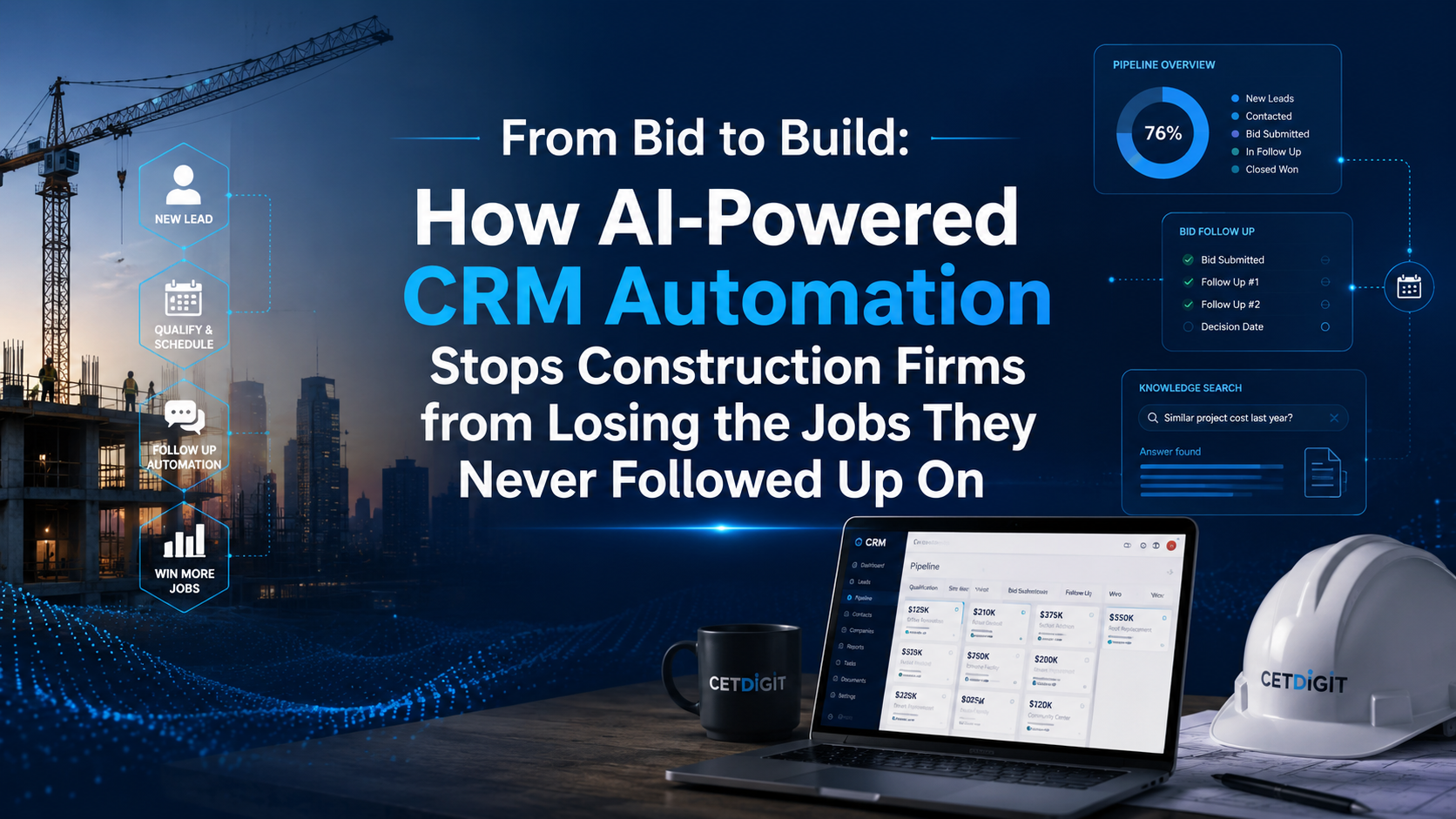
Ask any construction executive where their next quarter's revenue comes from, and the answer is the same: the pipeline of bids, estimates, and proposals sitting in some combination of spreadsheets, inboxes, and an estimator's head. Now ask how many of last month's inbound leads got a response within a day, or how many outstanding bids received a follow-up call before the award decision, and the room usually goes quiet. Construction firms are exceptional at building and notoriously inconsistent at following up, not because they do not care but because the people responsible for follow-up are the same people running jobs, walking sites, and putting out fires.
The math is unforgiving. General contractors commonly win somewhere between one in five and one in ten of the jobs they bid, and every estimate represents hours of takeoffs, subcontractor pricing, and site visits. When a firm invests that effort and then never calls to ask where the decision stands, it is not just losing a job; it is donating free estimating work to the market. Meanwhile, a homeowner or facilities manager who fills out a website form and hears nothing for three days has usually signed with whoever answered first. In residential and light commercial work, especially, speed to first contact is often the single strongest predictor of who wins.
Why the CRM nobody updates is the real problem
Most mid-sized construction firms have bought a CRM at some point, and many have watched it quietly die. The pattern is familiar. Estimators live in their takeoff and estimating tools. Project managers live in Procore or Buildertrend. Roofing and exterior contractors live in platforms such as JobNimbus or AccuLynx. Accounting lives in QuickBooks or Sage. The CRM sits off to the side, demanding manual data entry from people who are on a roof or in a trailer, and within six months, it is a graveyard of stale records. Leadership then concludes that CRM does not work for construction, when the truth is that manual CRM does not work for construction.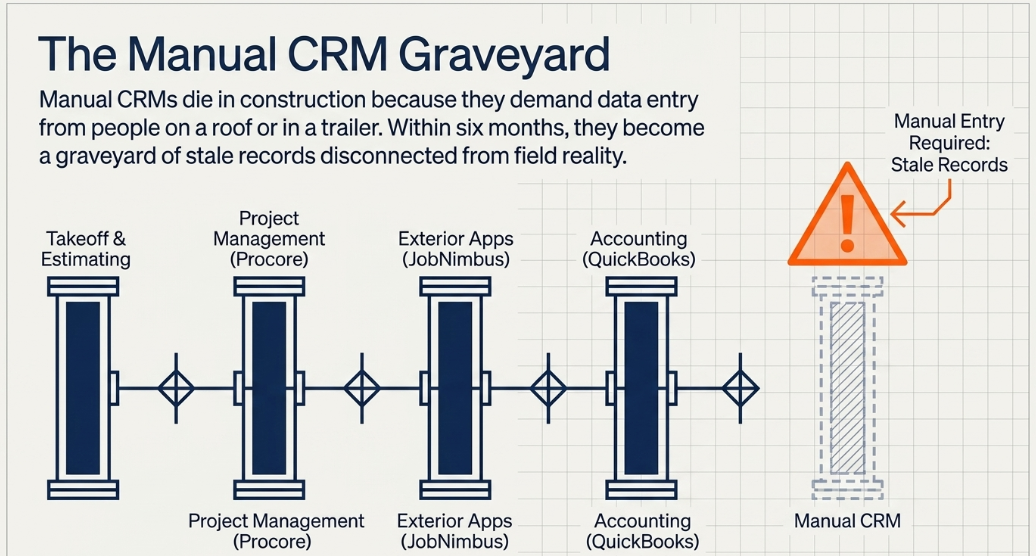
This is precisely the gap AI automation closes. The goal is not to make the field and estimating staff do more typing. It is to make the CRM update itself from the activity that is already happening, and then act on what it knows.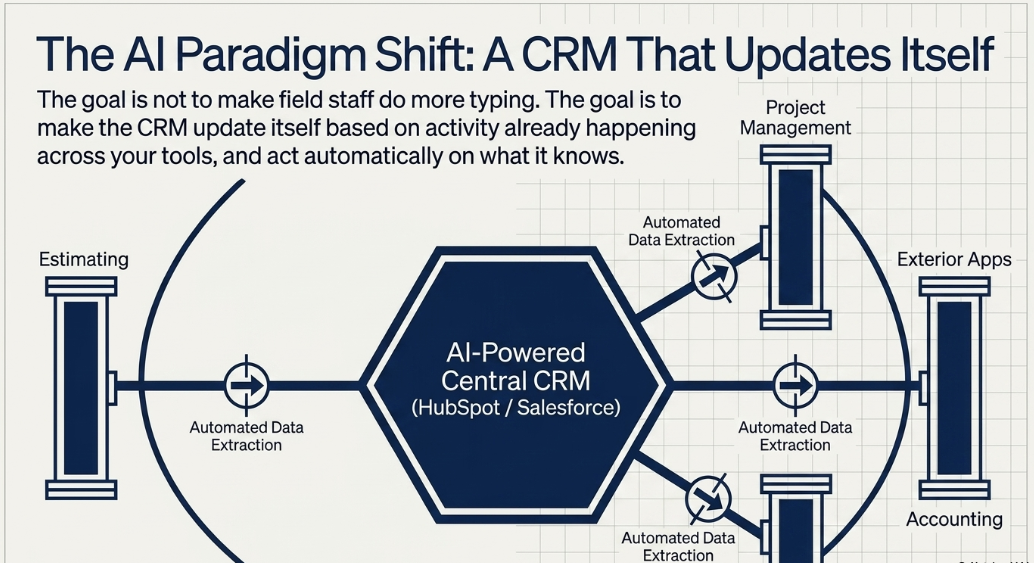
What AI plus a CRM actually does for a contractor
Start at the top of the funnel. When a lead arrives from the website, a paid campaign, or a referral, an AI agent connected to a CRM such as HubSpot or Salesforce responds within minutes, not days. It asks the qualifying questions an estimator would ask: project type, location, rough scope, timeline, budget range, and whether plans exist. It books the site visit directly onto the right estimator's calendar based on territory and workload. By the time a human first touches the deal, it is qualified, scheduled, and fully logged.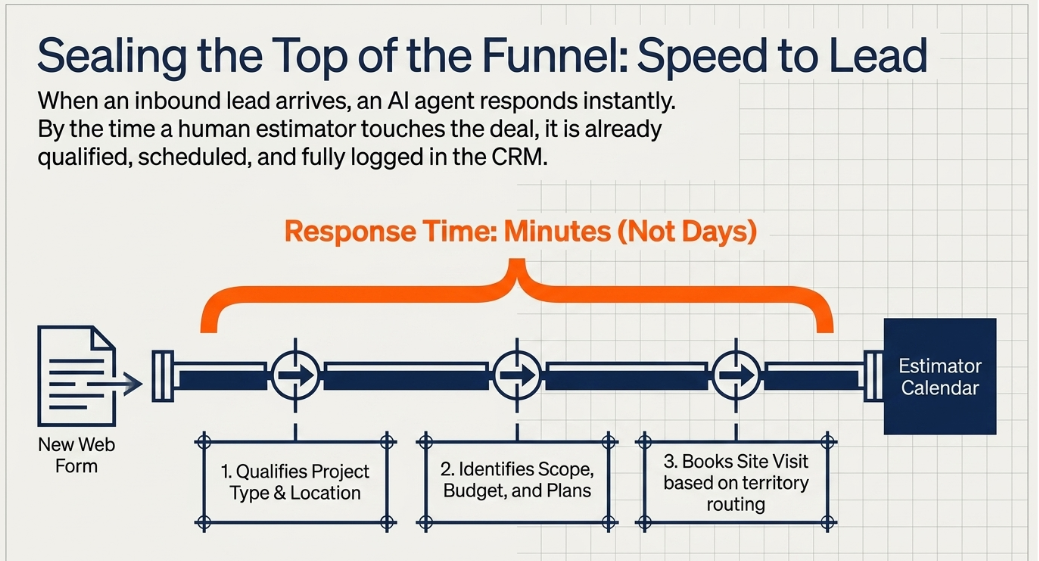
Now look at the middle, where construction pipelines actually leak. Every bid a firm submits becomes a record with a decision date, and the system works those records automatically: a check-in message a few days after submission, a reminder to the estimator when a decision date passes silently, a prompt to revive proposals that stalled after a price question. Bid follow-up stops depending on whether anyone remembered, and starts happening as a matter of process. The same logic applies after the win. Handoff from sales to operations, the point where information traditionally falls on the floor, becomes an automated package: contacts, scope notes, quoted allowances, and every email thread, delivered to the project team the day the contract is signed.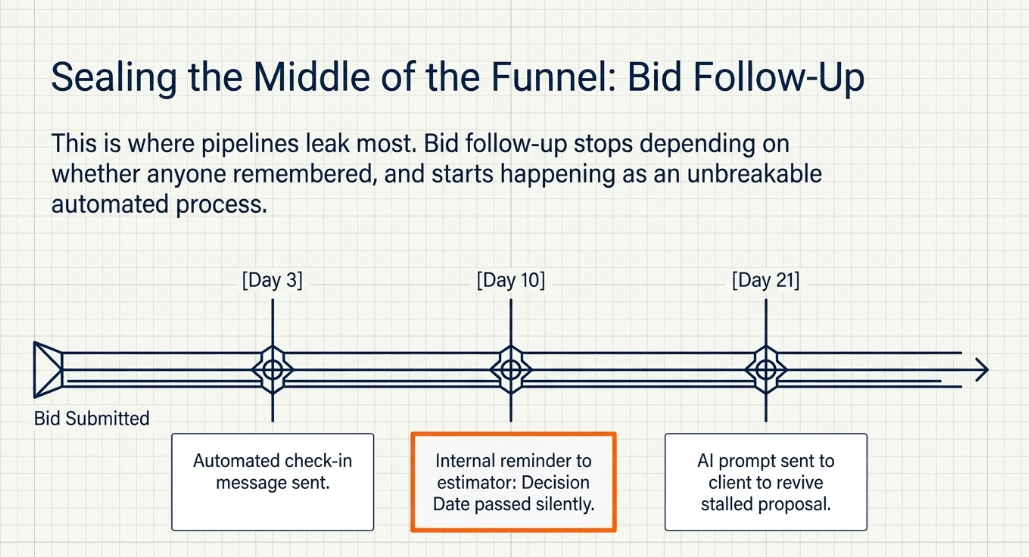
Then there is the knowledge problem. A contractor's institutional memory is scattered across old proposals, submittals, spec sheets, and closed-out job files. Retrieval-augmented generation puts that archive to work: an estimator can ask what the firm quoted for a similar tenant improvement last year, or what the warranty terms were on a past project, and get an answer drawn from the firm's own documents with the source cited. For firms pursuing public work, where responses to RFPs demand past performance narratives and compliance documentation on tight deadlines, the ability to instantly retrieve and reuse prior submissions is worth real money.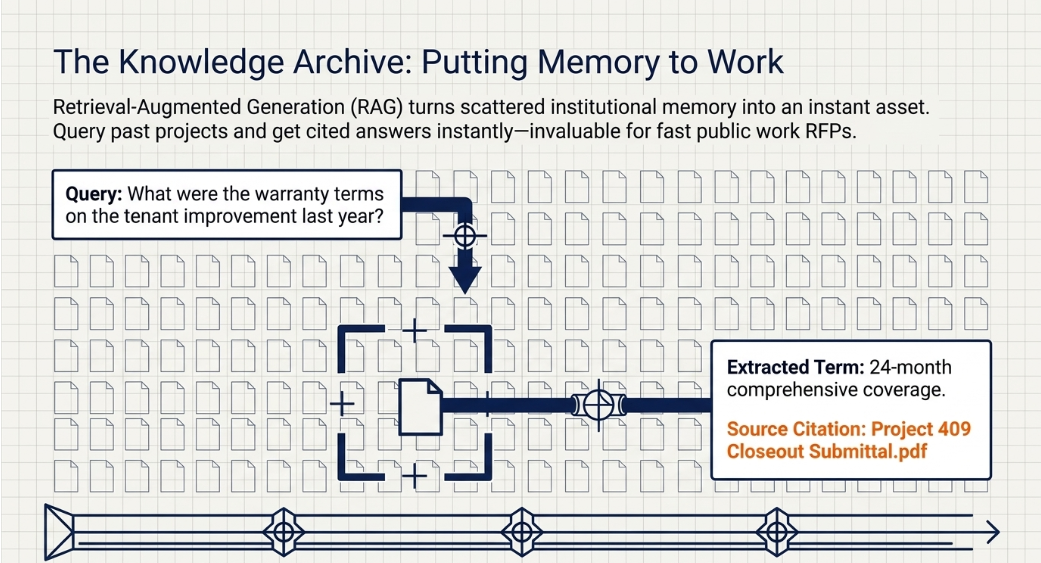
The rules of the road still apply
Contractors doing outbound follow-up by phone and text need to take TCPA obligations seriously, because automated calling and texting rules apply to a roofing company just as much as to a bank. Consent needs to be captured when the lead comes in, opt-outs honored instantly, and calling hours respected, and a properly configured system enforces all of this automatically instead of leaving it to a busy office manager. Firms working on government and institutional projects carry additional documentation duties, from certified payroll to insurance certificates, and here the audit trail matters: every automated communication logged, every AI-generated answer traceable to its source document.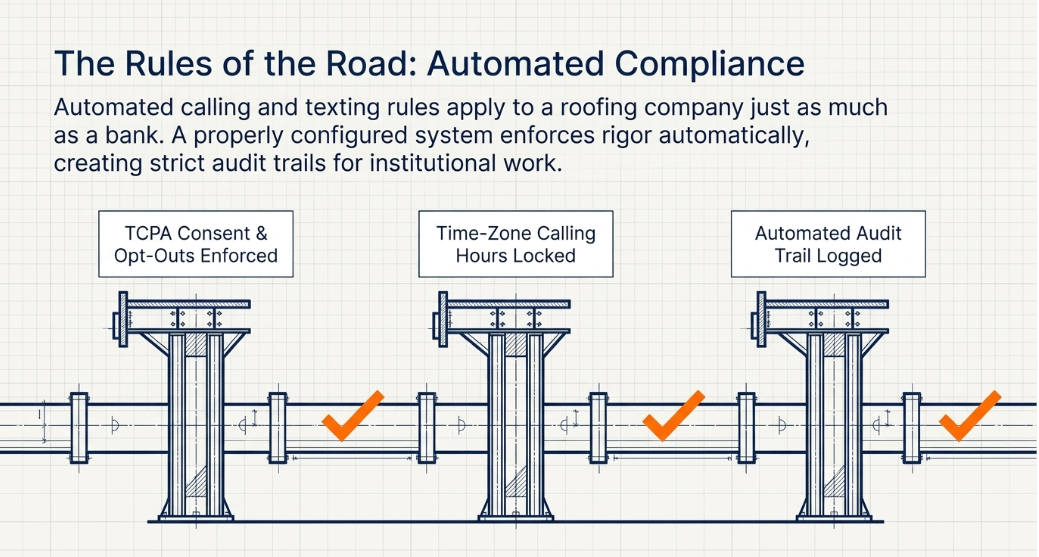
Start where the leak is worst
The construction firms we see succeed with this do not attempt a grand digital transformation. They pick the worst leak and fix it first. For most, that is lead response time: connect the website and ad forms to the CRM, put an AI agent on first response and qualification, and measure how speed changes win rates. The next step is usually bid follow-up automation, because it turns existing estimating effort into more wins without a single additional takeoff. From there, the handoff package and the searchable project archive follow naturally. Each step pays for the next, and crucially, none of them asks the field to change how it works.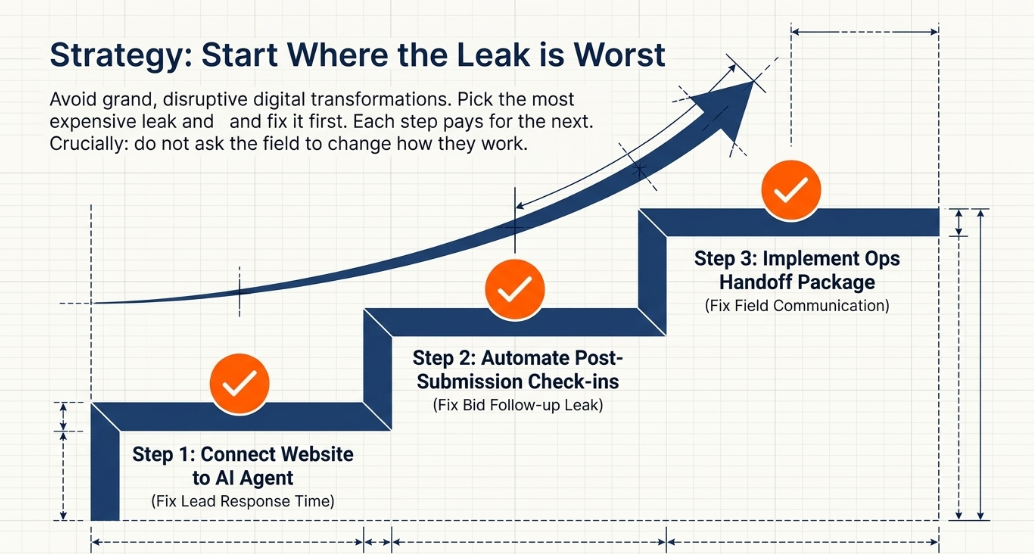
Buying decisions in construction tend to be made by owners and general managers who are rightly skeptical of software promises, so they insist on proof in your own terms: response times measured in minutes, follow-up rates on submitted bids, and revived deals that would otherwise have gone quiet. Those numbers show up within the first quarter, or they do not, and a good partner will commit to measuring them with you.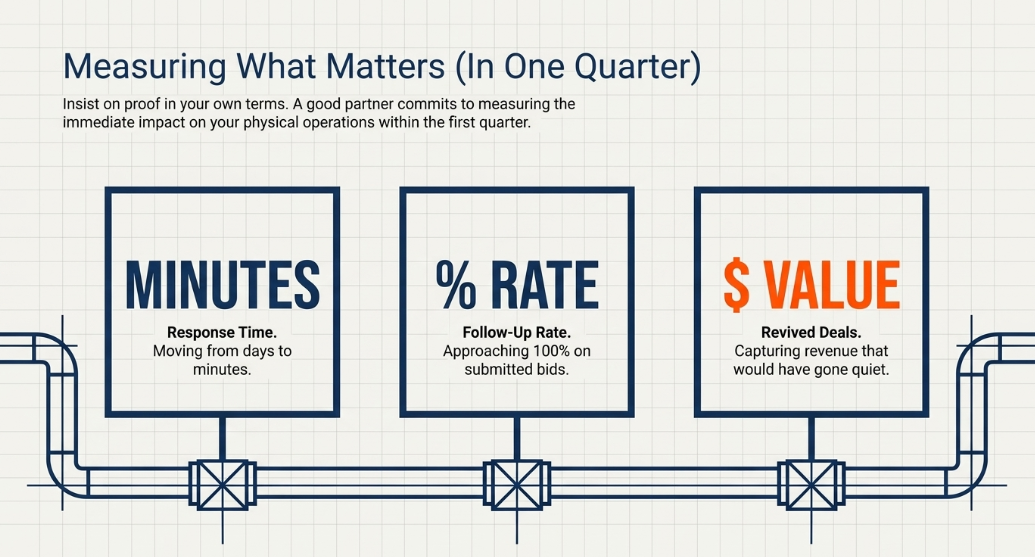
Build the pipeline like you build everything else
CETDIGIT, the digital solutions arm of Cetrix Technologies LLC, has completed more than 300 AI and CRM deployments, and we work with construction and trades businesses that need their pipeline to run as reliably as their job sites. As a HubSpot Elite Partner and Salesforce Crest Partner, we build AI automation directly into the CRM your office already uses and connect it to the estimating and project tools your teams live in. If your firm is bidding well and following up inconsistently, schedule a consultation with CETDIGIT, and we will map your lead-to-contract process and show you exactly where the leaks are costing you jobs.
Related Reads
Your CRM Already Knows the Answer: How AI Integration Turns Salesforce into an Intelligent Operating System
Beyond Standard RAG: How Agentic RAG is Transforming Enterprise AI in Salesforce and HubSpot
The Real Cost of Waiting: What Business Owners Lose by Delaying AI Adoption



Leave a Comment