



A principal at a mid-sized engineering firm gets a call from a city public works director she last worked with six years ago. A request for qualifications is coming, and the director wants to know whether the firm still does stormwater design. The principal is certain the firm has, but she cannot remember which project manager led the last job, which of the firm's three offices holds the drawings, or whether anyone has spoken to the client since. She emails the marketing coordinator, who starts digging through shared folders and an old spreadsheet. The answer arrives two days later, and by then the director has talked to a competitor.
Architecture, engineering, and construction-adjacent firms are built on relationships that last years and projects that last months. The knowledge of who did what for whom lives in a few people's heads, in the accounting system, and in the proposal library. A CRM is supposed to connect those pieces. In many firms, it connects none of them.
Two systems that do not meet
Most design firms already run a project accounting platform such as Deltek Vision, Deltek Ajera, Unanet, or Replicon, and often a project management or document tool alongside it. Those systems know project numbers, fees, billing, and staff hours. They know very little about the pursuit that preceded the project, the people on the client side, or the teaming partner who made the introduction.
Meanwhile, the business development side often runs on a mix of a lightly configured CRM, a marketing database, spreadsheets for the pursuit pipeline, and a folder of past SF330 forms, project sheets, and résumés. When an opportunity appears, the marketing coordinator assembles the response by hand. Nothing in that process is wrong, but it is slow, and it depends heavily on who is in the office that week.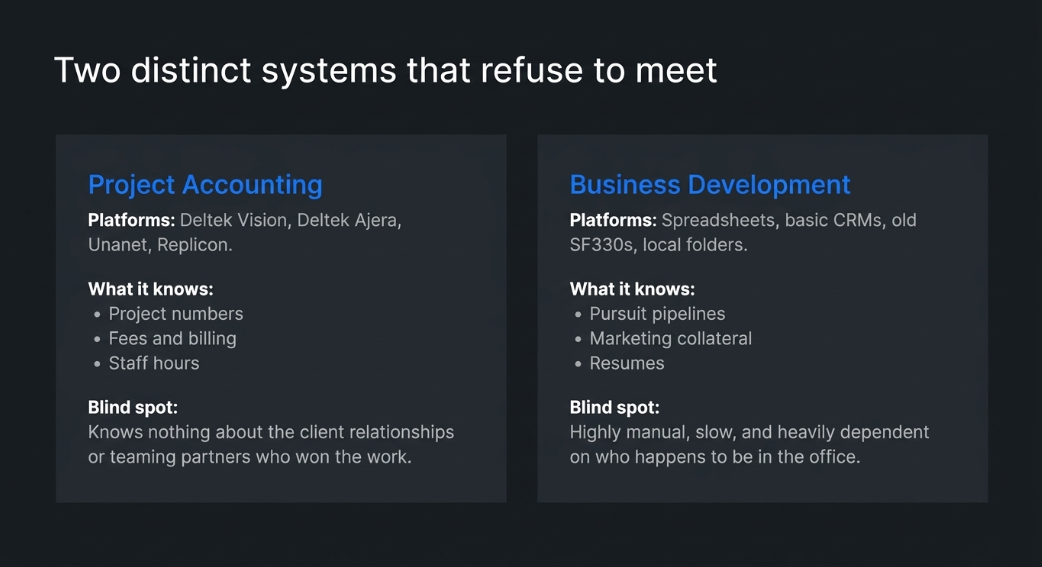
The pursuit is the opportunity, and the project is the memory
Salesforce works well for a firm like this when the data model reflects how the work actually moves. A pursuit is an opportunity: it has a client, a source such as a posted solicitation or a relationship-driven lead, a due date, a go or no-go decision, a teaming structure, an estimated fee, and a probability that is honest about the competitive field. A project is something different. It is a record of delivered work, tied to an account, a market sector, a service type, a location, a delivery method, a construction value, and the staff who worked on it.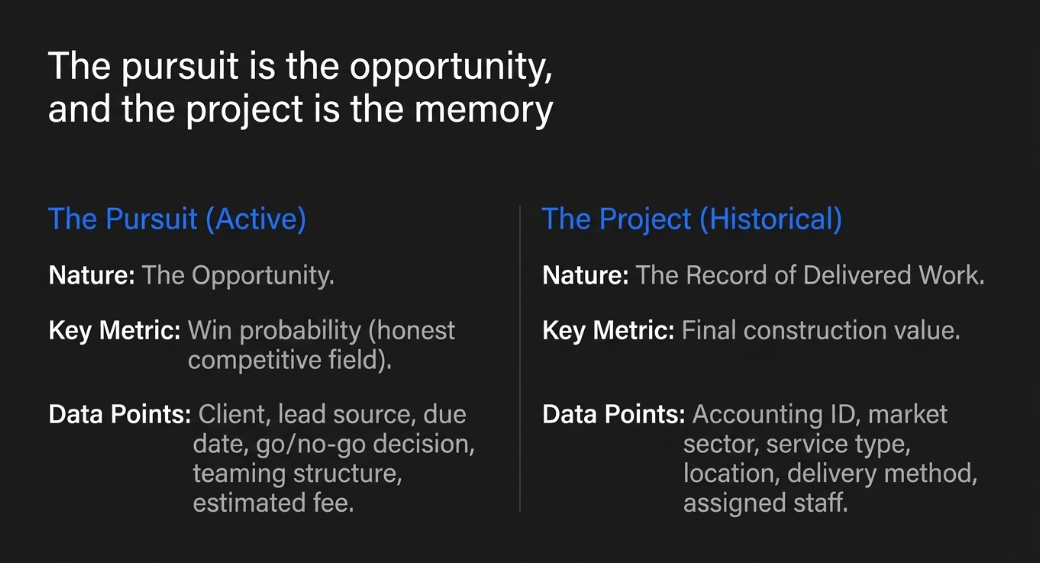
Linking the two is where the value appears. When a pursuit is won, the project record is created with the project number from the accounting system, so there is one source for the identifier. When a new pursuit appears, the team can see every past project for that client and for similar clients in the same sector. Contact roles on the opportunity capture who evaluates, who signs, and who influences. Teaming partners and subconsultants live as related accounts, which makes it easy to ask who has teamed with the firm before and how those pursuits turned out.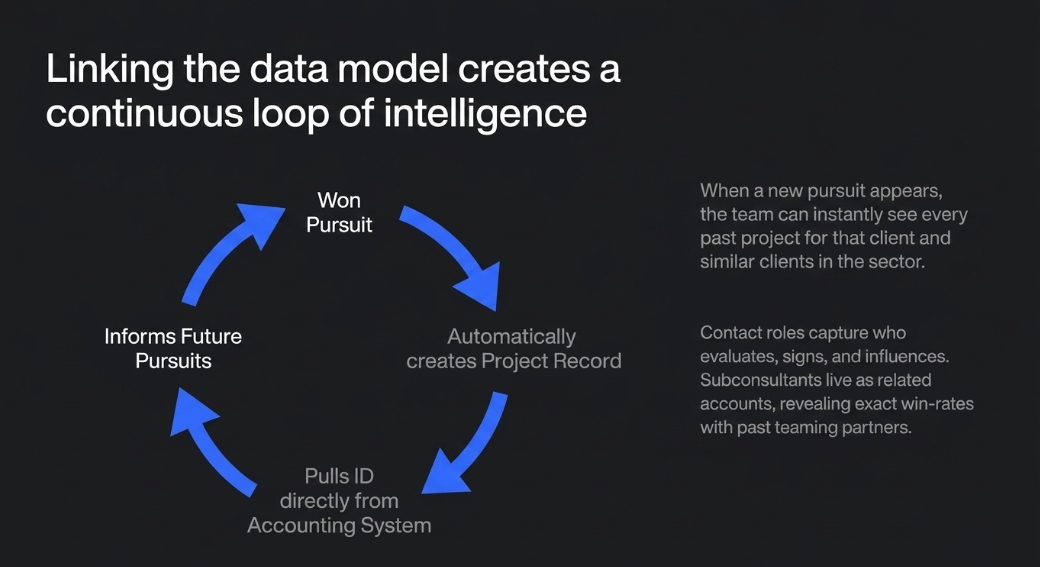
Go or no-go belongs in the system
Few activities save more money in a design firm than a disciplined go or no-go decision. Chasing the wrong pursuit costs weeks of principal and staff time. A short, structured scorecard attached to the opportunity, covering relationship strength, incumbent position, fit with the firm's experience, key personnel availability, and expected fee, turns an argument in a meeting into a record. Over a year, that record becomes the firm's honest win-loss history by client type, sector, and pursuit method, which is the data most firms wish they had and rarely do.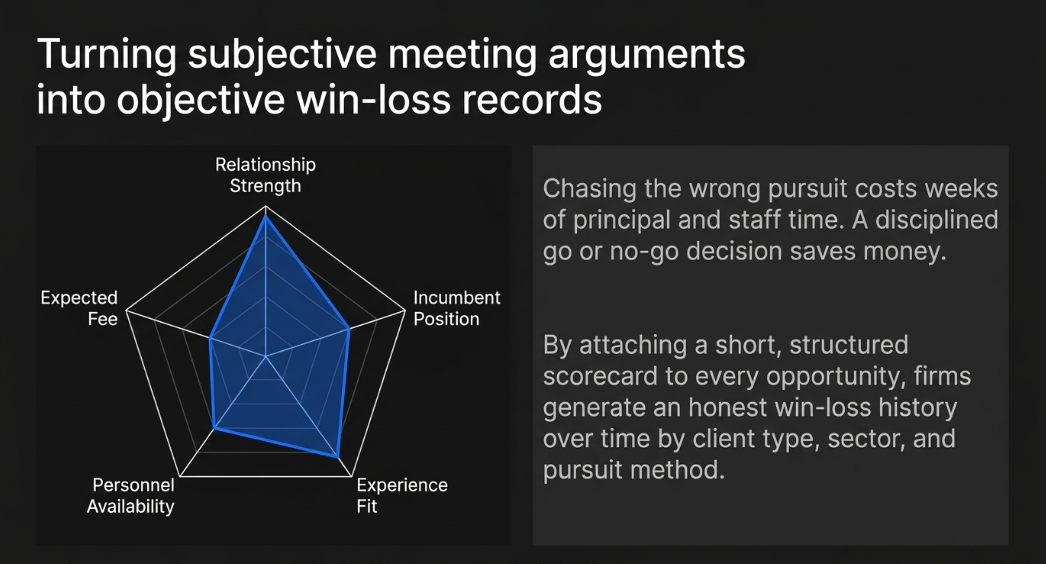
Qualifications-based selection changes the rules
Public work is largely procured through qualifications-based selection, under the federal Brooks Act and state equivalents. That shapes how a CRM should be used. Many solicitations include restrictions on contacting agency staff during the procurement, often called a cone of silence. A CRM that automatically reminds a project manager to check in with a client contact during an active solicitation can create a problem. A useful design flags active solicitations on the account, shows the contact restrictions in plain view, and pauses outreach tasks until the selection is complete. Procurement rules vary by agency and state, so the specifics should come from the firm's counsel and the solicitation documents, not from the CRM vendor.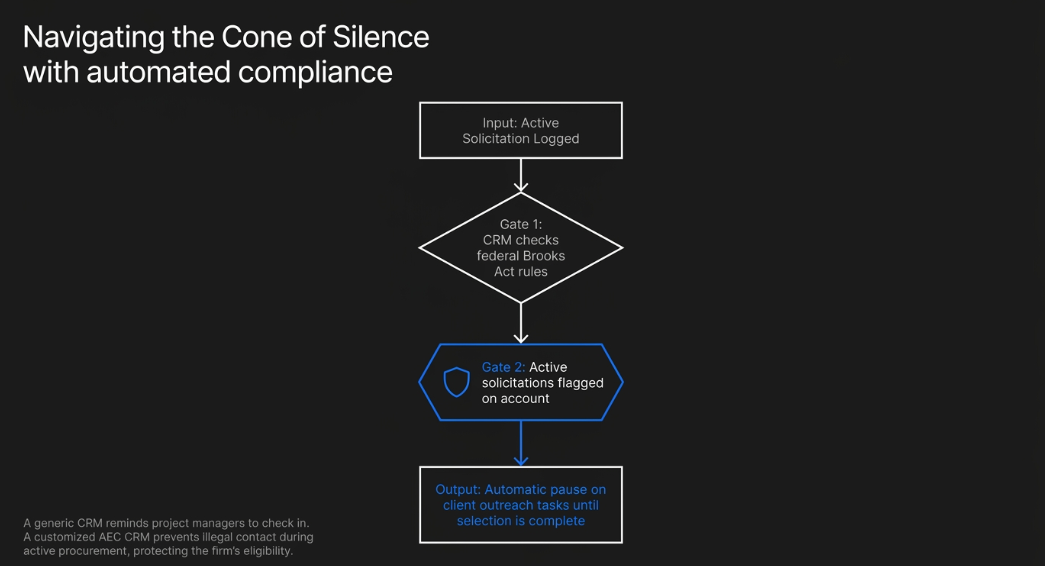
Keeping contacts alive between projects
Public agency staff turns over, and so do private owners. A director who championed the firm leaves, and nobody notices for a year. Because the relationship with the client matters more than any single project, a firm should treat contact data as a living asset. Simple practices help: a quarterly review of key client contacts by the principal who owns the relationship, a task when a contact changes organizations, and a clean split between the firm's marketing list and its personal relationship notes. Those habits do not need an expensive tool, but they do need a CRM where adding a note takes thirty seconds and not five minutes.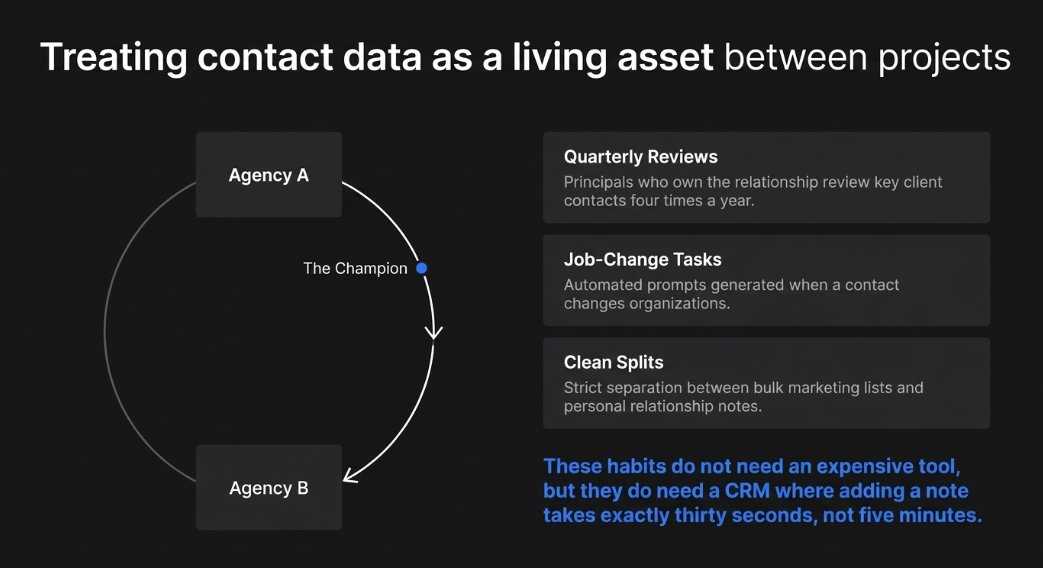
Where AI helps, and where it does not
Once pursuit and project data are clean, Salesforce's AI capabilities and a retrieval layer over the firm's own documents become genuinely useful. A marketing coordinator can ask for the three most relevant past projects for a hospital renovation in a particular county, and receive suggestions drawn from the firm's own project records, with each answer pointing back to its source. First drafts of project descriptions can be pulled from existing material and reviewed by the project manager. Résumés can be matched to a solicitation's required key personnel.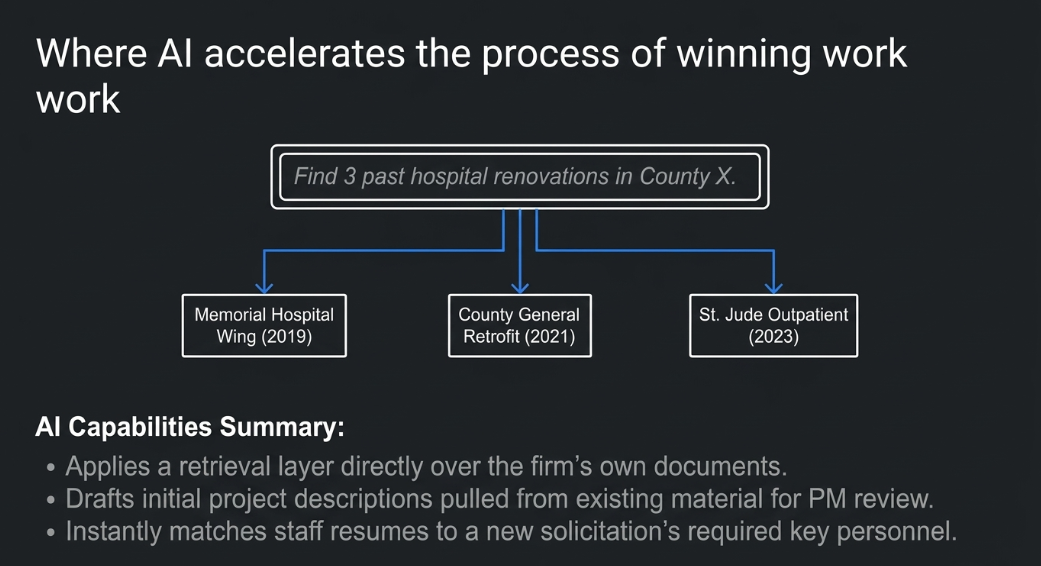
The caution is that AI is only as reliable as the record beneath it. If project descriptions are inconsistent, sector tags are missing, and half the pursuits never reached the system, an AI assistant will confidently repeat those gaps. Cleaning the data first is not glamorous, but it is what makes the later steps trustworthy. Client confidentiality also matters. Some projects, particularly in the private, industrial, and security sectors, cannot be described publicly, and the system should carry a flag so that those records never appear in an external proposal by accident.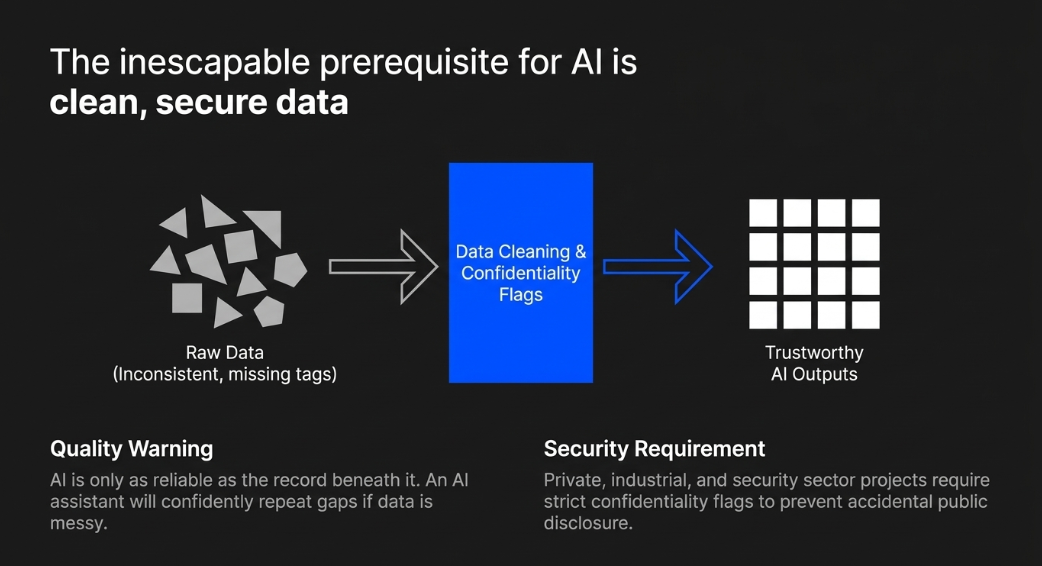
A sensible rollout
Firms that succeed with this start narrow. The first phase usually covers the pursuit pipeline and the go or no-go scorecard, with a handful of principals and the marketing team as users. The second connects the project record to the accounting platform so that project numbers and basic fields sync. The third adds the proposal library, résumés, and AI-assisted search. Principals will use the system only if it saves them time, so the first view they see should be a short list of their own pursuits and their own client relationships, not a sprawling dashboard.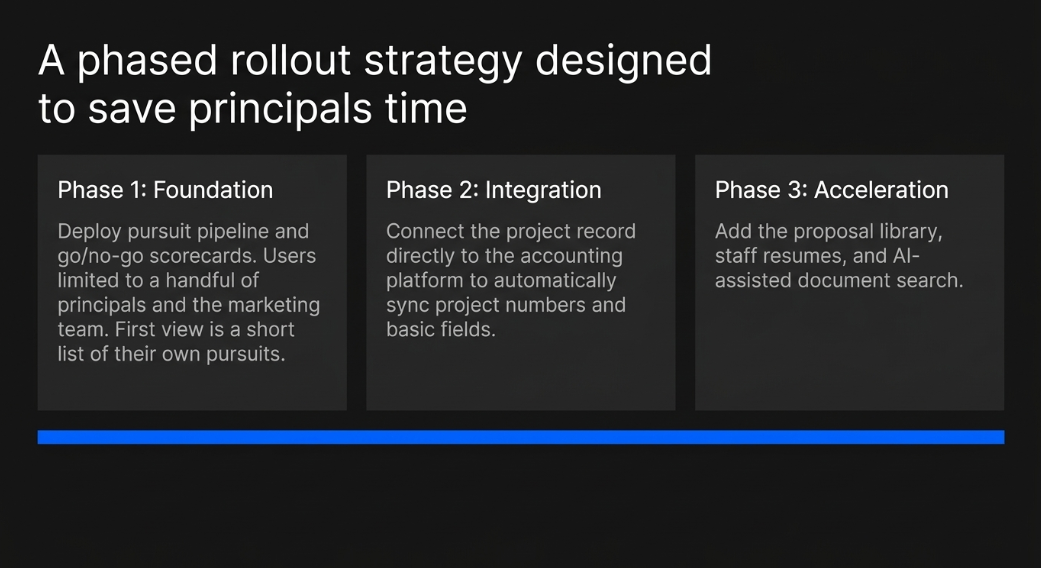
Cetrix Technologies LLC, doing business as CETDIGIT, is an AI solutions builder with more than 300 AI and CRM deployments, a Salesforce Crest Partner and a HubSpot Elite Partner. If your firm's pursuits, past projects, and client relationships live in separate places, we would welcome the chance to talk. Schedule a consultation, and we will map a Salesforce design around your practice areas, your accounting platform, and the way your principals actually win work.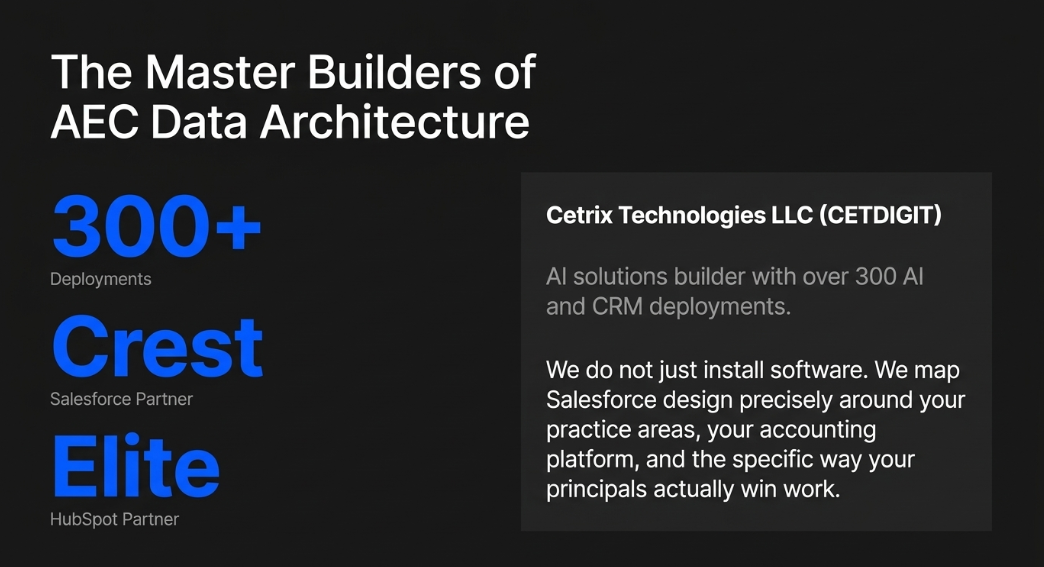
Related Reads
Forty Quotes, Three Loads: How Freight Brokerages Use HubSpot and Salesforce to Learn From Every Rate They Send
The Quote That Went Cold: How AI-Connected CRM Helps Custom Manufacturers Win the RFQs They Already Earned
From Bid to Build: How AI-Powered CRM Automation Stops Construction Firms from Losing the Jobs They Never Followed Up On


Leave a Comment