


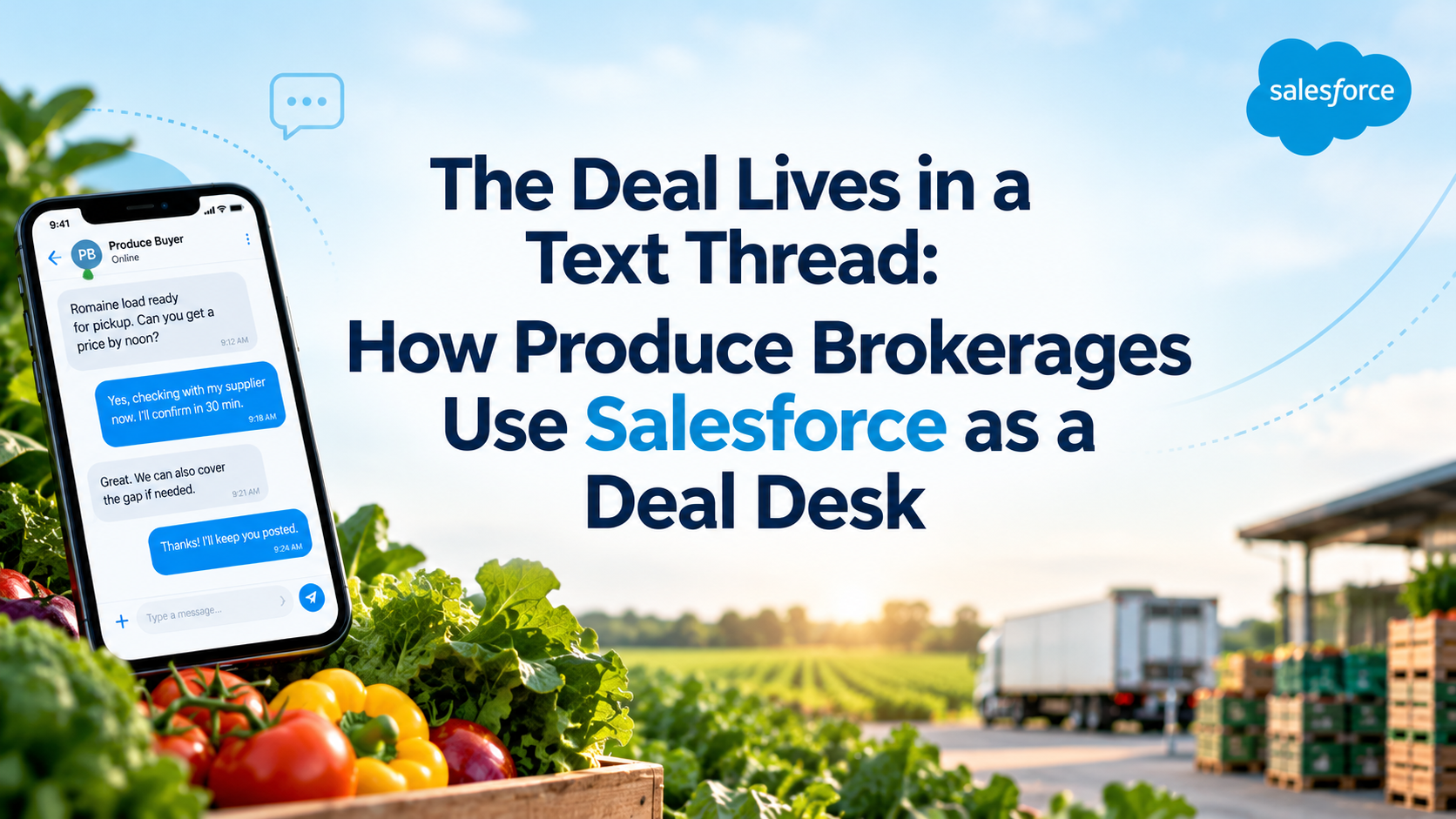
A produce broker does not sell a product so much as manage a clock. A grower has a load of romaine that has to move before the weekend. A buyer wants a price by noon. A second supplier might cover the gap if the first one cannot, and every one of those conversations happens on a phone, usually by text, usually from a personal mobile number, and usually with no record that anyone else in the company can see. When the deal closes, it closes in a thread. When it falls apart, it falls apart there too, and the brokerage is left reconstructing what was promised from a screenshot.
That arrangement works for a while. It stops working the moment the business grows, a broker takes a vacation, or a dispute over price, quality, or timing needs to be settled with evidence instead of recollection.
Why generic CRM does not fit a brokerage
Most CRM templates assume a sales cycle measured in weeks. A lead is qualified, a proposal is sent, a decision is made, and a deal is won or lost. A produce brokerage runs on a very different rhythm. A single deal may be opened, priced, countered, re-sourced, and closed within hours, and the same broker may be running a dozen of them at once, each with a different commodity, quantity, price, loading location, supplier, and buyer.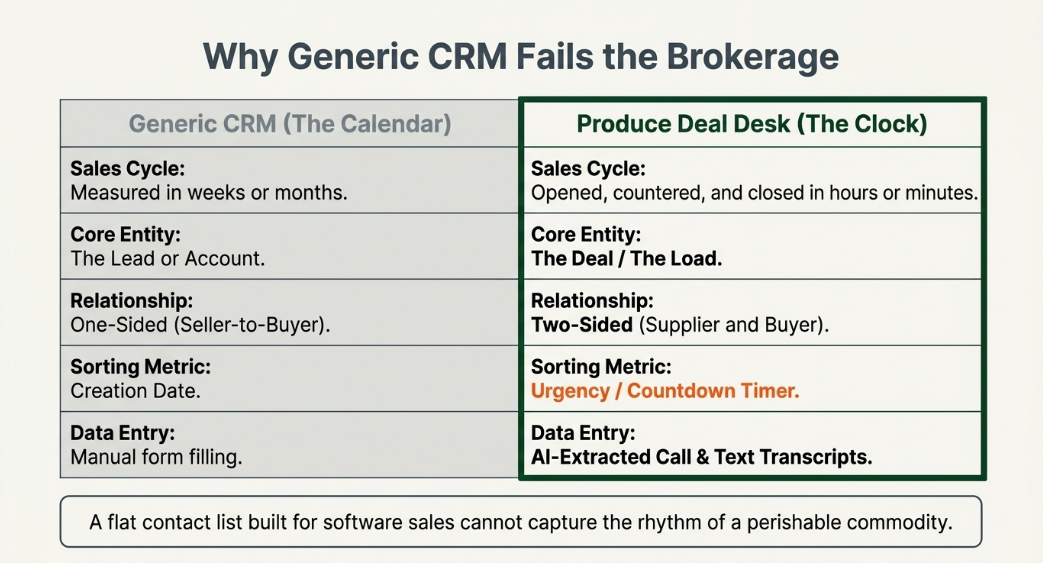
The brokerage also sits between two parties at all times. Every deal has a supplier side and a buyer side, and the broker is the only person who sees both. The CRM therefore has to track the counterparty relationship on each end, the commodity and its specifications, and the status of the deal itself, including the timer that tells a broker which load is about to become a problem. A flat contact list and an opportunity pipeline built for software sales will not capture any of that.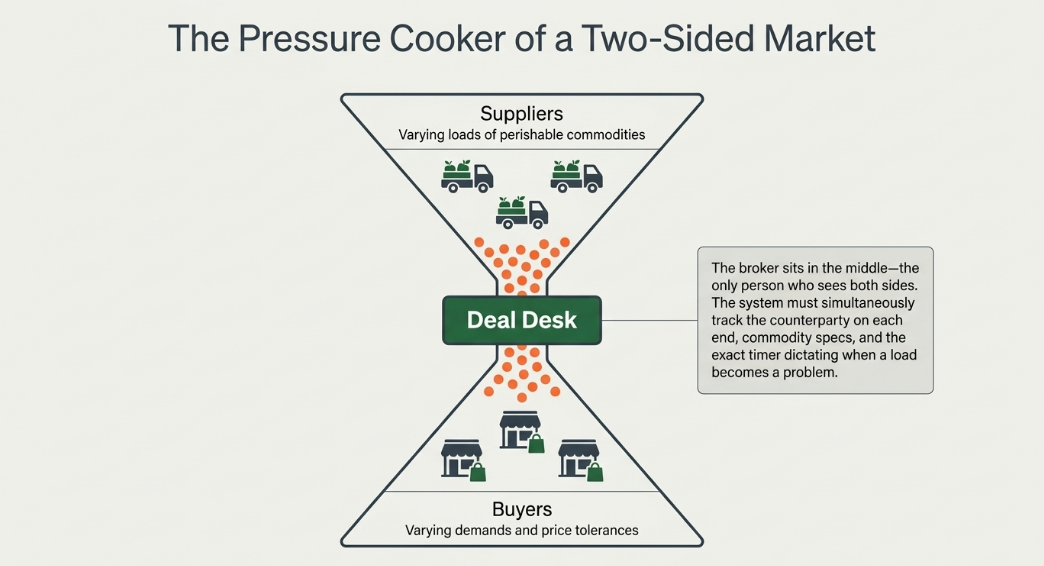
What a deal desk in Salesforce looks like
The pattern we see working is a deal desk built on Salesforce, where the deal itself is the central record. Each deal carries the stage, the countdown timer, the counterparty on each side, the commodity, quantity, price, and the loading and receiving locations. Brokers see their open deals sorted by urgency instead of by creation date. Quick edits update the record under the same validation rules everyone else follows, so the numbers brokers see are the numbers finance and operations see.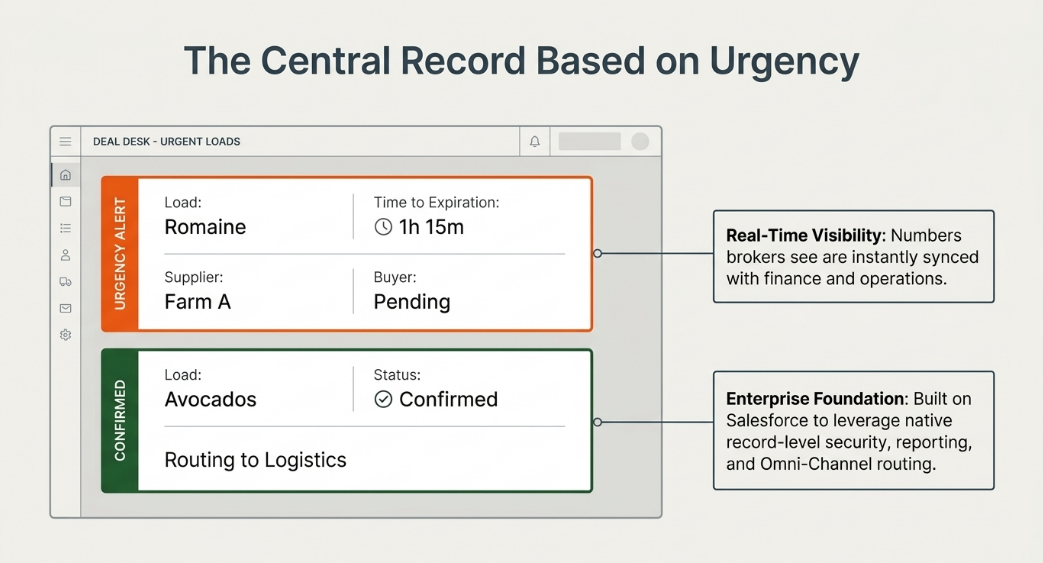
Salesforce is well suited to this because the platform already handles the pieces that are expensive to build from scratch: record-level security, automation, reporting, and Omni-Channel for routing and tracking conversations. Flows can prepare the message that belongs to each stage, whether that is an inquiry, a working quote, or a supplier purchase order, so a broker reviews and sends instead of retyping the same text forty times a day. Campaign logic can offer a load to three suppliers, wait, and then offer it to two more, with replies tracked on each thread.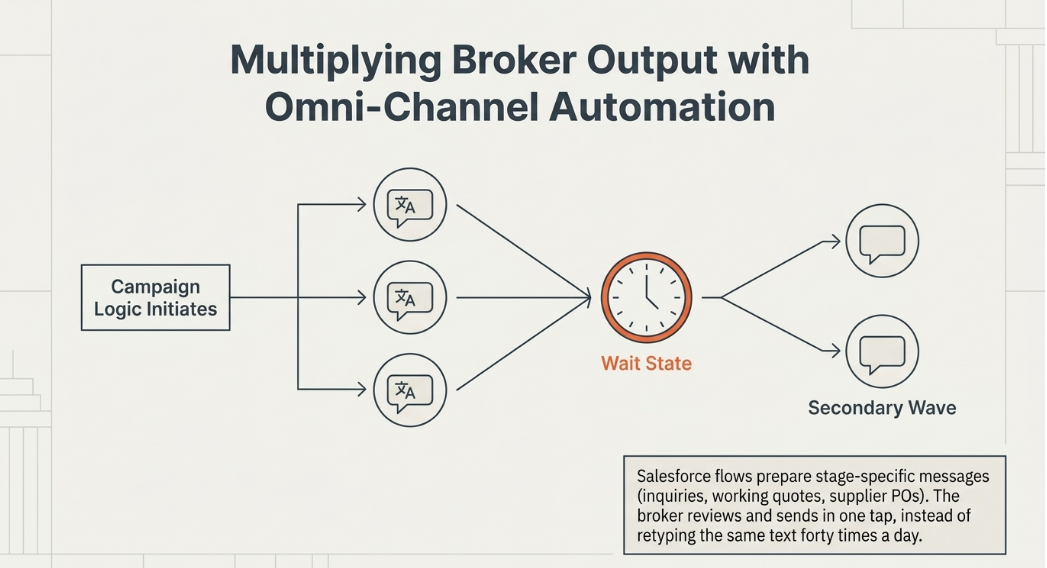
Putting the phone inside the system of record
The hardest part of the problem is not the data model. It is the phone. Brokers will not abandon calls and texts, because that is how the trade actually works. The practical answer is to bring the conversation into the system instead of asking brokers to leave it. Calls and texts run through a business number connected to a telephony platform such as Twilio, and every message, call, and call transcript is written back to the deal in Salesforce. Personal mobile numbers stay out of supplier and buyer threads, which matters the day a broker leaves and takes a book of relationships along.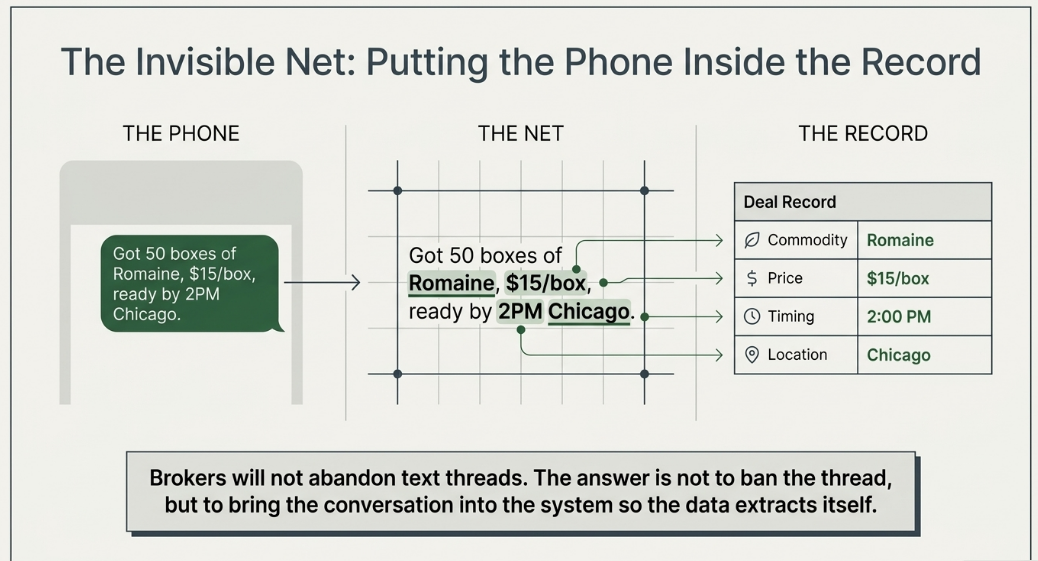
Increasingly, the call transcript becomes a data source rather than only an archive. Once a call is transcribed, details like counterparty, commodity, quantity, price, location, and timing can be extracted and proposed as updates to the deal record, with the broker confirming them in a tap. Nothing has to be re-entered, and the record stays current without anyone having to remember to update it.
Because brokers spend their day away from a desk, at a dock, in a field, or in a car, the interface matters as much as the data. A mobile experience that looks and behaves like the messaging app brokers already use, with the deal card sitting beside the conversation, is far more likely to be adopted than a desktop CRM they are asked to open later. Heavier work, such as full deal detail, supplier onboarding, and reporting, can stay on the desktop where a larger screen makes it faster.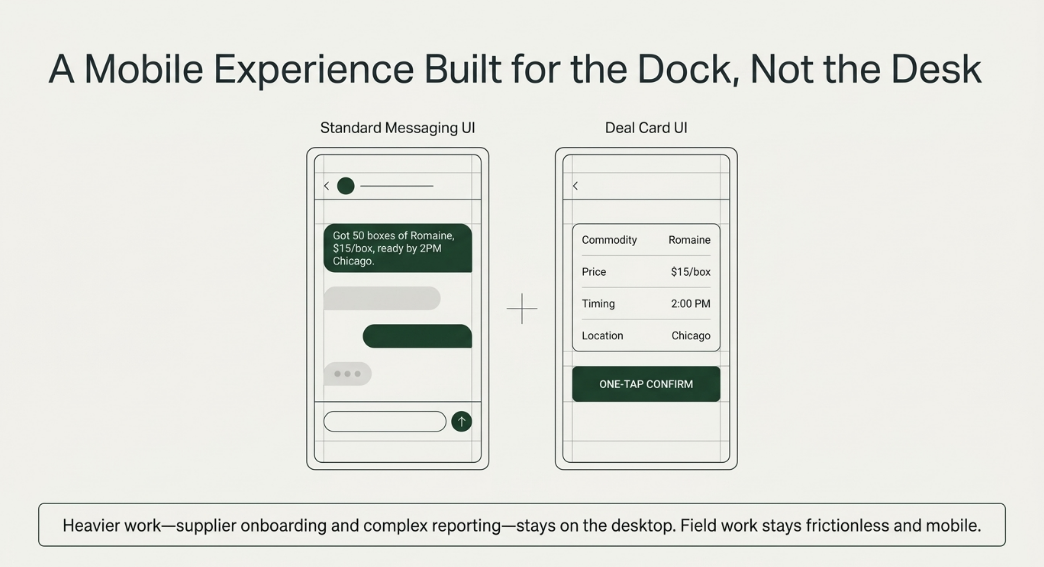
The compliance and risk questions behind the workflow
Perishable commodity brokers operate under rules that most CRM projects never encounter. The Perishable Agricultural Commodities Act sets licensing and payment requirements for those who trade in produce, and its protections depend on accurate records of who bought what, from whom, and on what terms. A complete, time-stamped history of every quote, counter, and confirmation is not only convenient. It is the evidence a brokerage wants if a payment dispute ever reaches a formal process.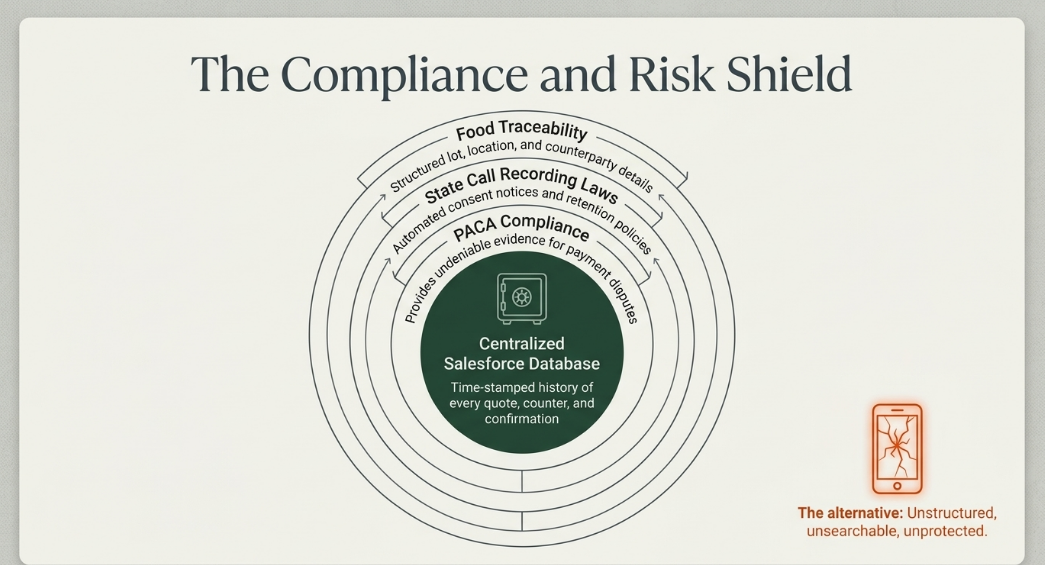
Call recording adds its own requirement. Several states require every party to consent before a call is recorded, so a brokerage that records or transcribes calls needs a clear notice policy and a way to prove it was followed. Retention matters too: audio is expensive to store and rarely needed after a short window, while transcripts and deal data are worth keeping. Food traceability expectations are also tightening across the supply chain, which gives brokerages another reason to keep lot, location, and counterparty details in a structured system rather than in scattered messages.
Integration is the real project
Brokerages rarely have a clean technology landscape. Accounting often lives in QuickBooks or an industry-specific ERP, market pricing comes from public reports and paid services, and commission calculations sit in a spreadsheet that one person understands. A deal desk delivers its full value only when it connects to those systems, or at least decides clearly which of them are out of scope for the first release. The most successful projects we see define a narrow first phase, such as getting every conversation and every deal into one place, and then expand into commissions, credit data, and accounting once brokers trust the foundation.
That sequencing also protects adoption. Brokers are paid to trade, not to maintain a database. If the tool is slower than a text message, they will go back to the text message.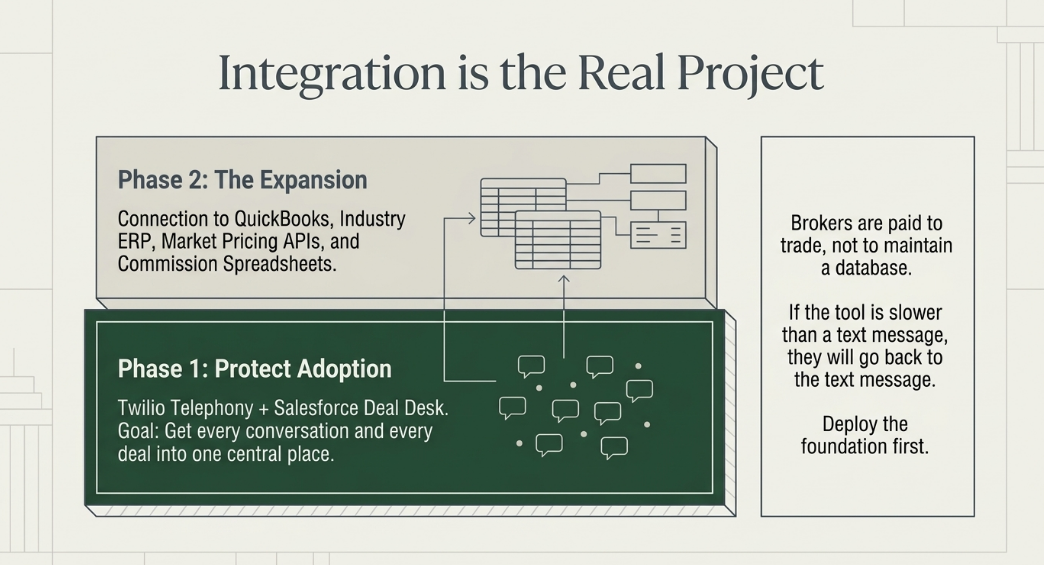
Talk With CETDIGIT
CETDIGIT has delivered more than 300 AI and CRM deployments and is a Salesforce Crest Partner and HubSpot Elite Partner. If your brokerage or wholesale distribution business is running deals out of text threads and spreadsheets, we can help you design a Salesforce deal desk that fits how your brokers actually work, from the data model and mobile experience to telephony and integrations. Schedule a consultation with our team at cetdigit.com and we will walk through your workflow and the right first phase.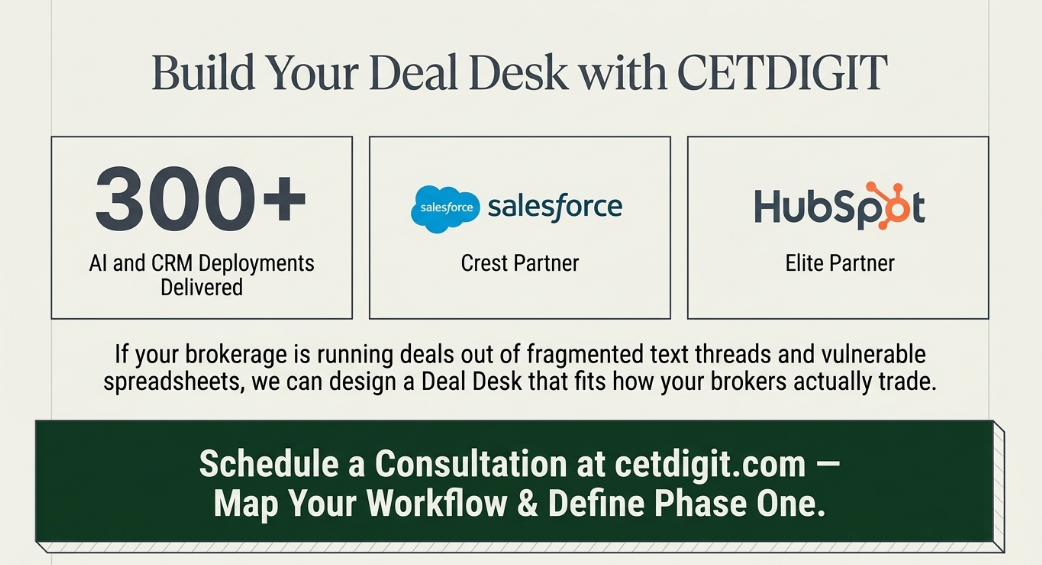
Related Reads
The Quote That Went Cold: How AI-Connected CRM Helps Custom Manufacturers Win the RFQs They Already Earned
Four Systems, One Client: Why Economic Development Agencies Are Retiring the Spreadsheet Stack
Your CRM Already Knows the Answer: How AI Integration Turns Salesforce into an Intelligent Operating System

Leave a Comment