


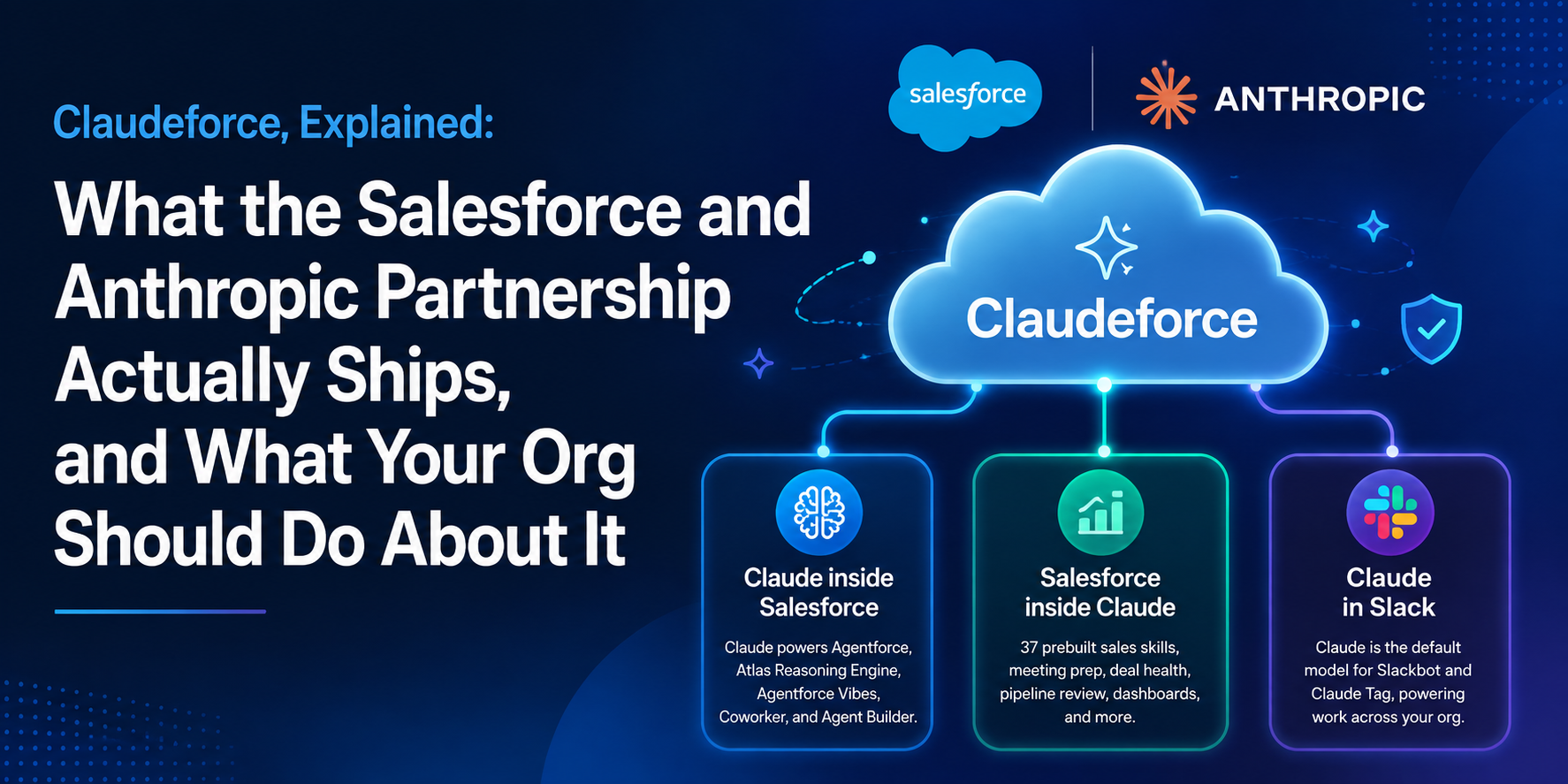
On August 26, Salesforce and Anthropic announced Claudeforce under a banner built for a keynote slide: the number one AI meets the number one AI CRM. If you run a Salesforce org, you have probably already fielded the question from your CEO or your board: what does this mean for us, and when? The honest answer is that Claudeforce is neither a single product nor a distant promise. It is three concrete workstreams shipping on three different timelines, and the useful executive briefing separates what is available now, what is in beta, and what your team should be doing before any of it touches production.
Workstream one: Claude inside Salesforce
The first piece is the least visible and the most consequential. Claude now serves as a reasoning model across Agentforce, the Atlas Reasoning Engine that plans and executes agent actions, Agentforce Vibes, Agentforce Coworker, and Agent Builder. Claude has been available as a foundation model in Agentforce since late 2025; Claudeforce formalizes and deepens it across those surfaces.
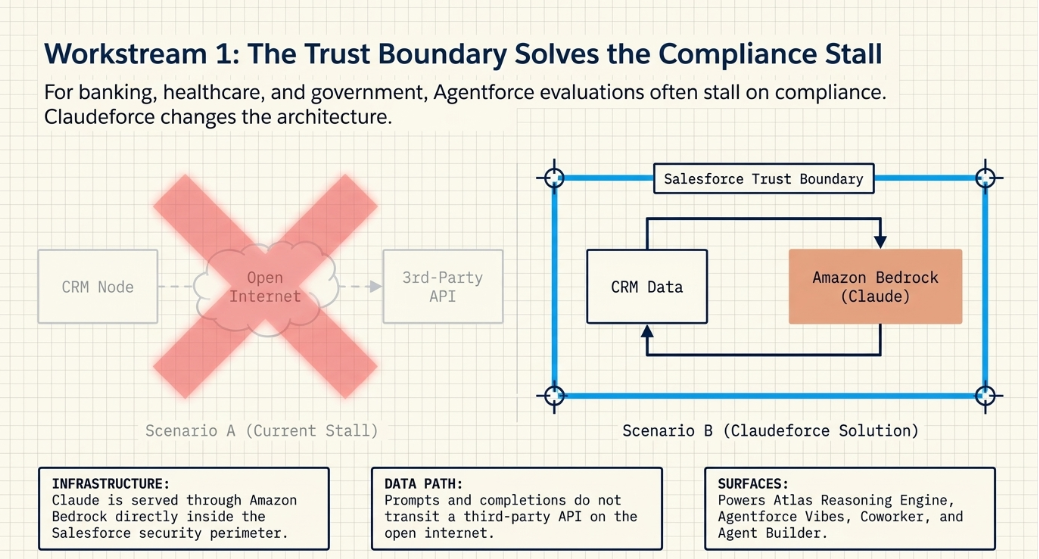
The architecture detail that matters for regulated businesses: Claude is served through Amazon Bedrock inside the Salesforce Trust Boundary. Prompts and completions stay within Salesforce's security perimeter rather than transiting a third-party API on the open internet. If your compliance team has been the reason your Agentforce evaluation stalled, banking, insurance, healthcare, government — this is the line item that changes the conversation. The model your agents reason with can now sit inside the same boundary as the CRM data it reasons about. These Agentforce surfaces are available today.
Workstream two: Salesforce inside Claude
The second piece inverts the relationship. Instead of AI living inside your CRM, your CRM becomes available inside Claude, through a plugin carrying 37 prebuilt sales skills, meeting prep, deal health review, pipeline review, and the rest of the daily motions of a selling team. A rep can ask Claude to prepare them for the 2 p.m. call and get an answer assembled from live CRM records, or generate a working HTML dashboard from Salesforce data in the conversation.
Two design decisions deserve attention from admins. First, authentication is org-level: one administrator configures the connection and its permissions once, rather than every user wiring up their own integration, which is the difference between a governed rollout and shadow IT. Second, the plugin encodes guidance as skills rather than exposing raw API operations, so the model works through vetted task patterns instead of improvising against your object model. Under the hood sits a hosted MCP server whose tools include a read-only dispatch mode, and every request executes as the authenticated user, respecting the permissions that user already has. The plugin has been running with select pilot customers, with open beta expected this month, September 2026, and it requires API version 67.0 or later.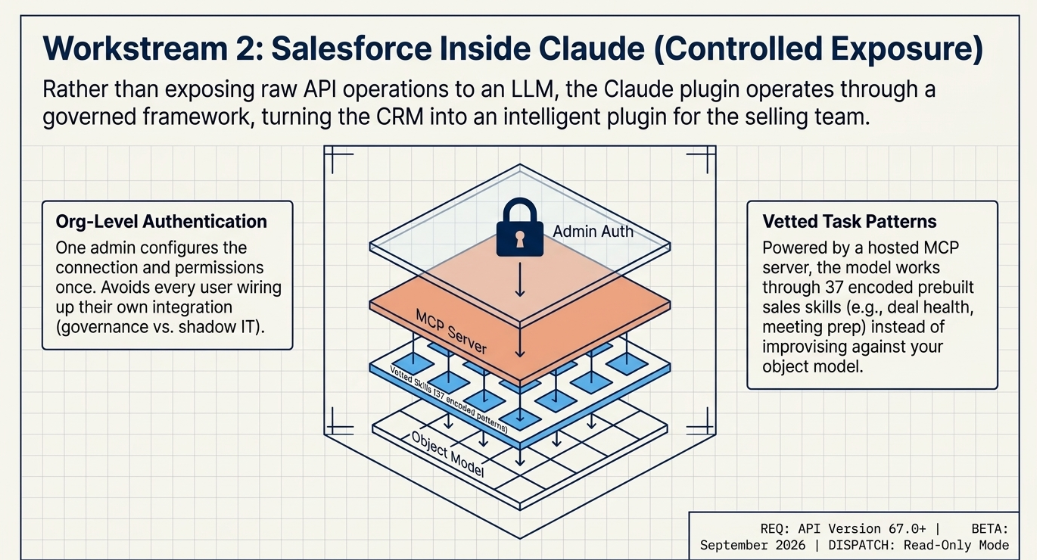
Workstream three: Claude in Slack
The third piece is the one most of your company will touch without ever thinking about it: Claude becomes the default model behind Slackbot and Claude Tag. Salesforce reports that 83 percent of its own workforce uses the Claude-powered Slackbot, with claimed annualized productivity gains in the millions of hours. Treat vendor numbers with the usual salt, but the direction is clear: the assistant in your team's daily chat tool is becoming the same model family that powers your CRM agents, which makes cross-system workflows dramatically more coherent.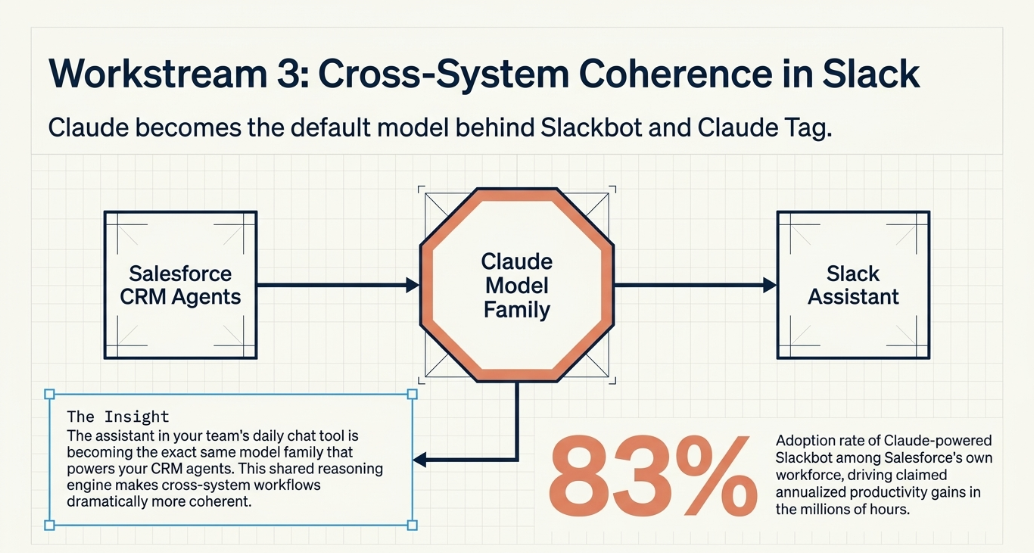
What this means operationally, not theoretically
Here is the part the press releases do not cover. Claudeforce arrives at the same time as the Winter '27 release cycle; production upgrade waves run September 4, October 2, and October 9, which means orgs enabling the open beta are layering a new AI surface onto an org that is itself mid-upgrade. Sequencing matters: know which behavior changes come from the release and which come from the agents you just turned on.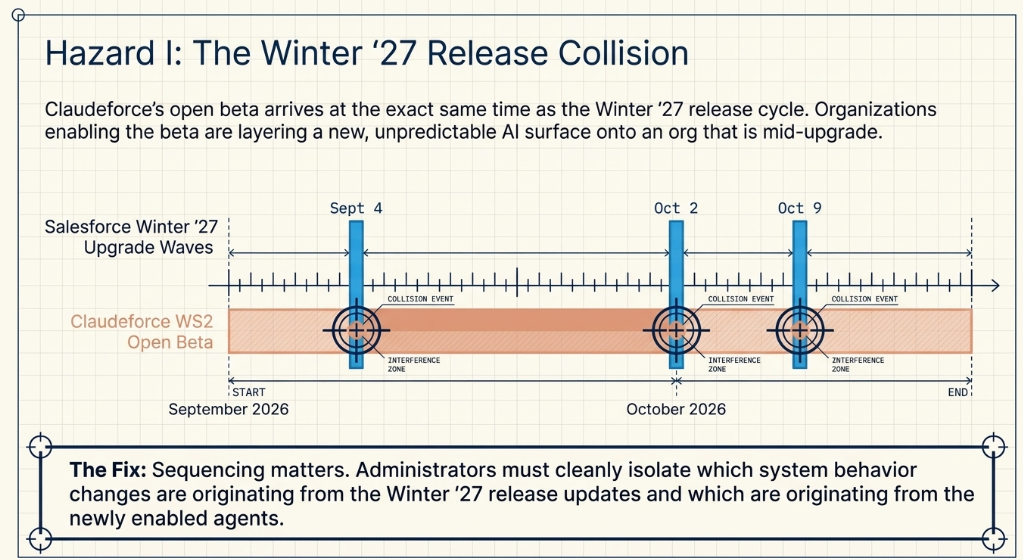
More fundamentally, an agent is only as trustworthy as the org you point it at. Every request through the plugin runs as the requesting user, so the years of accumulated permission sprawl in your org- over-provisioned profiles, forgotten permission sets, fields nobody remembers exposing- become exactly what the AI can see and touch. The unglamorous preparation is the high-leverage work: audit permissions before enabling access, start pilots with read-only dispatch and a tightly scoped permission set, and decide in advance what a written record from an agent should trigger in your existing Flows, validation rules, and Apex. Pricing is consumption-based through the model provider, so a disciplined pilot also instruments token usage from day one, giving you a real cost-per-workflow number instead of a surprise invoice.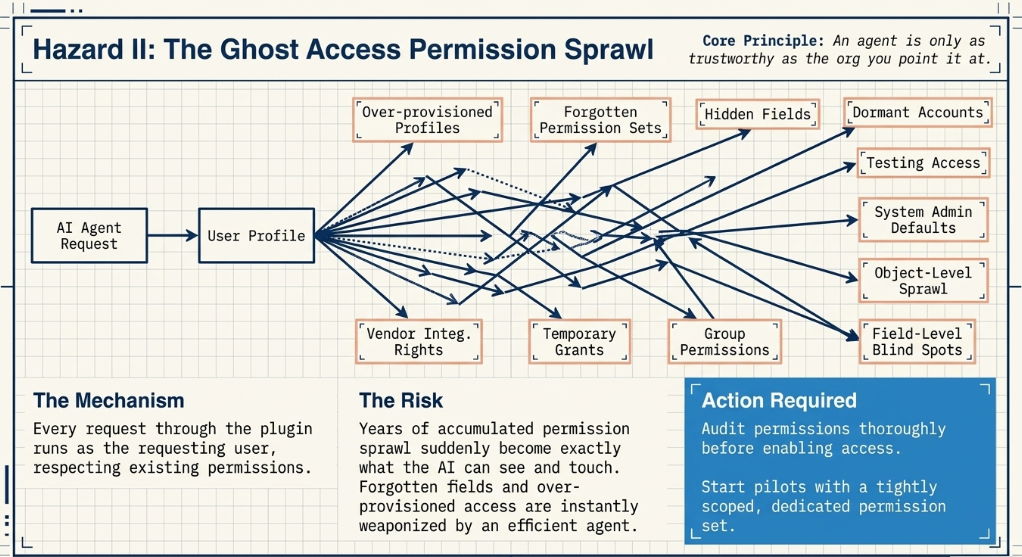
And the data-quality rule has not changed; it has compounded: an agent reasoning over stale pipeline data and duplicate contacts will produce confident, well-written nonsense faster than any human ever could. If your org needed hygiene work before Claudeforce, it needs it more now.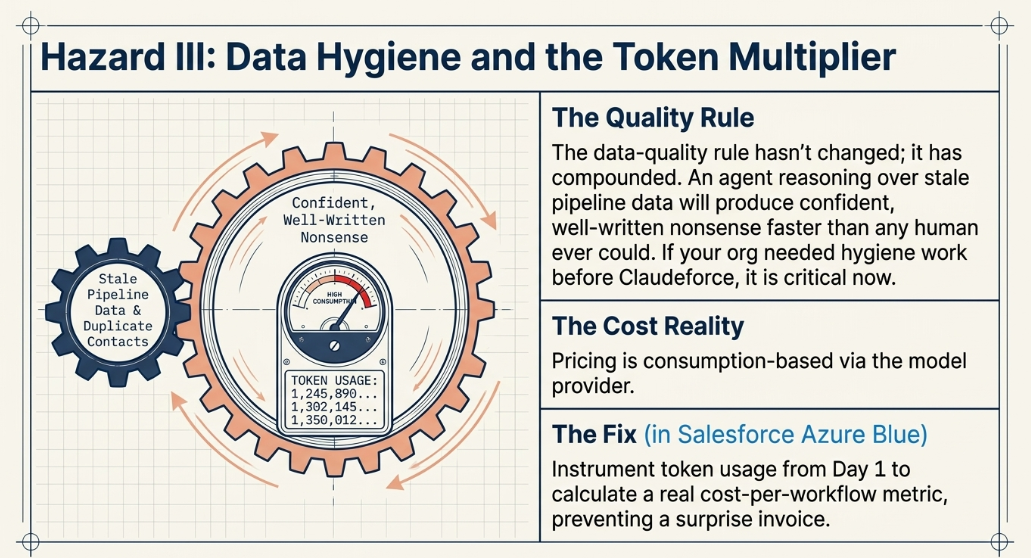
The realistic ninety days
For most organizations, the sensible sequence is unheroic. Confirm your API version and upgrade path against the Winter '27 waves. Run the permissions audit. Pick one team, usually sales, since the prebuilt skills are sales-shaped, and one measurable workflow, such as meeting prep time or pipeline review cadence. Enable the beta for that team behind a scoped permission set, instrument usage and cost, and hold a scale-or-stop review at the end. That is how Claudeforce becomes an operating advantage instead of another enabled-but-unused checkbox in Setup.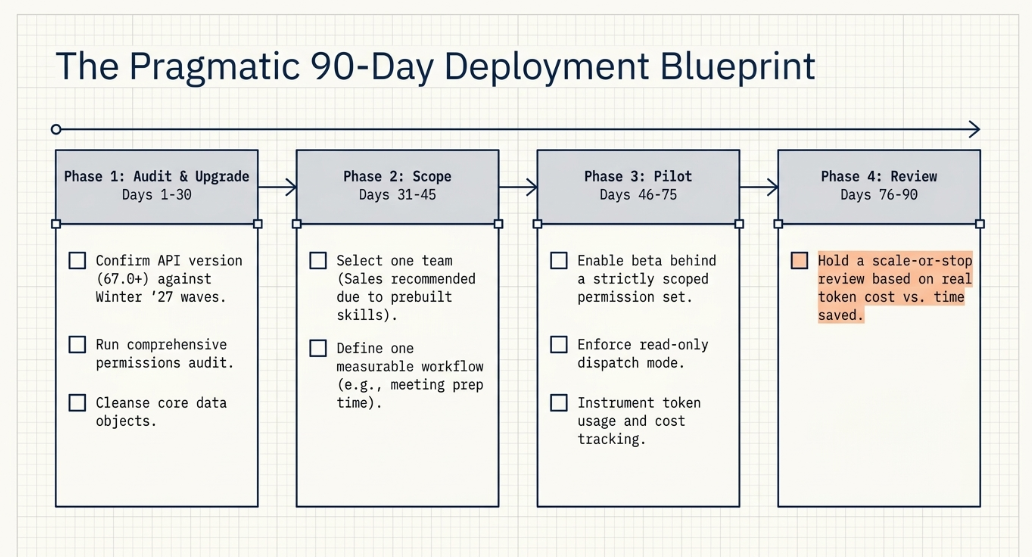
Talk to CETDIGIT
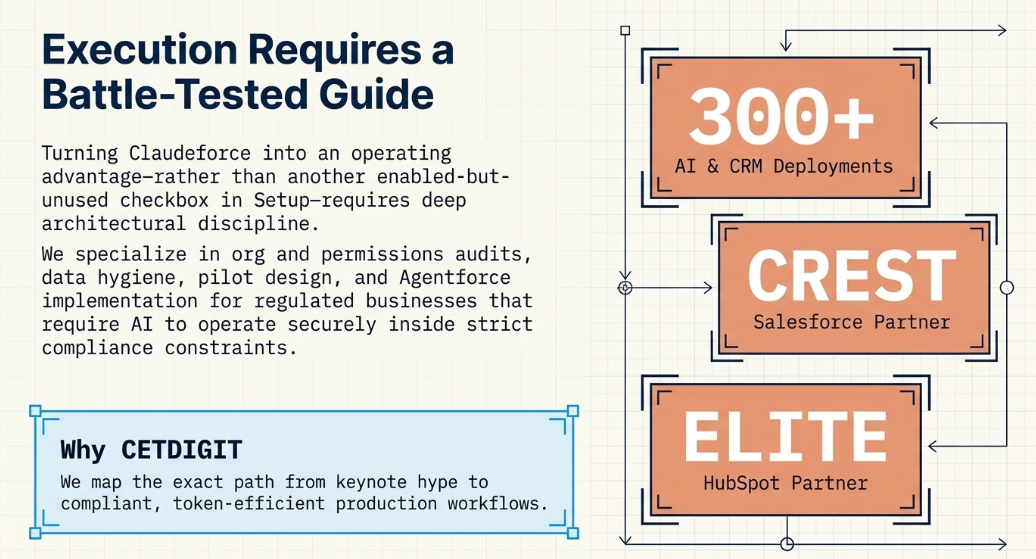
CETDIGIT (Cetrix Technologies LLC) is a Salesforce Crest Partner and HubSpot Elite Partner with more than 300 AI and CRM deployments behind us, and Claudeforce readiness is precisely the kind of work we do: org and permissions audits, data hygiene, pilot design, and Agentforce implementation for businesses that need AI to work inside real compliance constraints. If you want to know what Claudeforce means for your specific org, and what to fix before you flip it on, schedule a consultation with our team, and we will map your ninety-day path.
Related Reads
Your CRM Already Knows the Answer: How AI Integration Turns Salesforce into an Intelligent Operating System
Where to Start With AI: A Practical Guide for Business Leaders Who Know They Are Behind
The Core Knows the Balance, Not the Relationship: How Banks and Credit Unions Use Salesforce and AI to See the Whole Client
Leave a Comment