


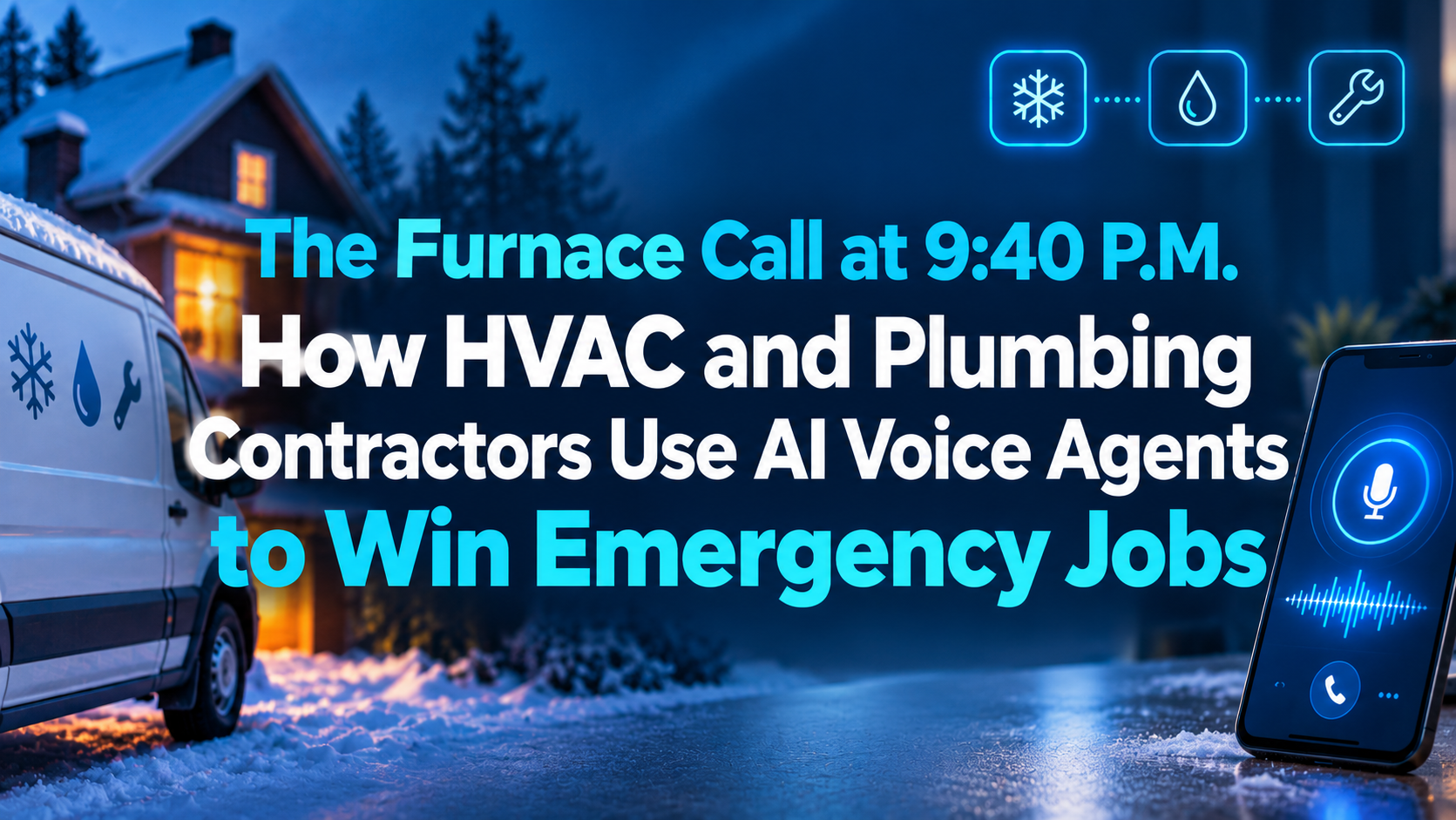
It is the first hard freeze of the season, and the phone at a mid-sized heating and plumbing company starts ringing at 6:15 in the evening. By 9:40, the dispatcher has gone home, the on-call technician is under a house two towns away with his phone in his pocket, and a homeowner with a dead furnace and two small children is listening to a voicemail greeting. She does not leave a message. She opens a browser, searches for the next contractor with a five-star rating, and calls them instead. The first company never learns the call existed. It simply notices, weeks later, that cold snaps do not produce the revenue they should.
Anyone who runs a home service business knows this pattern. Demand for heating, cooling, plumbing, and electrical work does not arrive evenly. It arrives in surges tied to weather, and the callers in those surges are the least patient customers in any industry. They have a failure in their house right now. Whoever answers first, and answers competently, usually gets the job.
The Real Shape of the Problem
Most contractors assume their missed-call problem is a staffing problem, and for years the only answer was to hire another dispatcher or pay for an answering service. Both help, but neither fits the way the work actually flows. A customer service representative at a busy shop is simultaneously booking a tune-up, rescheduling a water heater install, confirming a technician's arrival window, and fielding a vendor. When a second line lights up during a surge, it rolls to voicemail. After hours, a traditional answering service can take a message but rarely knows enough about the business to decide whether a caller has a true emergency or a dripping faucet that can wait until Thursday.
The cost is rarely recorded anywhere. A missed call is not a lost lead in the field service software, because it never became a lead. Owners who look at their booking numbers see a healthy pipeline and do not see the calls that never made it in. The ones who do track it, by comparing call logs from their phone system against jobs created in ServiceTitan, Housecall Pro, or Jobber, tend to be surprised by the gap between the two.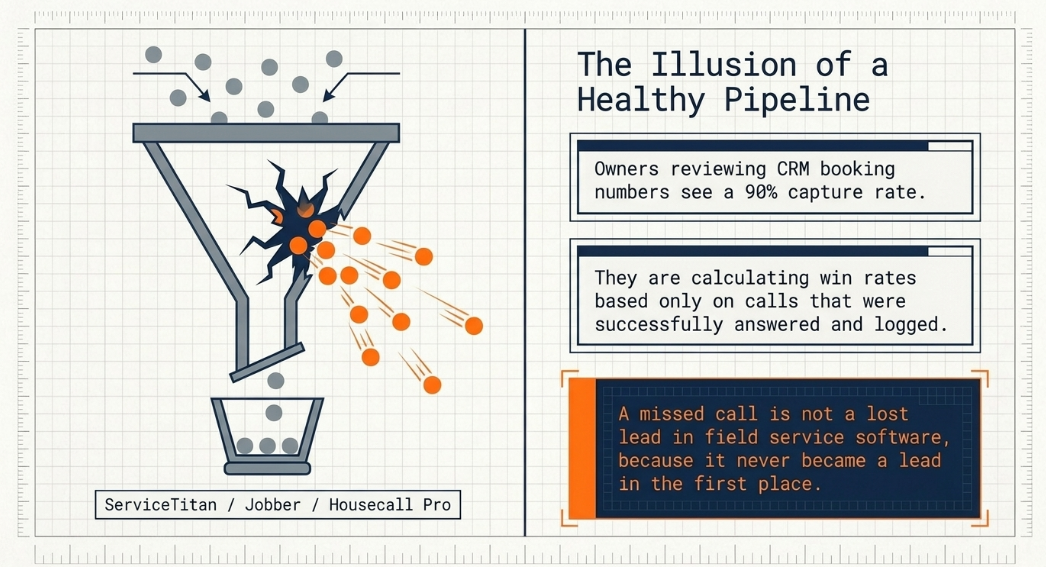
What an AI Voice Agent Changes in Daily Operations
A well-built voice agent does not replace the dispatcher. It covers the moments when the dispatcher is not available, and it does so with the shop's own rules rather than generic scripts. In practice, that means several concrete jobs.
The first is emergency triage. The agent asks the questions a good dispatcher would ask: is there water actively flowing, is there a gas smell, is the home without heat when temperatures are below freezing, is anyone in the home elderly or medically vulnerable. Answers that match the company's emergency criteria route straight to the on-call technician by call and text, with a summary already written. Gas smells can be handled according to the company's safety protocol, which typically means instructing the caller to leave the building and contact the gas utility or emergency services. Answers that do not match are booked into the next available standard appointment instead of waking a technician at midnight.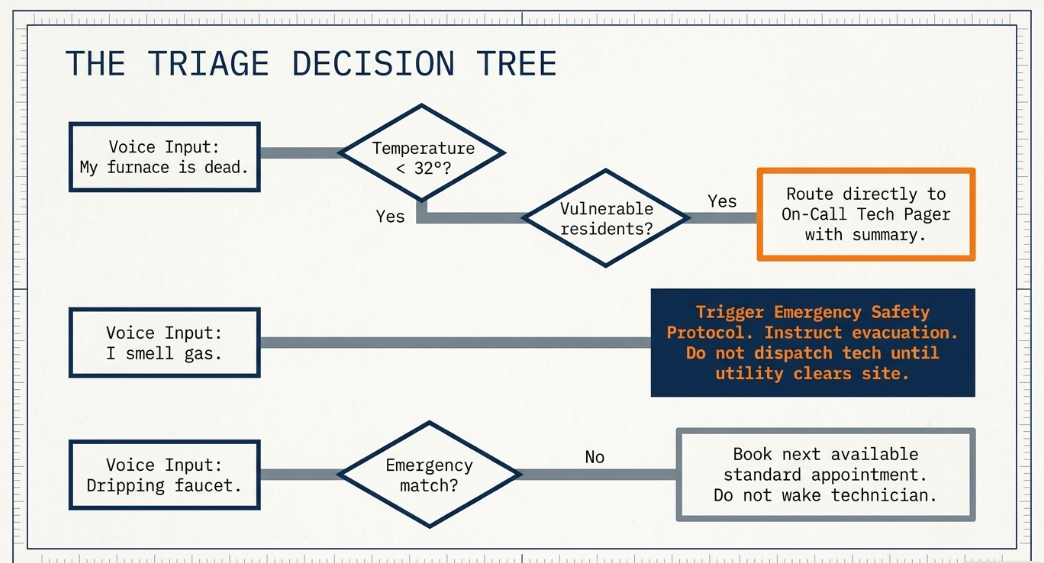
The second is booking directly into the system the office already uses. A voice agent that only takes messages simply moves the problem to the morning. One that creates the customer record, captures the service address, equipment type, and symptom, checks the technician calendar and service zone, and writes a job into the field service platform gives the dispatcher a finished work order on arrival. The workflow depends on clean integration, which is why a contractor's CRM and scheduling setup matters as much as the voice technology itself.
The third is the recurring revenue most shops underuse. Maintenance agreements, seasonal tune-ups, and filter programs generate predictable income, but renewal calls and reminders depend on someone having the time to make them. An agent can place outbound calls to members whose agreements are expiring, offer the next available tune-up slot, and book it on the call, with the results logged against the customer record.
The fourth is language. Many service areas include households where the person who calls the plumber is more comfortable in Spanish, Vietnamese, Tagalog, or another language. An agent who can hold the conversation in the caller's language and write the work order in English for the technician removes a barrier that a small office cannot staff around.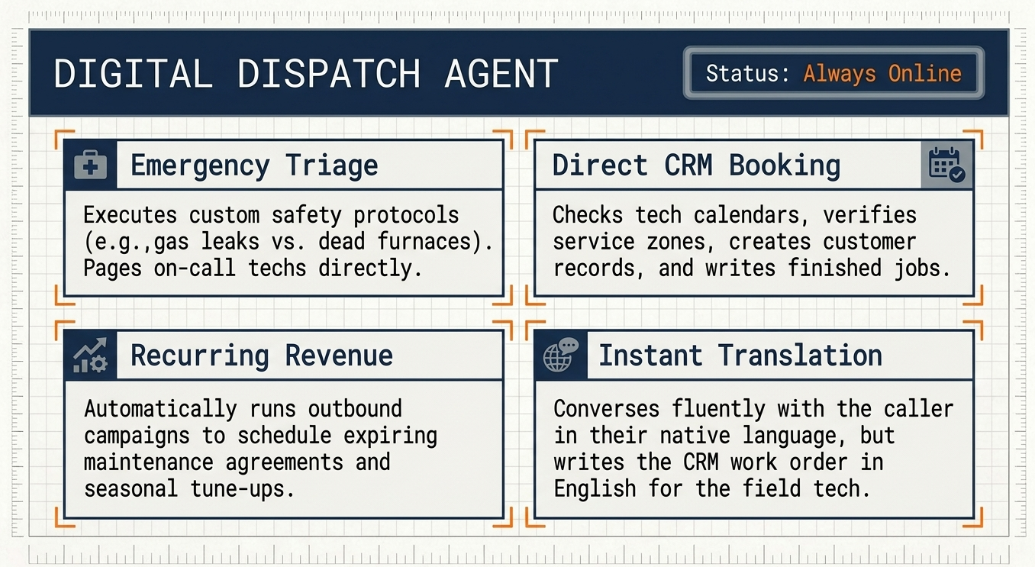
The Compliance Details Contractors Should Not Skip
Home service companies do not usually think of themselves as operating in a regulated environment, but outbound calling and recording touch several rules. The Telephone Consumer Protection Act governs automated and prerecorded calls and texts, so reminder and renewal campaigns need documented consent and clean opt-out handling. Call recording is subject to state law, and a number of states require all parties to consent, which means the agent should announce recording at the start of the call and the system should store that disclosure. Payment details spoken over the phone raise card data concerns, so the better practice is to send a secure payment link by text rather than collecting card numbers in the conversation. These are solvable design points, but they are far easier to build in at the start than to retrofit after a complaint.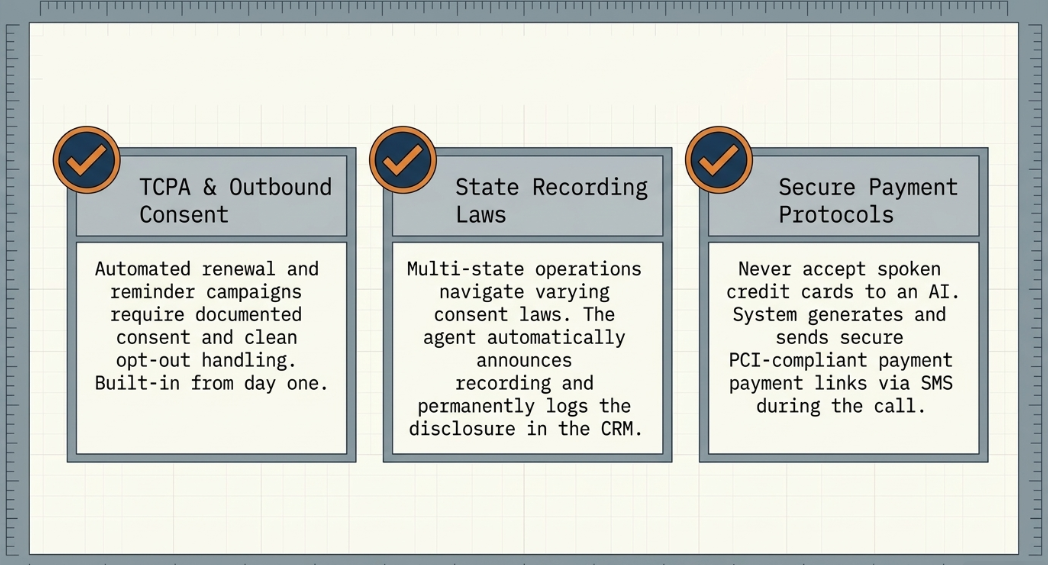
Where the Agent Meets the CRM
The most common reason voice projects disappoint is that the call is handled well and the data goes nowhere. Every call should end with something durable: a contact record matched or created, an address tied to the property, equipment details attached to the right asset, a job or estimate request opened, and a transcript and recording linked for training and dispute resolution. For contractors who sell larger replacements, such as a full system change-out, the same record should feed the sales pipeline in whichever CRM the company uses, so that the follow-up on a quote is tracked rather than remembered.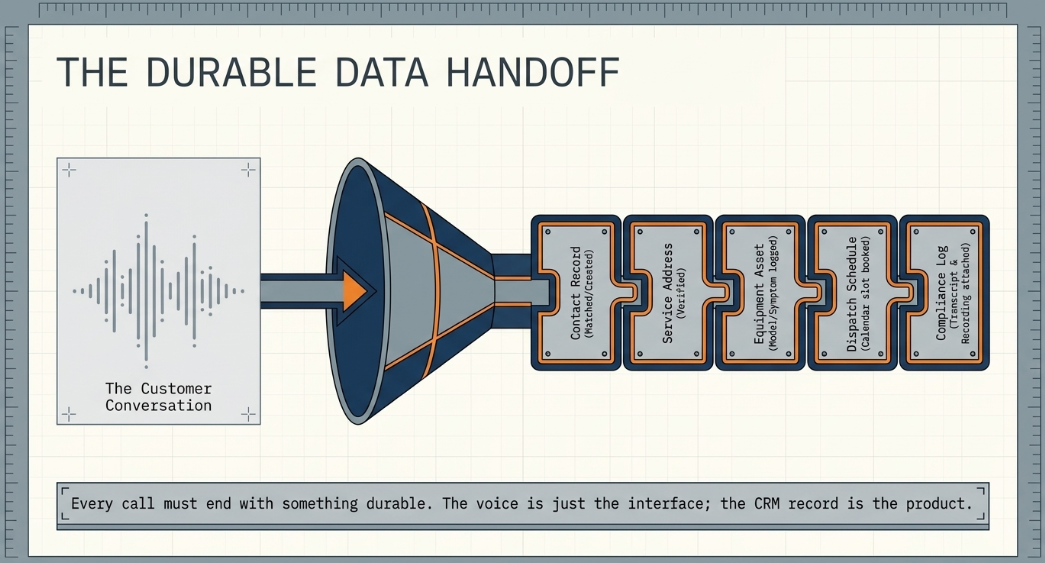
This is the work CETDIGIT does every week. With more than 300 AI and CRM deployments behind us, as a Salesforce Crest Partner and a HubSpot Elite Partner, we spend most of our time on the unglamorous part: field mapping, deduplication, routing rules, and the handoff between the phone system and the platform where the office actually works. The voice layer is the visible piece. The integration is what determines whether the owner can trust the numbers.
For contractors who want to see what a purpose-built voice and chat platform looks like in a regulated, high-volume setting, CETRAI is a useful reference. It is CETDIGIT's multi-model platform, with source-cited answers, audit logging, and consent handling designed in from the start, and it is a good way to understand what to ask any vendor about before putting a voice agent in front of customers.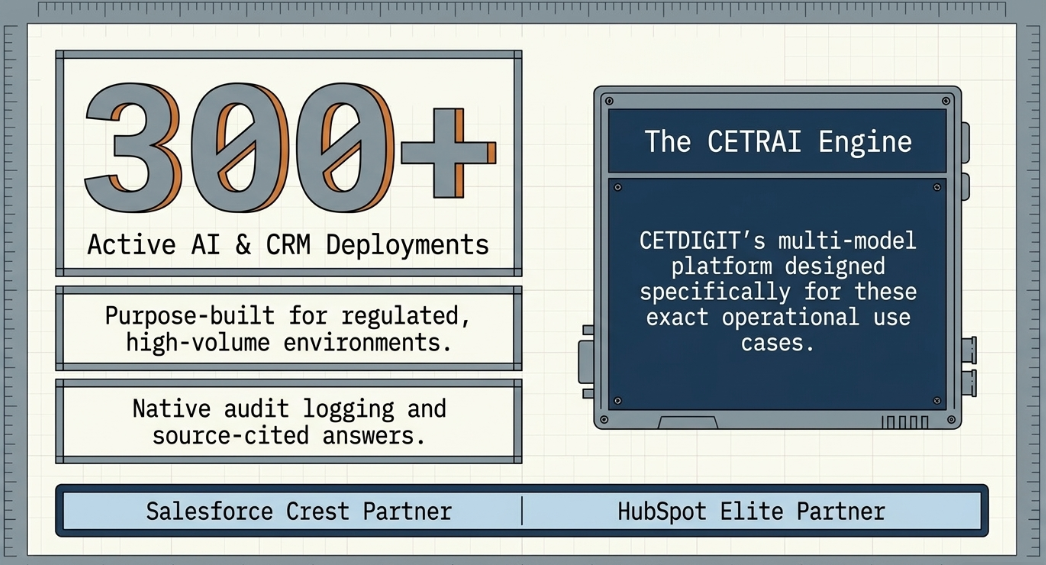
A Practical Way to Start
Contractors do not need to automate everything at once. A sensible first step is to pull thirty days of call logs and compare them with the jobs created in your field service platform. Count the calls after 5:00 p.m. and on weekends, count the abandoned calls during peak hours, and estimate the value of an average emergency ticket. That number tells you what coverage is worth. From there, start with after-hours triage and booking only, measure how many calls convert to jobs, and expand to overflow during the day and maintenance renewals once the routing rules are proven.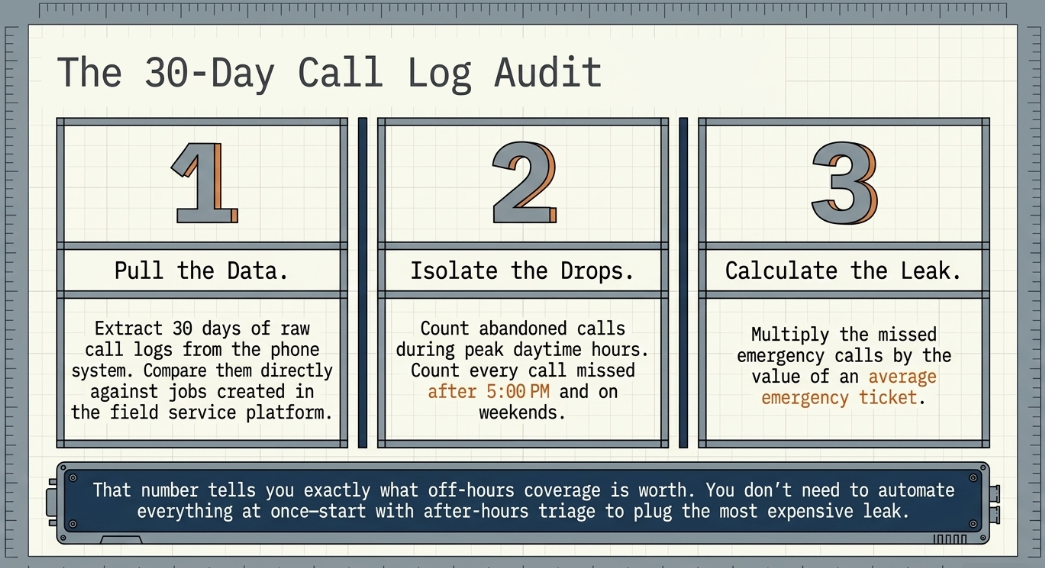
Most owners find that the technology is not the hard part. The hard part is writing down the decisions that currently live in the dispatcher's head: what counts as an emergency, which zip codes are in the service area, which jobs need a second technician, and when a quote should be escalated to the owner. Writing those rules down improves the business whether or not an agent ever answers a phone.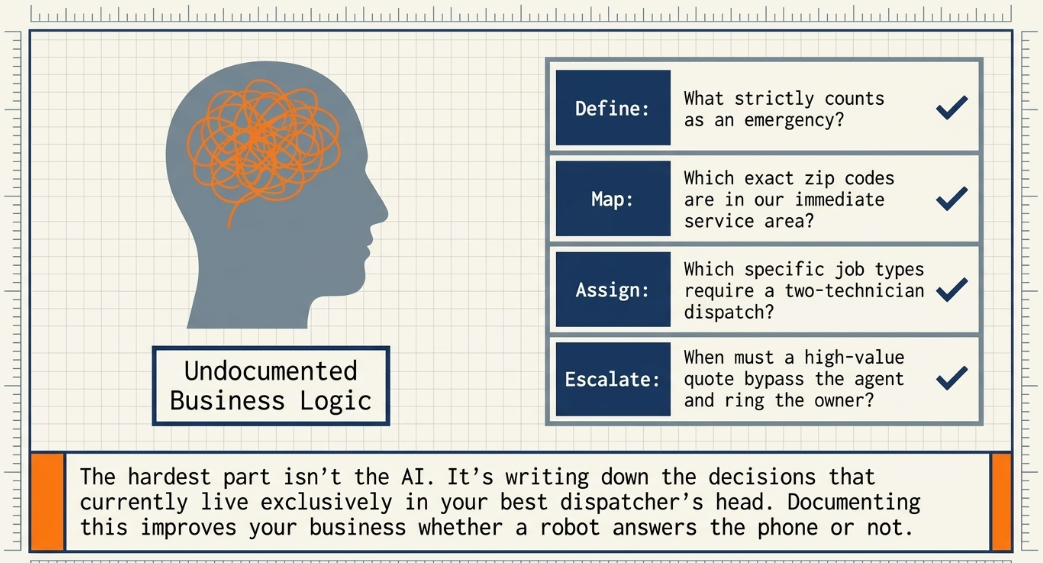
Let's Talk About Your Phones
If your company loses jobs to voicemail during the surges that matter most, CETDIGIT can help you map your call flow, connect it to the field service and CRM systems you already use, and design a voice agent that follows your rules. Schedule a consultation with our team at cetdigit.com, and we will walk through your call data, your emergency criteria, and a realistic rollout plan with no obligation.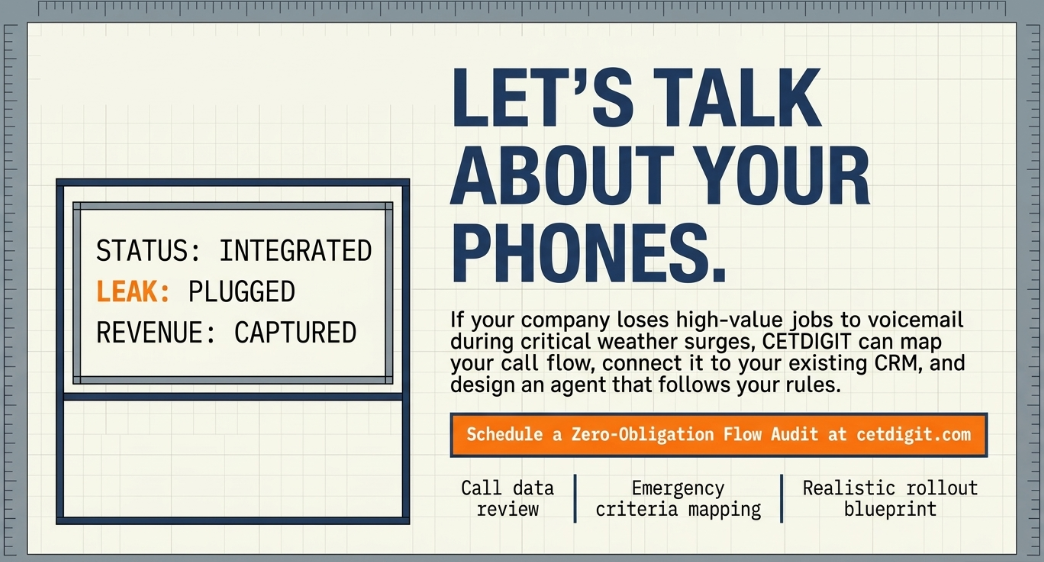
Related Reads
The Hygiene Recall List Nobody Has Time to Call: How AI Voice Agents Help Dental Practices Fill the Schedule
The Busiest Phone in the Building: How Auto Dealerships Use AI Voice Agents to Stop Losing Service Appointments and Sales Leads
The Leasing Call That Came In at 6:47 P.M.: How Property Management Companies Use AI Voice Agents to Fill Units and Route Emergencies



Leave a Comment