


Every dental office has the list. It lives inside the practice management system, usually Dentrix, Eaglesoft, or Open Dental, and it holds the names of patients who are overdue for a cleaning, who started a treatment plan and never came back, or who cancelled once and were never rebooked. Everyone in the office knows the list is valuable. Almost no one has the hour a day it would take to work it properly, because the same front office team is also checking patients in, verifying insurance, collecting copays, answering the phone, and managing a schedule that changes by the minute.
The result is a quiet leak that rarely shows up on a dashboard. A hygiene chair that sits empty on a Thursday afternoon is revenue that cannot be recovered. A treatment plan that was presented and accepted in principle but never scheduled is production that existed on paper and nowhere else. And a new patient who called during lunch, got voicemail, and booked with the practice down the road never appears in any report at all.
Why dental phones are a different problem
Dental practices handle a call mix that most other small businesses do not. A single morning can bring a new patient asking whether the office takes their plan, an existing patient moving a hygiene visit, a parent hunting for an opening before school lets out, and a patient with a cracked tooth who needs to be seen today. Each call needs a different answer, and several are time-sensitive in a way that matters clinically, not only commercially.
Peak call volume also lands exactly when the team is least able to answer. The phone rings hardest at opening, over lunch, and just after closing, which are the same moments when patients are being seated, discharged, or checked out. People shopping for a new dentist tend to call two or three offices in a row and book with whoever answers first.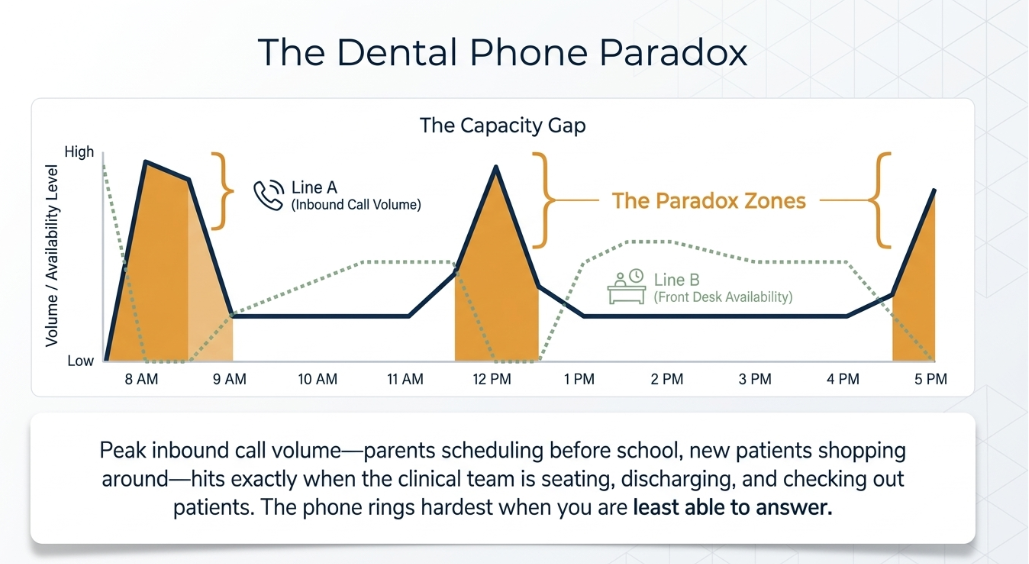
Where a voice agent fits, and where it does not
An AI voice agent is not a replacement for the dental team, and it should not be positioned as one. The more useful framing is coverage. It picks up when the team is chairside, answers the questions that have a known answer, and hands off the ones that need a person, with the context already captured so no one has to start the conversation over.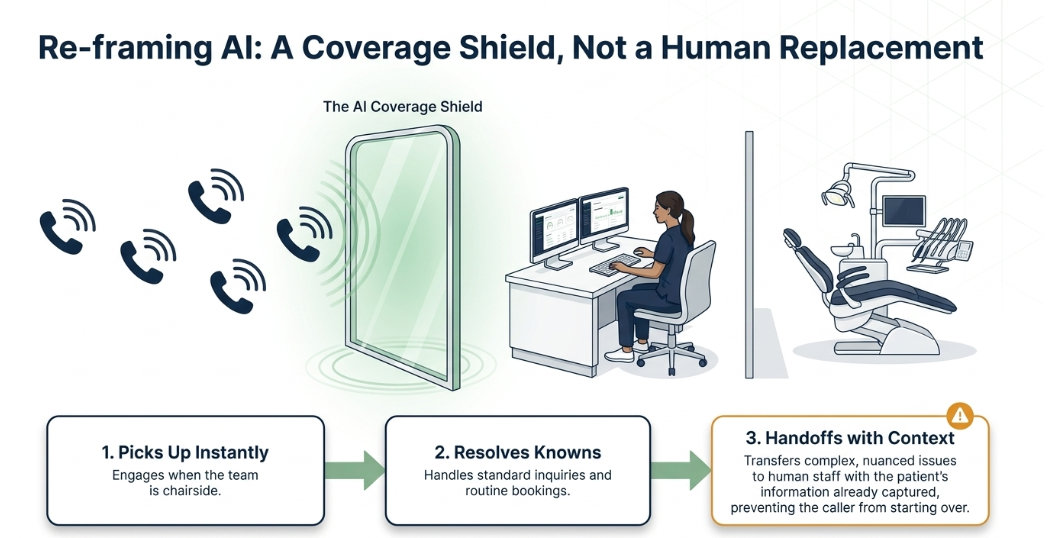
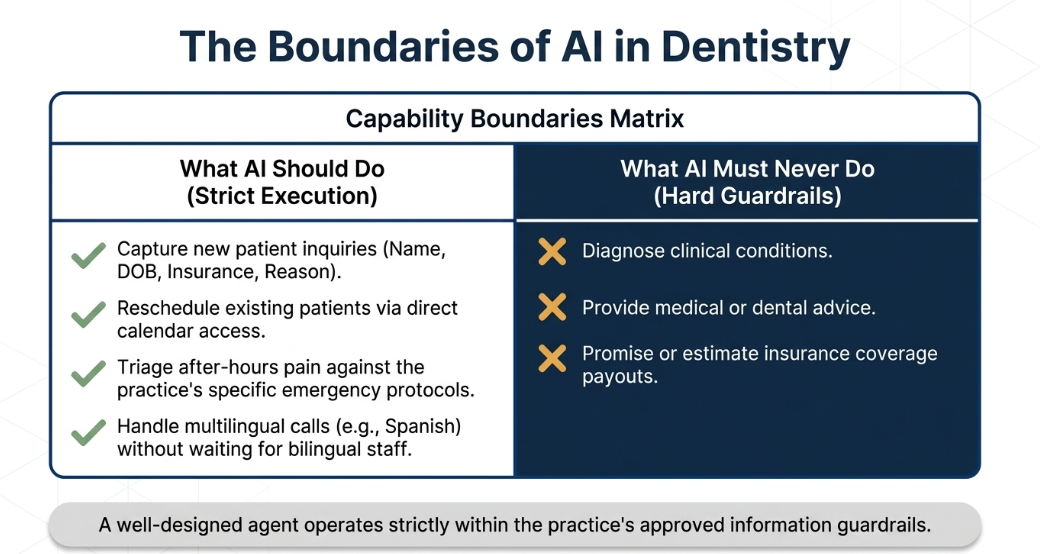
In practice, the highest value use cases in dentistry are specific. New patient inquiries can be captured and booked into the schedule at any hour, including the name, date of birth, insurance carrier, and reason for the visit. Existing patients can reschedule or confirm without waiting on hold. After-hours callers describing pain or a broken tooth can be triaged against the practice's own emergency protocol, with true emergencies routed to the on-call provider and everyone else offered the first available appointment. Spanish-speaking and other multilingual callers, who are common in many dental markets, can be served in their own language instead of being asked to call back when a bilingual team member is in.
Equally important is what the agent should not do. It should not diagnose, give clinical advice, or promise what insurance will cover. A well-designed agent answers from the practice's approved information and escalates anything outside those boundaries to a human.
The recall list is where the money is
Answering inbound calls is the visible benefit. The less visible one is outbound. Reactivation work, such as calling patients who are overdue for hygiene, following up on unscheduled treatment, and filling last-minute cancellations from a short list of patients who asked to be seen sooner, is exactly the kind of repetitive, high-volume task that gets postponed in a busy office.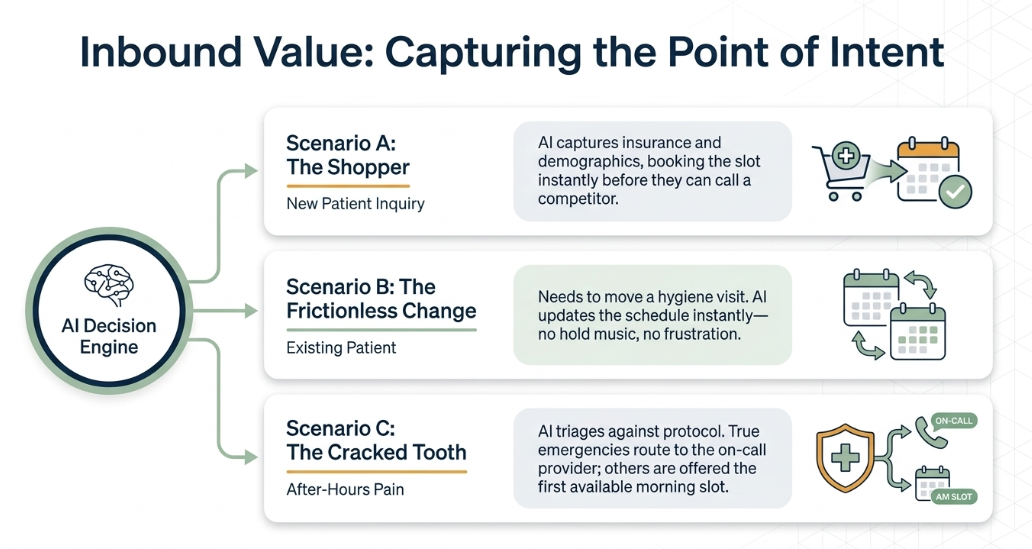
A voice agent can work that list consistently. It can call patients who are overdue, offer the next available hygiene appointments pulled from the live schedule, and book the visit on the spot. Outcomes are written back to the patient record, so the next person who touches the account sees exactly what was said.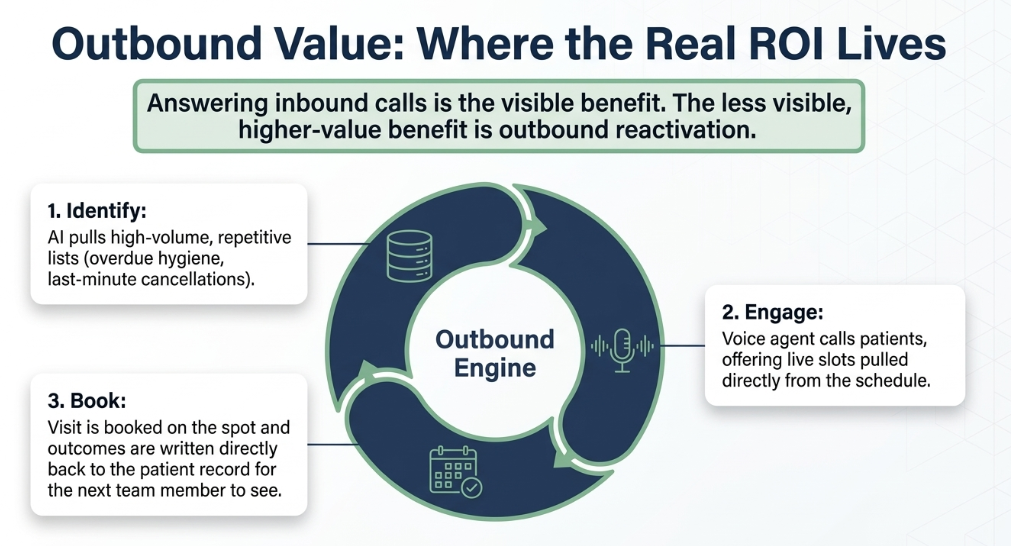
That write-back is the part practices should look at hardest. A voice agent that books appointments but does not update the practice management system creates a second schedule, which is worse than no automation at all. The integration with the system of record, and with whatever CRM or patient communication platform the practice uses for marketing and reputation, is where most of the implementation work actually sits.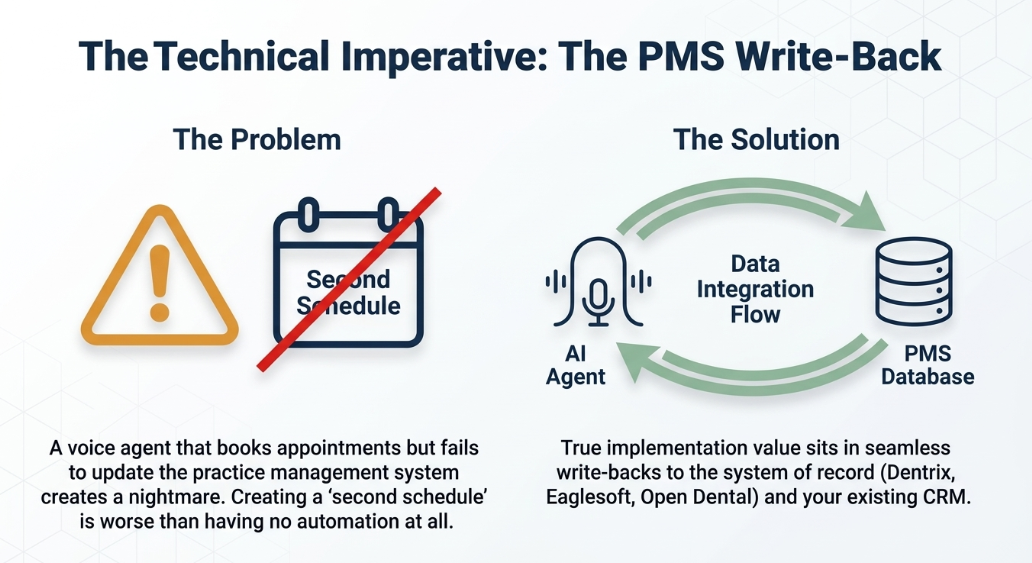
Compliance is part of the design, not an afterthought
Dental practices are covered entities, so patient information handled by any voice agent has to be protected under HIPAA, with appropriate agreements in place with every vendor that touches it. Outbound calling adds a second layer. The Telephone Consumer Protection Act governs automated and prerecorded calls and texts, and the FCC has made clear that AI-generated voices fall within its scope. Whether a particular recall call is treated as an informational healthcare message or as marketing can change the consent a practice needs, so consent capture and opt-out handling should be built into the workflow from the first day, not added after a complaint.
Ask any vendor direct questions. Does the agent disclose that it is automated? Does it transfer when a patient asks for a person? Is there an audit log of what was said and what was written to the chart? Those answers matter more than any feature list.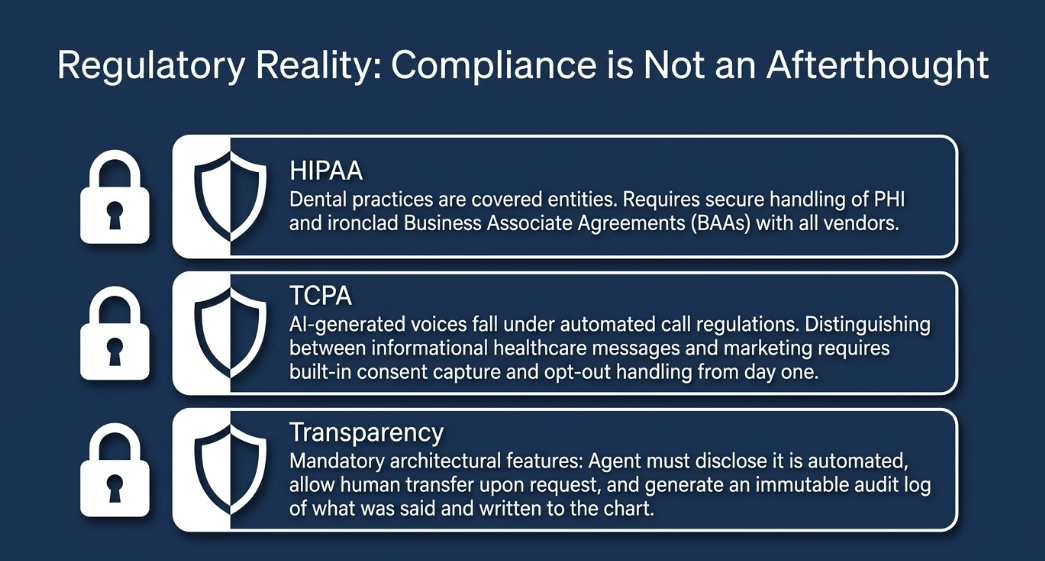
What a sensible rollout looks like
Practices that get value from voice automation tend to start narrow. A common path is to begin with after-hours and overflow coverage, where the agent only answers calls the team would otherwise miss, then add new patient booking, then add recall and reactivation once the team trusts the handoffs. Each step has a clear measure: missed calls recovered, new patient appointments booked, hygiene chairs filled, and unscheduled treatment brought back onto the schedule.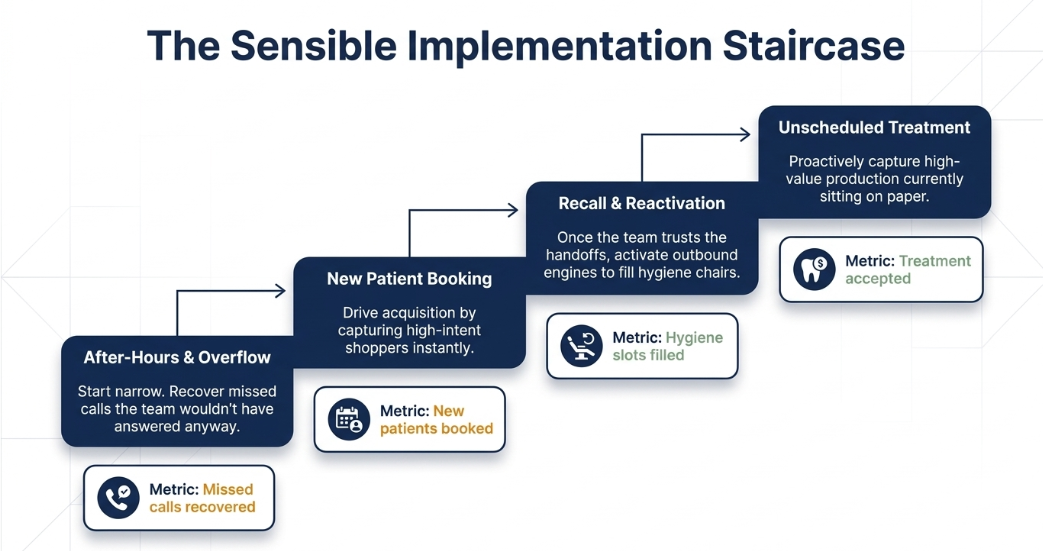
It also helps to be realistic about the data. Recall lists are only as good as the recall status in the practice management system, and many practices discover that phone numbers and consent flags need cleanup first. That work is unglamorous, but it separates a pilot that quietly fades from one that becomes part of how the office runs.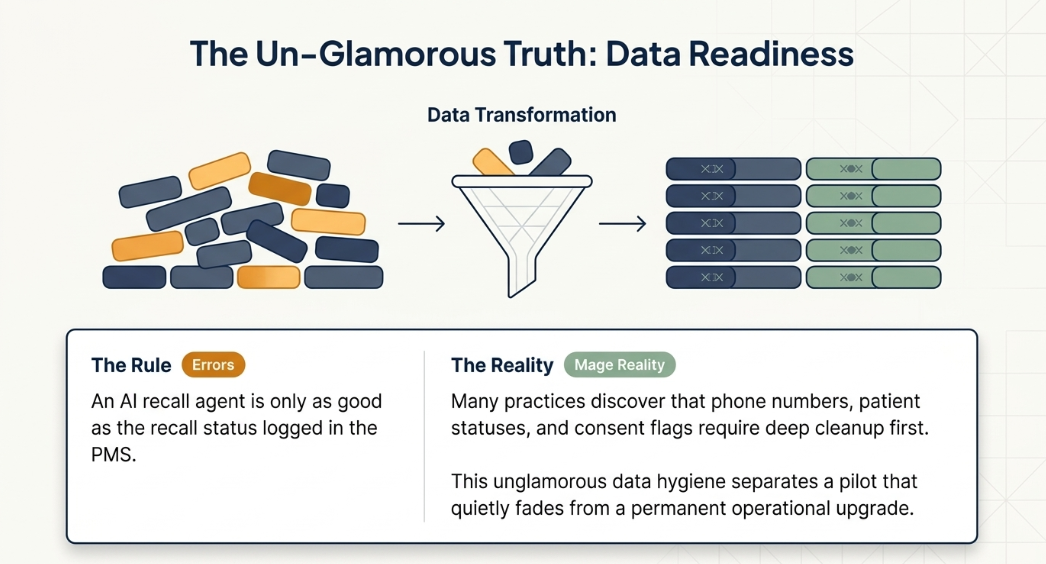
For practices that want a plain-language look at how voice and chat agents are applied in healthcare settings, CETRAI, the platform we build for regulated, high-volume environments, keeps an overview at cetrai.com/industries/healthcare. It is a useful reference when deciding which parts of the phone workflow are worth automating and which should stay with the team.
Talk With CETDIGIT
CETDIGIT has delivered more than 300 AI and CRM deployments and is a Salesforce Crest Partner and HubSpot Elite Partner. If your practice or dental group is weighing how voice automation should connect to your practice management system, your CRM, and your compliance requirements, we would be glad to walk through it with you. Schedule a consultation with our team at cetdigit.com, and we will map the call types, recall workflows, and integrations that make sense for your office.
Related Reads
The Missed Call Problem in Healthcare: How AI Voice Agents Give Medical Practices Their Phones Back
The Retainer That Went to Voicemail: How Law Firms Use AI Voice Agents to Stop Losing Clients at Intake
The Busiest Phone in the Building: How Auto Dealerships Use AI Voice Agents to Stop Losing Service Appointments and Sales Leads


Leave a Comment