


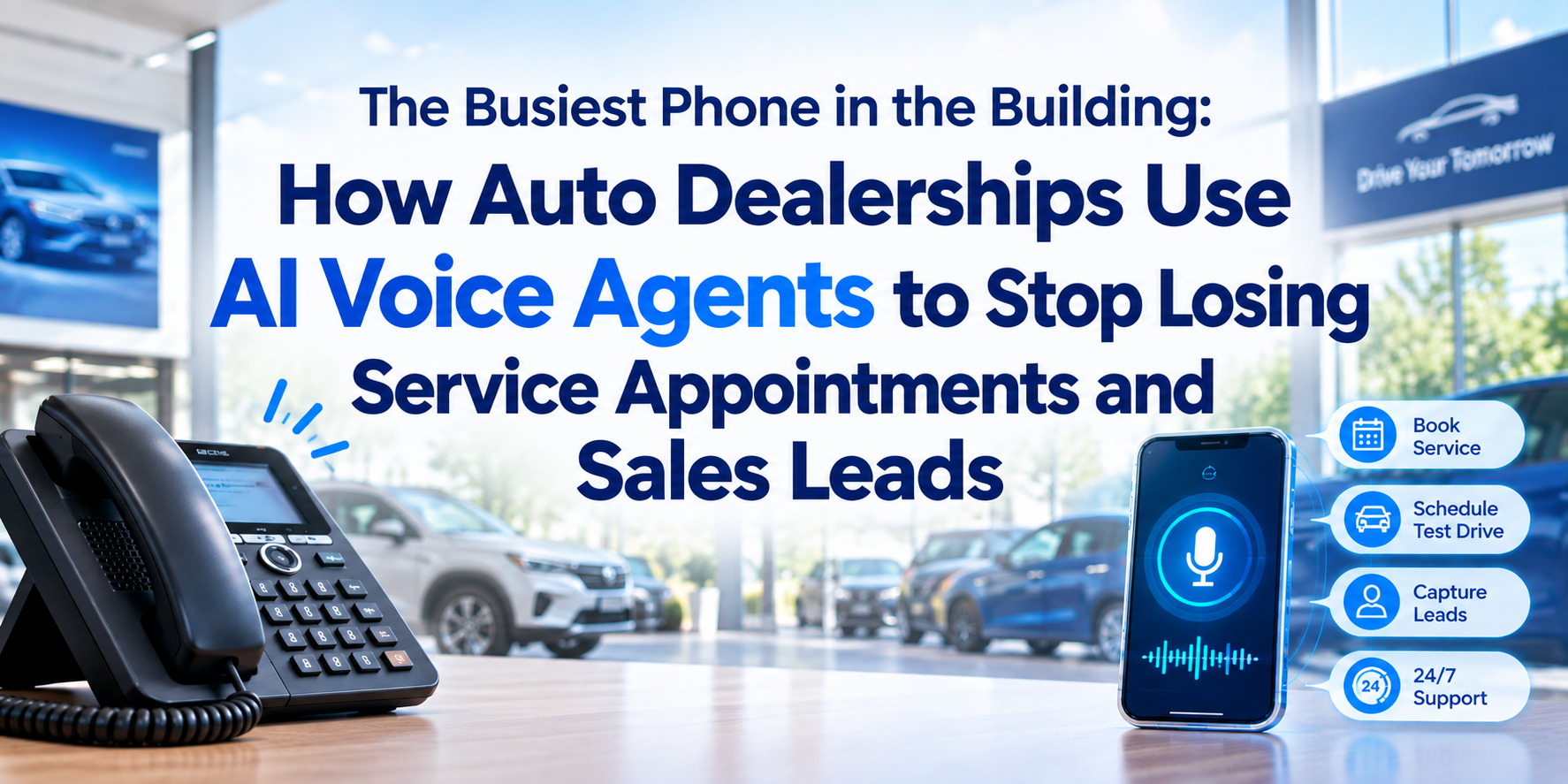
It is 7:40 on a Monday morning, and the service department phone is already ringing. The advisors are walking the drive, writing up the customers who arrived at opening. The BDC does not start until 8:30. The caller is a customer whose check engine light came on over the weekend, and she has exactly one window to book an appointment before her own workday starts. The phone rings six times and rolls to a voicemail box that, if the store is honest with itself, nobody will listen to before noon. She calls the dealership four miles down the road instead.
Nothing about that story involves bad people or a badly run store. It involves arithmetic. A mid-size dealership takes hundreds of calls a day across sales, service, and parts, and the calls cluster exactly when the humans who could answer them are busiest: Monday mornings in service, Saturday afternoons in sales, the first hour after a manufacturer mails a recall notice. Industry mystery-shop studies have found for years that a painful share of dealership calls go unanswered or end without an appointment request even being asked for. Every one of those calls was paid for somewhere, whether through third-party lead providers, co-op advertising, or the fixed cost of simply being a franchise store on a busy road.
Where the calls actually go to die
Dealerships are unusual among small and mid-size businesses in that they already run serious software. The DMS, whether CDK, Reynolds and Reynolds, Dealertrack, or Tekion, knows every repair order and every vehicle in operation. The CRM, whether VinSolutions, DealerSocket, or Elead, is supposed to know every customer and every open opportunity. Service scheduling tools like Xtime or myKaarma know the shop's capacity down to the bay and the hour.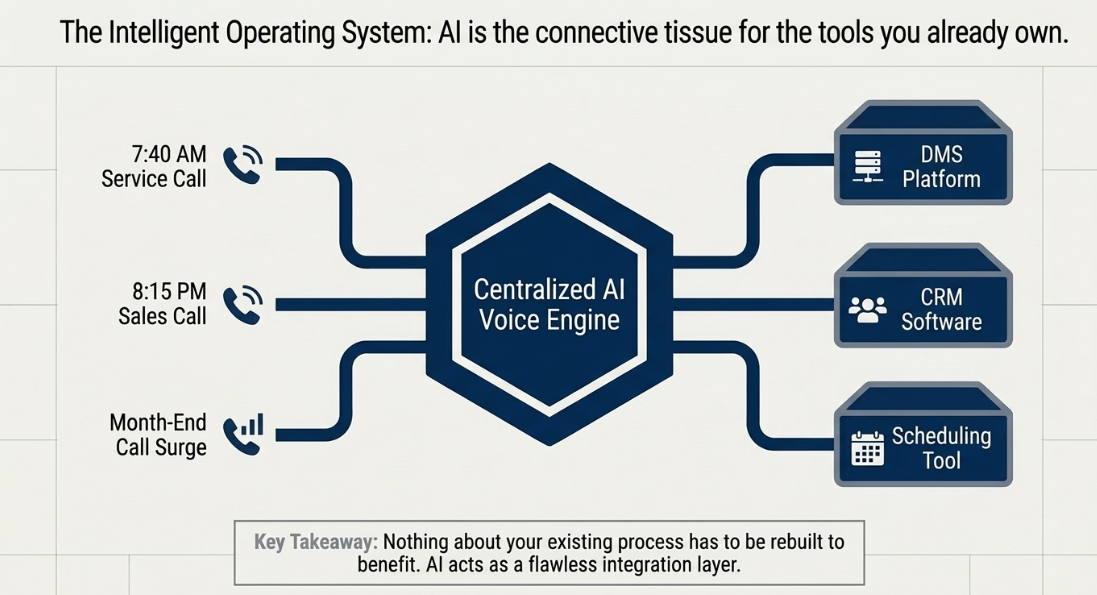
The weak link is not the systems. It is the moment a phone call has to become a record in one of them. A call answered by a rushed advisor gets handled but not logged; the CRM never learns the customer called. A call that rolls to voicemail produces, at best, a call-back task that competes with everything else in the store. A call to the sales line at 8:15 p.m., after an evening of online shopping, reaches nobody at all, and by morning the shopper has submitted leads to three competing stores. Speed-to-lead research is unambiguous about what happens next: the store that responds first, in minutes rather than hours, wins a disproportionate share of those deals.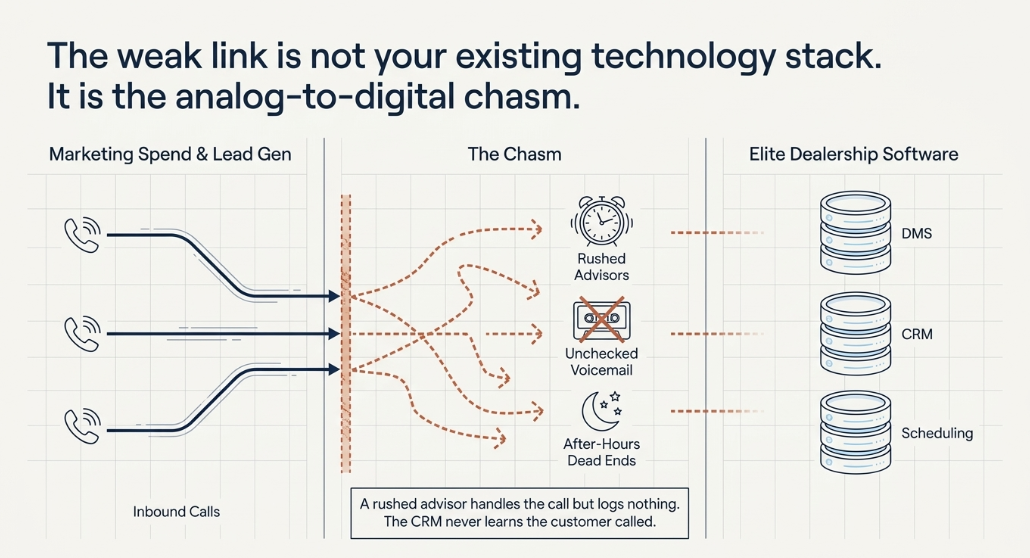
The BDC was invented to close this gap, and a good one helps. But BDCs are staffed for average call volume, not peak call volume, and the peaks are where the money leaks. No dealer can profitably staff for the Monday-morning service surge, the recall wave, and the Saturday sales rush all at once.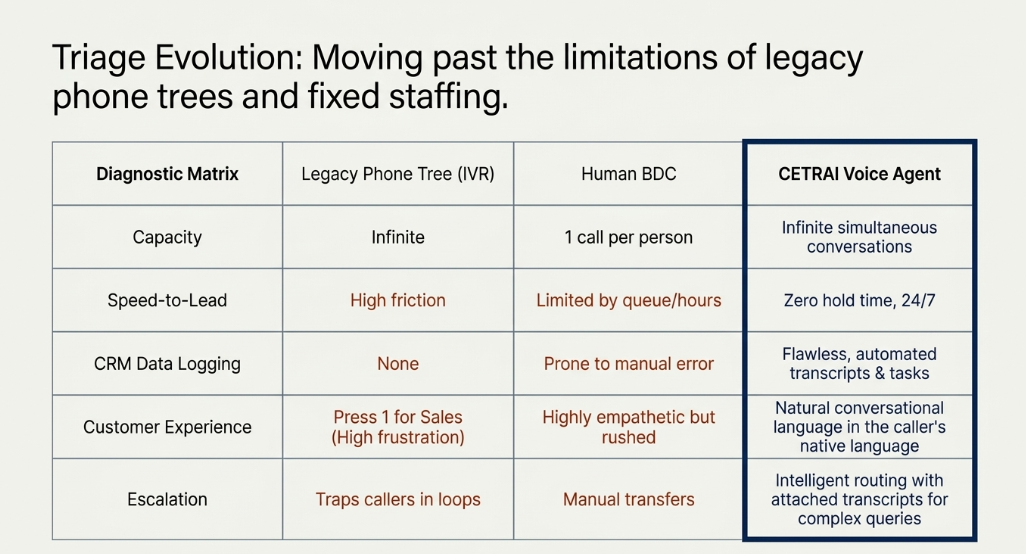
What an AI voice agent changes in operational terms
A modern AI voice agent is not the touch-tone phone tree customers have learned to hate. It answers on the first ring, in natural language, in the caller's language, at any hour, and it can hold as many simultaneous conversations as the phone system can deliver. For a dealership, the operational value shows up in a few specific places.
First, service booking. The agent can answer the questions that make up the bulk of service calls, including hours, whether loaners or shuttles are available, what a service visit involves, and can capture the vehicle, the concern, and the customer's preferred window, then either book directly into the scheduling tool or hand a structured appointment request to the advisor team. The 7:40 caller gets an appointment instead of a voicemail.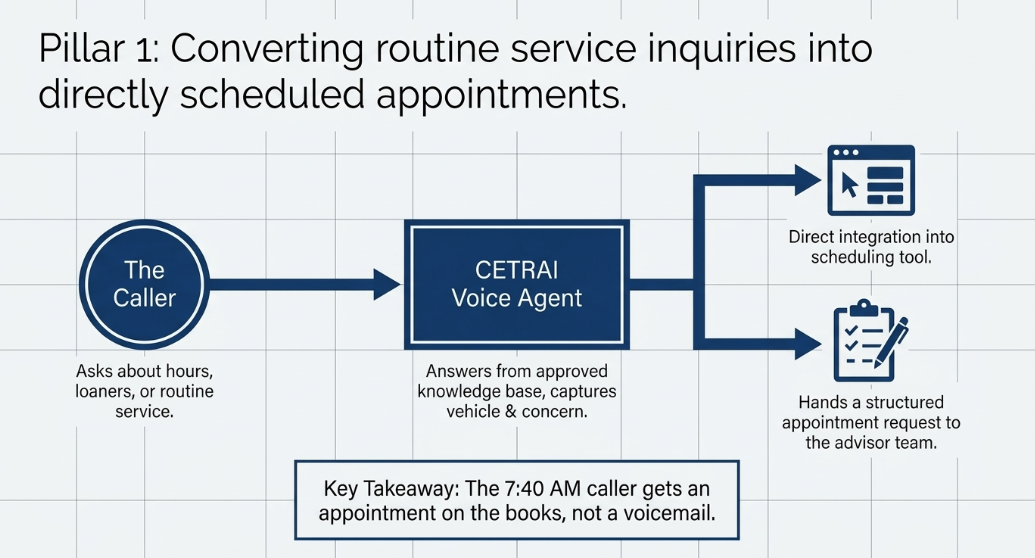
Second, after-hours sales coverage. When a shopper calls at 8:15 p.m. about a specific used vehicle, the agent can confirm the store has it, answer basic questions, and schedule a test drive for the next day, creating the lead and the appointment while the shopper's interest is at its peak. That is the difference between being first and being third in the next morning's follow-up race.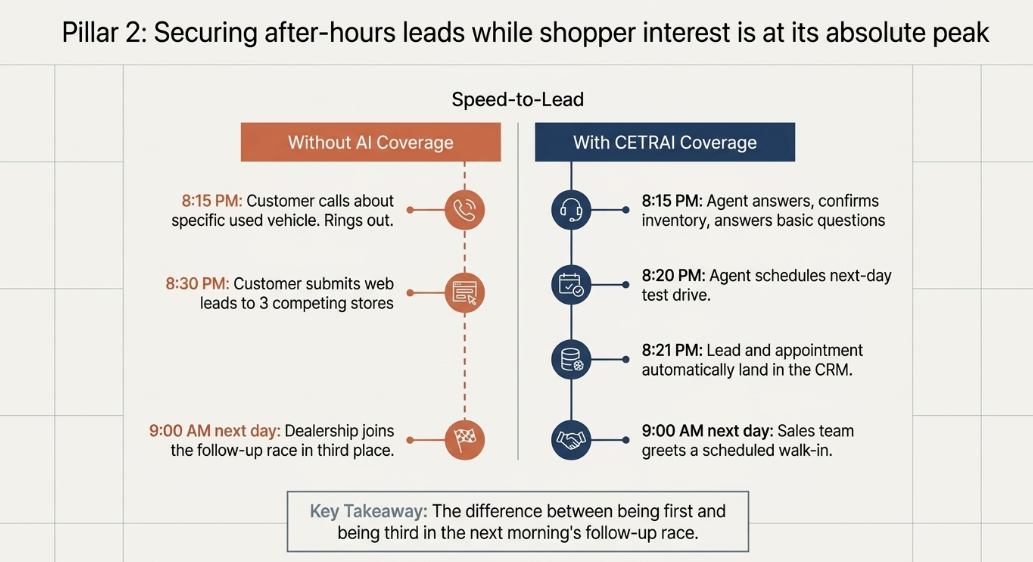
Third, surge absorption. Recall notices, weather events, and month-end all produce call spikes that no fixed staffing plan can meet. An AI agent absorbs the spike without hold queues, and it escalates the calls that genuinely need a human, such as an upset customer, a complex warranty question, or a caller who simply asks for a person, to the right desk with a transcript attached.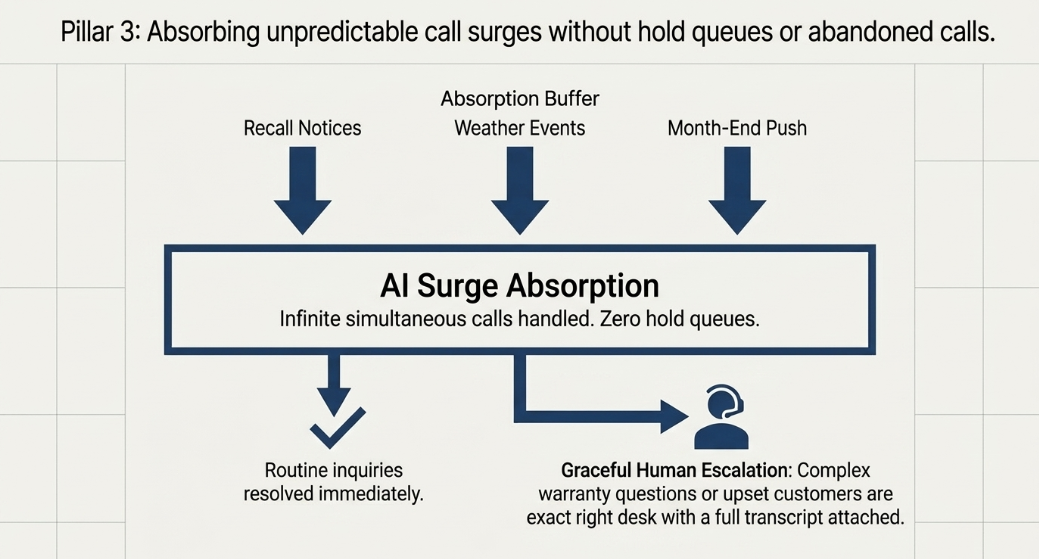
Fourth, and least visible but most valuable over time: every call becomes data. Each conversation lands in the CRM as a contact, a logged activity, and a task where one is needed, with a transcript and an audit trail. Managers stop discovering missed opportunities by accident and start seeing call outcomes on a dashboard next to their other pipeline numbers.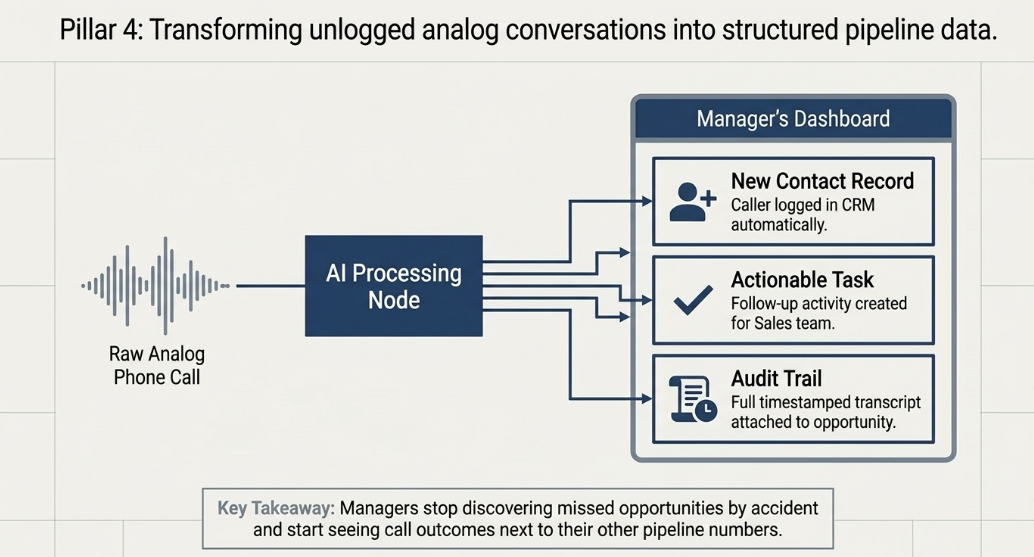
The guardrails a dealership should insist on
Automotive retail is a regulated, reputation-sensitive business, and a voice agent has to be deployed like it. Outbound follow-up by call or text requires documented consent under TCPA, so the platform must capture and store consent rather than assume it. Quoting is a hard boundary: the agent should never improvise a price, a payment, or an APR, and should work only from an approved knowledge base, with retrieval-augmented answers that cite their source so managers can verify what customers are being told. Recording and transcription must respect state consent rules. And the agent must know what it does not know; a well-designed deployment escalates gracefully instead of guessing.
This is the standard we build to at CETDIGIT. Our CETRAI platform was designed for regulated, high-volume phone environments, with mandatory source citations on retrieved answers, TCPA-aware consent handling, single sign-on, and audit logging, and it integrates with the CRMs dealerships actually run so calls become records, not anecdotes. If you want to see how it is applied to automotive retail specifically, the CETRAI automotive page is a good starting point.
Start with the phone log, not the demo
The practical first step costs nothing: pull one week of phone data. Count the calls that rang out, rolled to voicemail, or arrived outside staffed hours, and multiply by what a booked service appointment and a closed vehicle deal are worth in your store. Most dealers who do this exercise stop asking whether an AI voice agent pays for itself and start asking how quickly it can be live.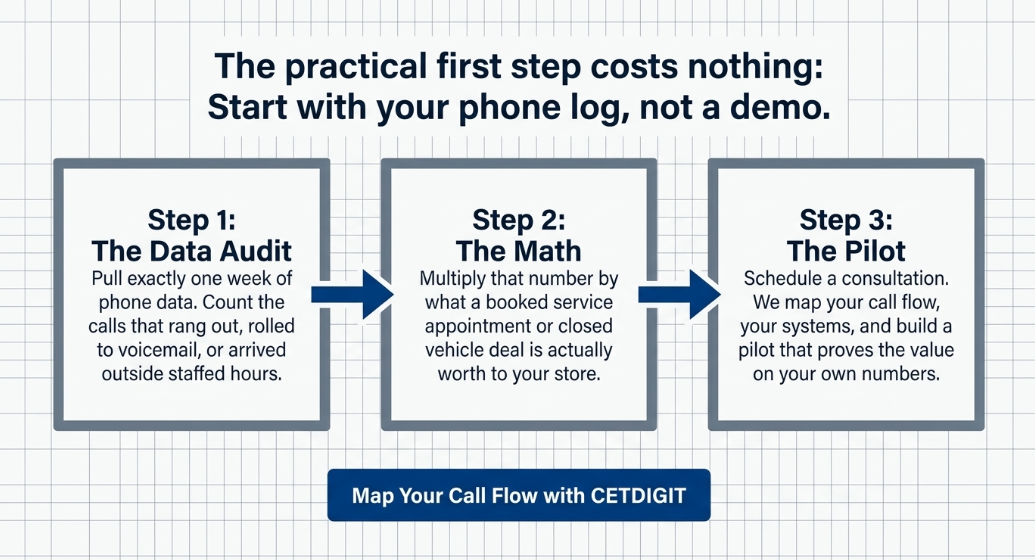
CETDIGIT is an AI solutions builder with more than 300 AI and CRM deployments, a Salesforce Crest Partner and HubSpot Elite Partner, and our client base includes hundreds of automotive businesses, from dealer groups to specialty vehicle retailers. We implement AI voice agents alongside the DMS, CRM, and scheduling tools you already own, so nothing about your process has to be rebuilt to benefit. If your store's phones are busier than your team can answer, schedule a consultation with CETDIGIT, and we will map your call flow, your systems, and a pilot that proves the value on your own numbers.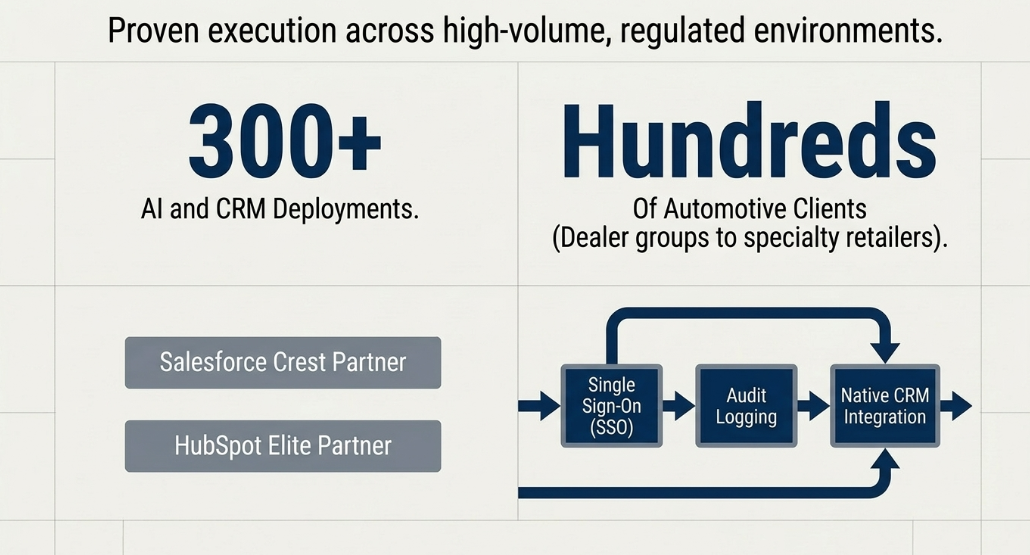
Related Reads
The Database Nobody Calls: How AI Voice Agents Help Real Estate Brokerages Work the Leads They Already Paid For
The Leasing Call That Came In at 6:47 P.M.: How Property Management Companies Use AI Voice Agents to Fill Units and Route Emergencies
Your CRM Already Knows the Answer: How AI Integration Turns Salesforce into an Intelligent Operating System



Leave a Comment