


The Dark Funnel is the part of your buying process you cannot see, where prospects research you, compare you against competitors, and form a preference before they ever raise a hand or enter your CRM. It costs you the deals you never knew existed. By the time a buyer reaches out, most of the decision is already made. Gartner's March 2026 survey found 67% of B2B buyers now prefer to buy without a sales rep at all, which means the most important part of the sale happens in the dark.
It Starts with a Deal You Never Knew You Lost
A founder I'll call Maria runs a $12M B2B firm. Last quarter, a buyer who fit her ideal customer profile spent three weeks researching her category. He read two of her blog posts. He asked ChatGPT how her type of product compares to two competitors. He posted a question in a Slack community he belonged to and got three recommendations back. None of them was Maria's.
Then he booked a call with the competitor who showed up first in his research.
Maria never saw any of it. There was no form fill, no email, no name in the pipeline. From where she sat, the deal simply never existed. She didn't lose it in a bake-off. She lost it before she knew there was a race.
That gap between what your buyers are doing and what you can actually see has a name. The work of buying has gotten genuinely complicated, and most of it now happens somewhere you're not looking. If you want a sense of how the pieces connect once you can see them, here's CETDIGIT's connected AI architecture.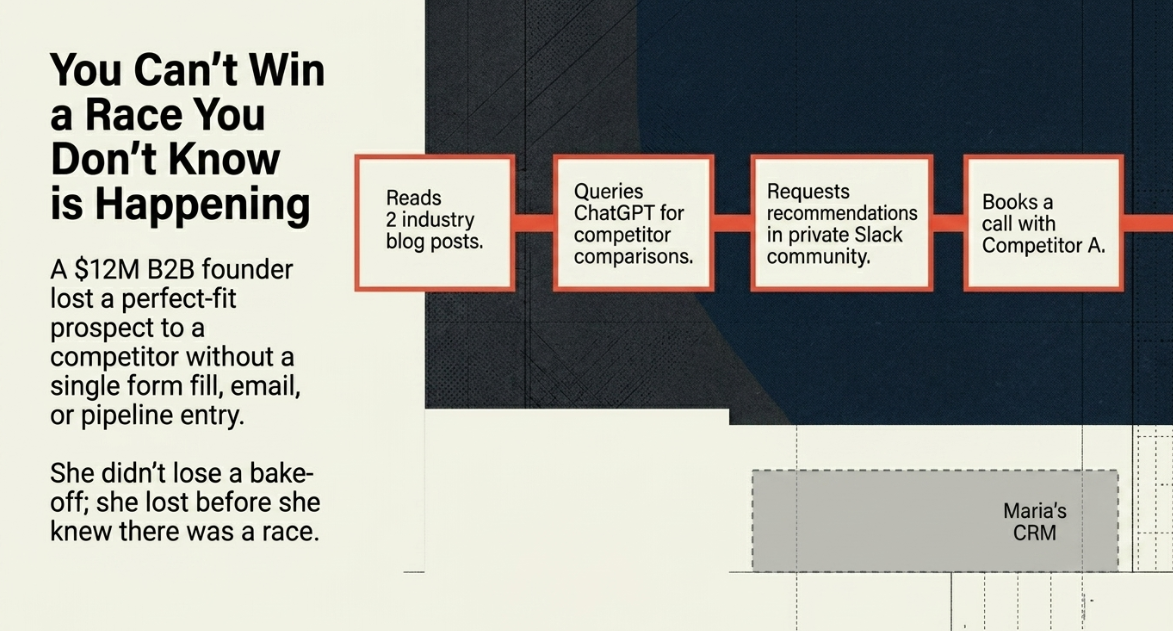
So, What Is the Dark Funnel?
The Dark Funnel is everything that happens in a buyer's journey before they become visible to you. They search. They read reviews. They ask peers. They query AI tools. They build a shortlist. And they do almost all of it without ever touching anything you can track.
The concept was first introduced in our look at why leads fall through the cracks, where it described the deals that vanish before they reach your inbox. Here it gets its full definition: the Dark Funnel is not a leak in your pipeline. It's the activity that happens before your pipeline begins.
That distinction matters. A leak is something you can find and patch. The Dark Funnel is something you can't even see, which is exactly why chasing harder doesn't fix it.
Why It's Bigger Than It Used to Be
Buyers didn't always operate this way. The shift is recent, and it's measurable.
Gartner's March 2026 survey of 646 B2B buyers found that most now prefer to buy without a rep at all, 67%, up from 61% the year before. In the same research, 45% said they used AI tools during a recent purchase. The buyer who once called you to learn now asks a machine instead.
And they're not doing it in one place. McKinsey's B2B Pulse research found that buyers now move across roughly ten channels before they decide, double the number from a decade ago. Ten channels. Your CRM sees maybe one or two of them. The rest is dark.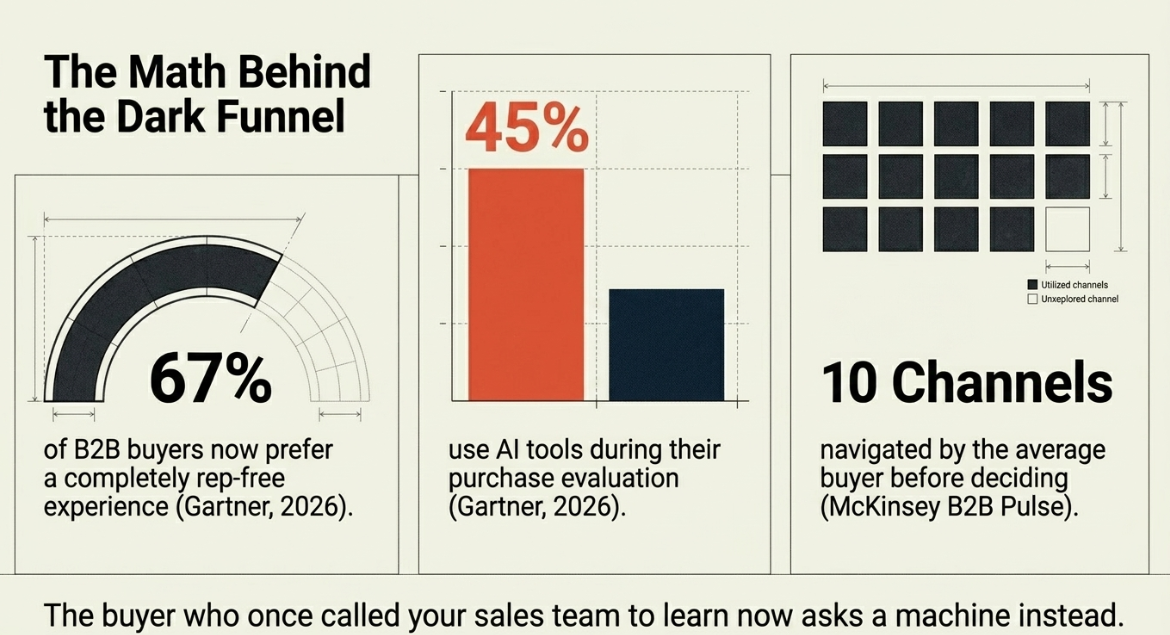
Here's the part that stings. The 2025 Gartner research found that buyers actively avoid suppliers who chase them with irrelevant outreach, 73% of them. So, the instinct to push harder, send more emails, and follow up more aggressively doesn't surface the Dark Funnel. It makes buyers hide deeper inside it.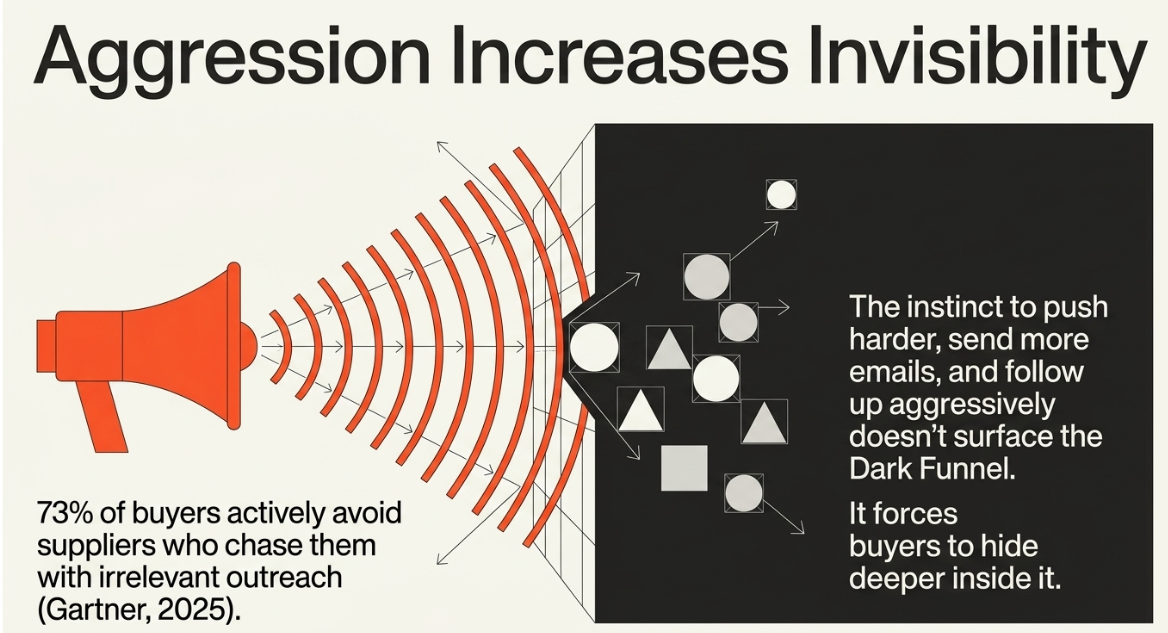
Whom This Hits Hardest
If you're a founder running a growing company on spreadsheets, shared inboxes, and a sales team that lives in three people's heads, this is your problem more than anyone's.
You're past the stage where you personally meet every prospect. But you haven't yet built the system that would show you the ones you're not meeting. The pipeline you can see looks fine. It's the pipeline you can't see that's quietly going to your competitors.
Bigger companies have teams whose whole job is to watch for this. You don't, yet. That's not a failing, it's just where you are. The danger is assuming the deals in your CRM are the whole picture when they're only the part that happened to surface.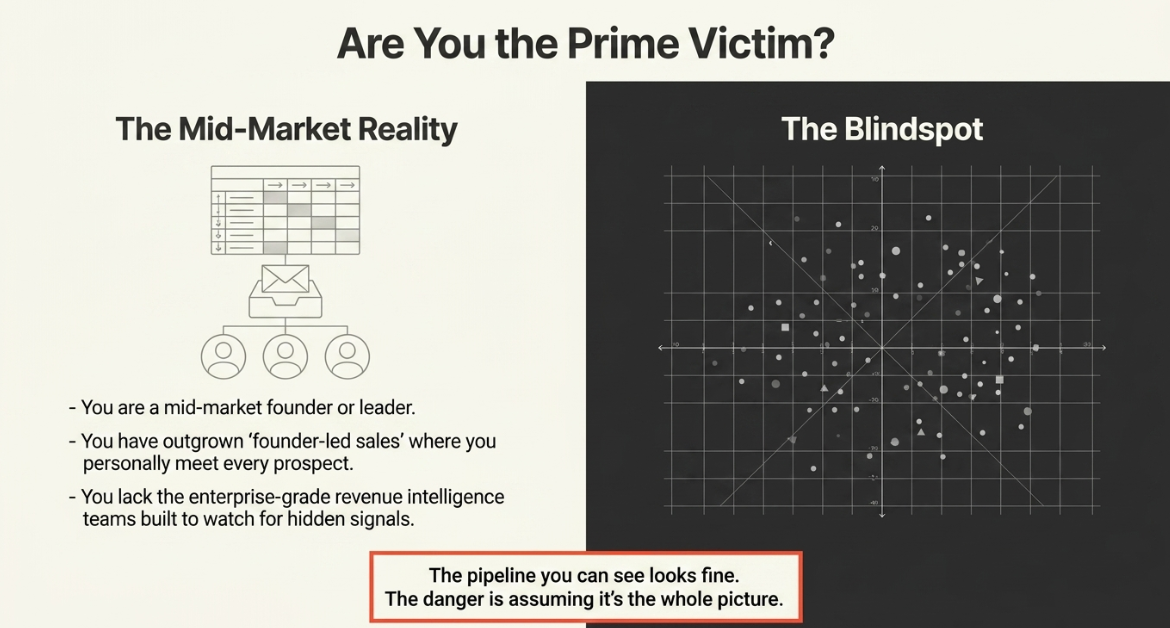
The Symptoms You Can Actually Feel
You won't see the Dark Funnel directly. But you'll feel it. A few signs:
- Deals show up "ready to buy" with vendors you've never spoken to, and you wonder how they got so far without you.
- Win rates on inbound feel fine, but total volume is lower than your market position says it should be.
- A prospect mentions a comparison or an objection you never raised; they got it somewhere you weren't.
- You hear "we already looked at a few options" on a first call more often than you used to.
These aren't follow-up failures. Follow-up that did not happen is a different problem; this is about deals that never became visible enough to follow up on in the first place.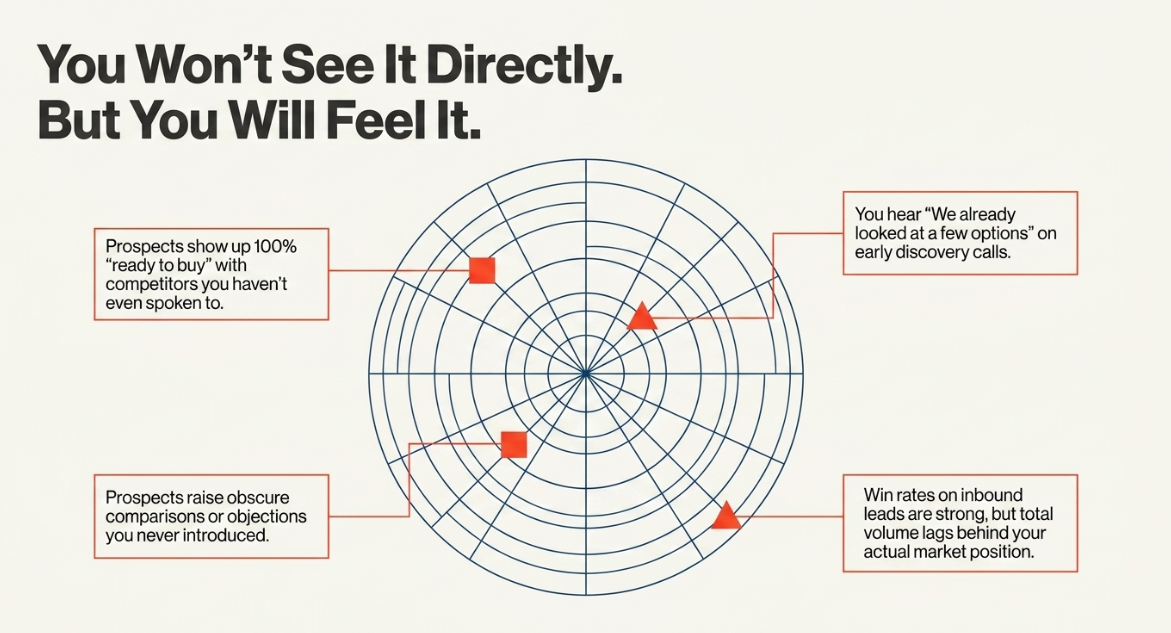
Why It Happens
Three things are happening at once.
First, buyers are overwhelmed and self-directed. The seminal HBR research on B2B buying found that purchasing has gotten too complicated for buyers to want a rep early, so they delay contact until the decision is nearly made. They don't engage you because engaging you feels like more work.
Second, the research is spread across those ten channels McKinsey counted. Review sites, peer communities, search, AI assistants, social. No single tool you own can watch all of them, so the picture you assemble is always partial.
Third, even the buyers who do reach out can slip away in the gap between touches, the multi-touch abandonment gap that lets prospects go quiet when a response is slow or inconsistent. The Dark Funnel is the front end of the same visibility problem.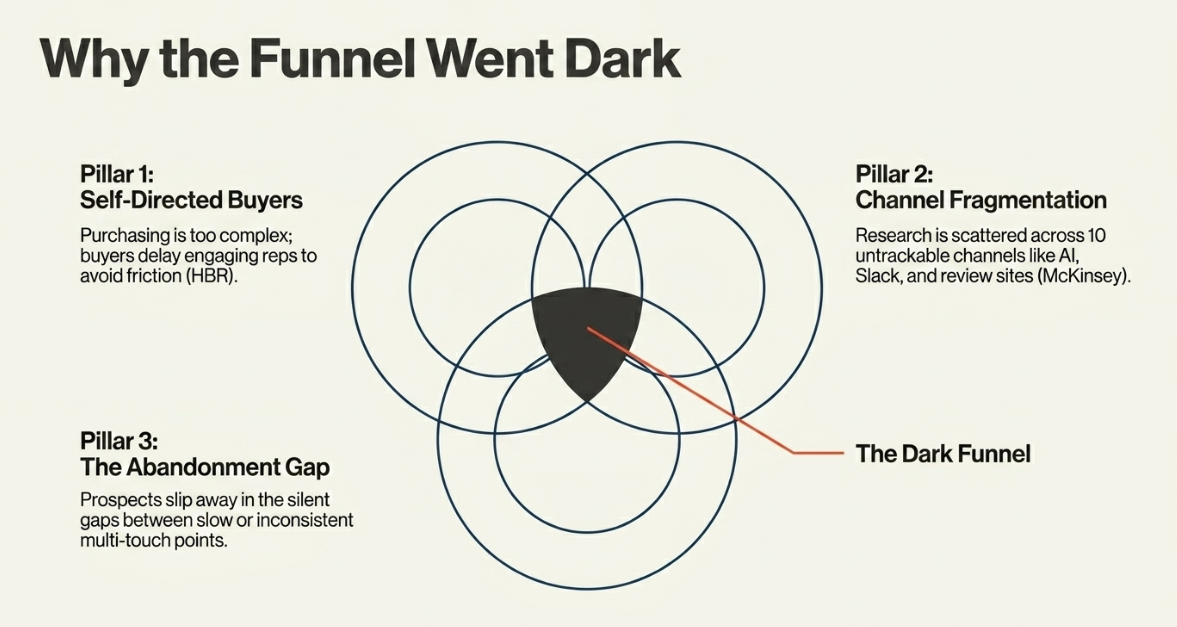
Seeing What You Can't See (A Quick Comparison)
|
Running blind |
Making the funnel visible |
|
|
Response speed |
You respond only to those who reach out, often after the decision is set |
You catch intent signals earlier, while the buyer is still deciding |
|
Pipeline confidence |
You can name the deals in your CRM, and nothing else |
You see early-stage interest before it becomes a named opportunity |
|
Deals surfaced |
Only the ones that self-identify |
The ones researching you quietly, before they pick a shortlist |
The difference isn't working harder. It's seeing earlier.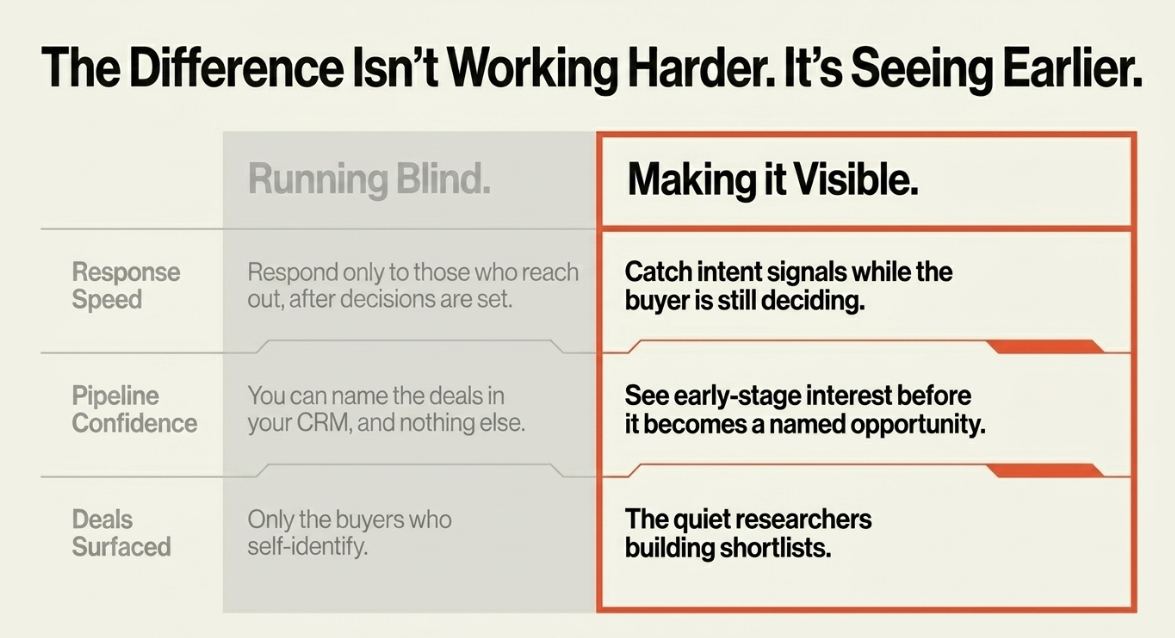
How We Think About It at CETDIGIT
The Dark Funnel isn't a tool problem. You can't buy your way out of it with one more app. It's a visibility problem, and visibility comes from connecting the signals you already generate into something you can actually act on.
That's the visibility gap an AI revenue engine closes that visibility gap, by connecting the scattered signals of buyer intent into one view instead of leaving them stranded across ten channels. That's the architecture piece, and for a founder, it's enough to know it exists; you don't need to build it tomorrow.
What you do need is to stop treating the deals you can see as the whole market.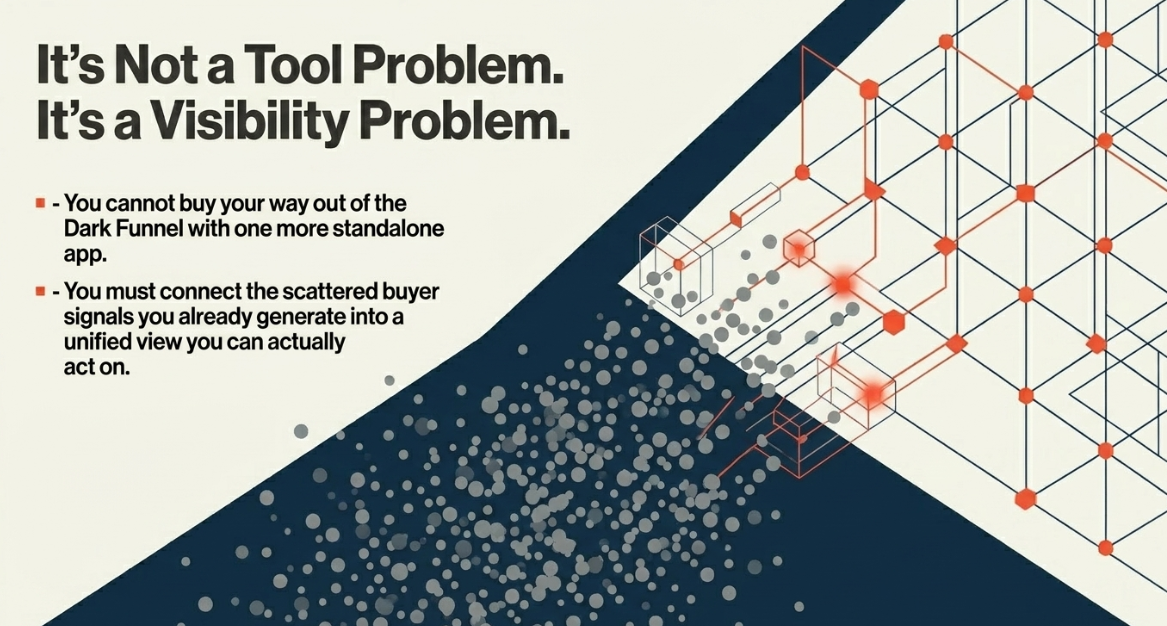
Where to Start
Start by accepting that the pipeline you can see is incomplete. That single shift changes how you read your numbers.
From there, the practical move is to close the gap on the deals you're already losing in the dark, which is exactly what AI sales workflows that close the gap on deals you can't see are built to do: catch intent earlier and respond before the decision hardens. If you want to see where this fits in CETDIGIT's full AI services architecture, the sales workflows piece is one part of a connected system rather than a standalone fix.
You don't have to solve all of it at once. You do have to start seeing it.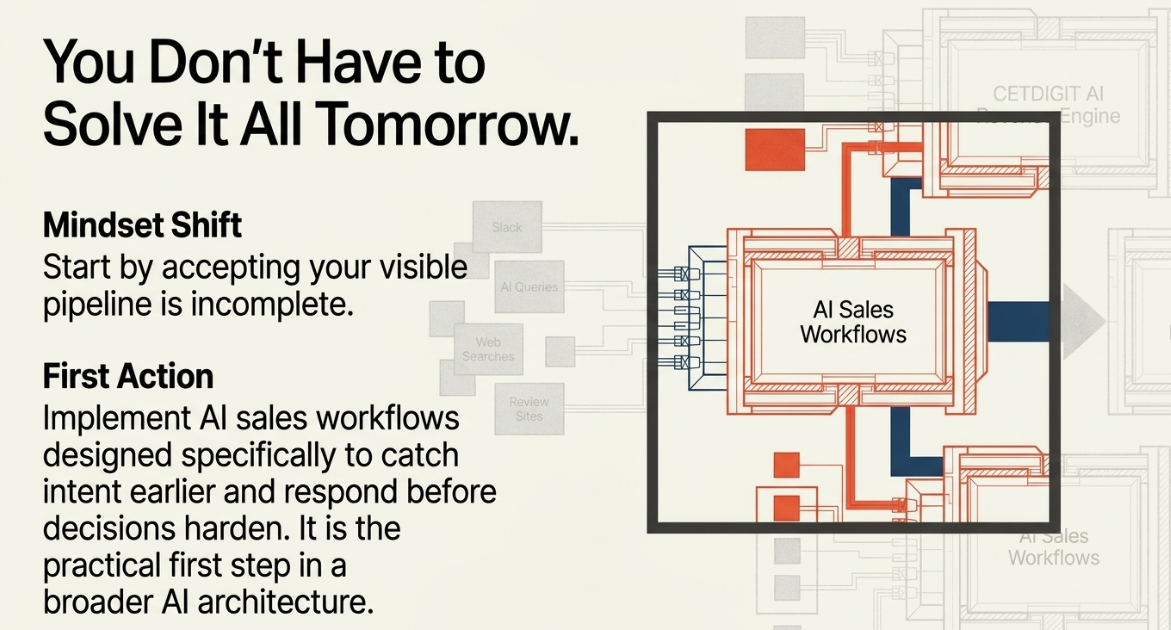
Frequently Asked Questions
What is the dark funnel in B2B?
In B2B, the Dark Funnel is the research and evaluation buyers do before they identify themselves to you, across search, peer communities, review sites, and AI tools. Gartner's March 2026 survey found 67% of B2B buyers now prefer a rep-free experience, so most of the decision forms in that invisible stretch before any contact.
What is the dark funnel in sales?
In sales, it's every buying signal that never reaches your CRM. A prospect can research you for weeks and arrive on a competitor's calendar without ever appearing in your pipeline. McKinsey's B2B Pulse research found buyers move across roughly ten channels before deciding, most of which no single sales team can see.
Why are we losing deals we can't see?
Because buyers now decide before they engage. Gartner found 73% of buyers actively avoid suppliers who chase them with irrelevant outreach, so pushing harder drives them further into the dark rather than surfacing them. The deals aren't being lost in your pipeline; they're being lost before they enter it.
What is the dark funnel costing my company?
It costs you the deals that pick a competitor before you knew they were shopping. There's no single sourced dollar figure for mid-market B2B, but the shape of the cost is clear: with 67% of buyers preferring to buy rep-free and the average journey crossing ten channels, the majority of buying activity happens where you have no visibility and no chance to compete.
How is the dark funnel different from a normal sales funnel?
A normal sales funnel tracks buyers after they become visible, a lead, an opportunity, or a stage. The Dark Funnel is everything before that, where buyers are active but invisible to you. The normal funnel is the part you measure; the Dark Funnel is the part you miss.
How does the dark funnel connect to CETDIGIT's broader AI work?
Seeing into the Dark Funnel depends on connecting buyer signals that are currently scattered, which is the core idea behind the connected AI Solutions framework at CETDIGIT. The goal is one view of intent instead of a dozen disconnected ones.
Revenue Leak Assessment
20-minute call, no pitch, we will show you exactly which deals you are losing right now. We'll walk through where your pipeline is going dark and what to fix first.
Leave a Comment