


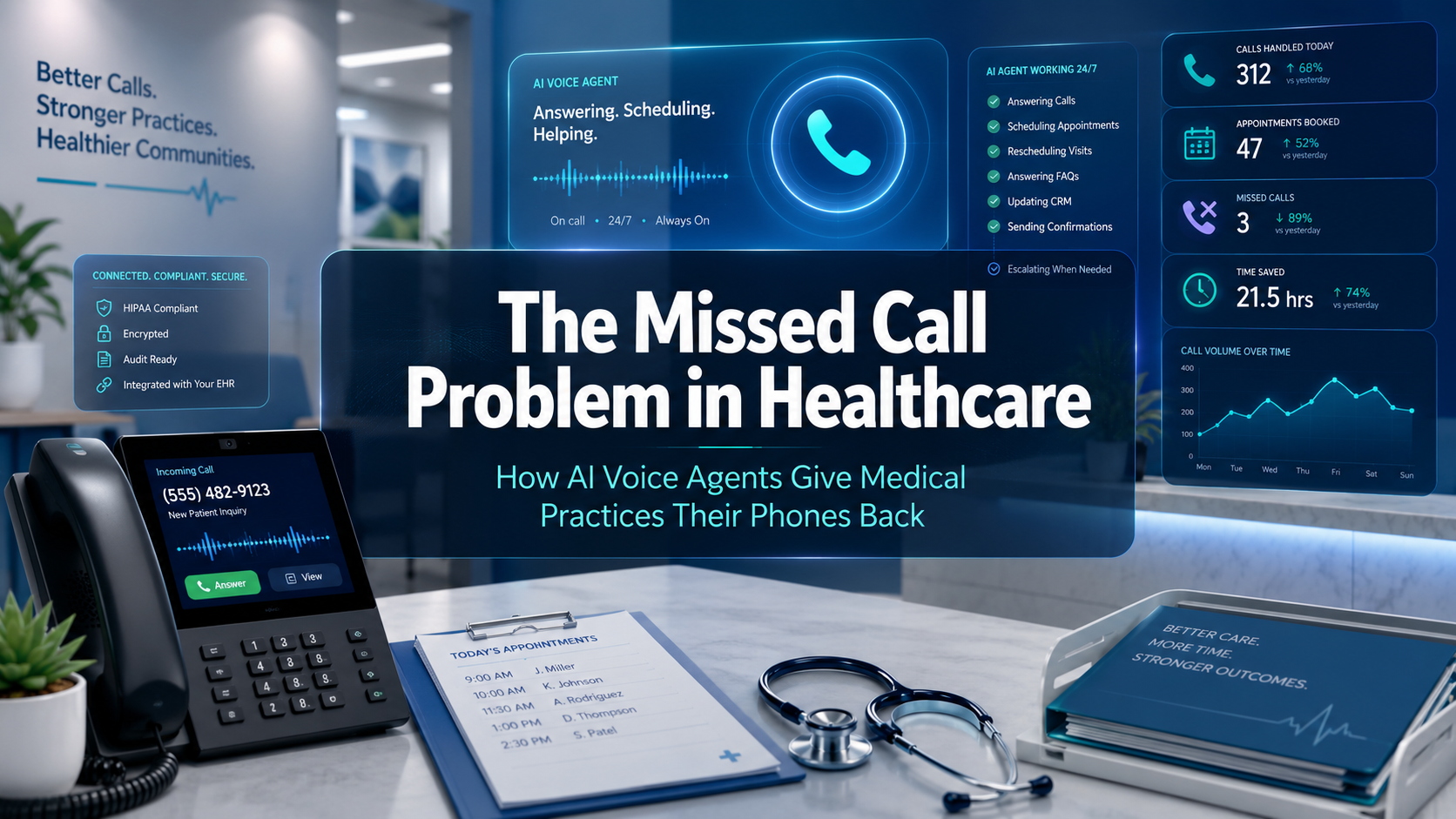
Walk into any busy medical practice at nine in the morning, and you will hear the same soundtrack: phones ringing, hold music looping, and a front desk team trying to check in the patient standing in front of them while three lines blink. Industry studies consistently find that a meaningful share of inbound calls to medical practices go unanswered or land in voicemail, and most patients who reach voicemail simply hang up and call the next provider. For a primary care clinic, a behavioral health group, or a multi-location specialty practice, every one of those abandoned calls is a delayed appointment, a frustrated patient, or lost revenue.
The phone remains the front door of healthcare. Portals exist, but a large portion of patients, especially older ones and those in urgent situations, still pick up the phone to schedule, reschedule, ask about a bill, request a refill, or check on a referral. The problem is not that practices do not care. It is that the economics of staffing a phone room have broken down. Front desk turnover is high, training takes months, and no staffing model gracefully absorbs Monday morning surges, flu season, or the flood of calls that follows an appointment reminder campaign.
What actually eats a front desk's day
When we map call volume for medical and behavioral health practices, the same pattern appears again and again. The majority of inbound calls are routine and repetitive: scheduling and rescheduling, appointment confirmations, directions and parking, insurance participation questions, prescription refill requests that must be routed to a nurse line, and referral status checks. These are exactly the calls that keep skilled staff from doing the work that genuinely requires a human, such as complex insurance conversations, distressed patients, and clinical triage.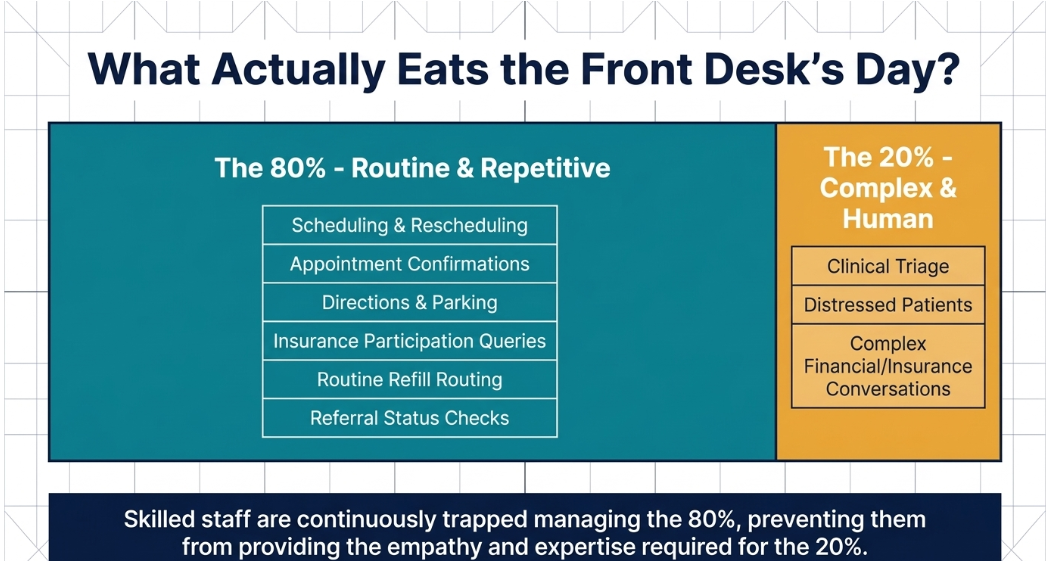
Layered on top is the outbound burden. No-show rates in outpatient settings commonly run in double digits, and the most effective countermeasure, a personal reminder call with the option to reschedule on the spot, is precisely the task practices rarely have staff to perform. Text reminders help, but they are one-way; when a patient replies, "Can I come Thursday instead?" someone still has to pick up the thread.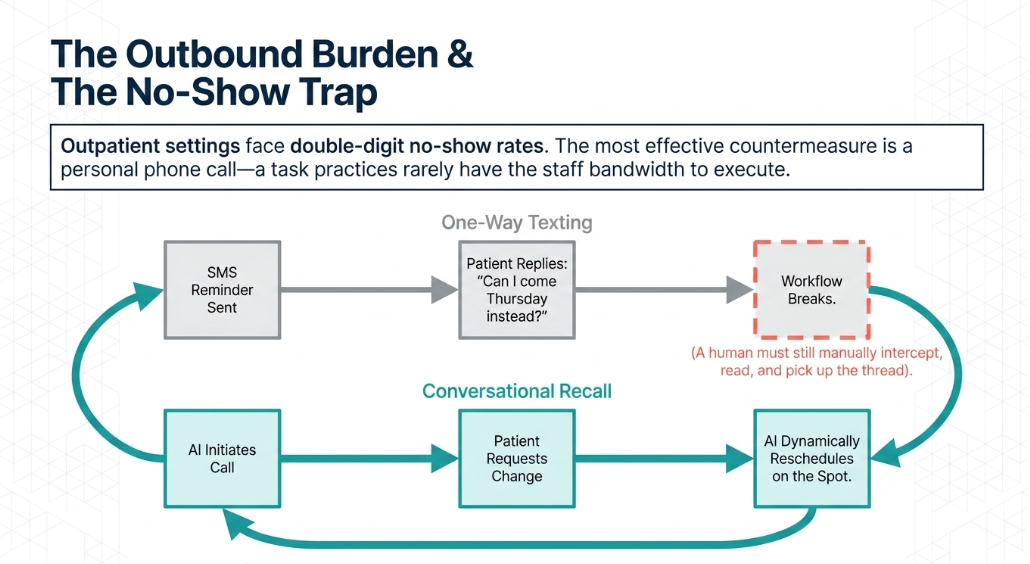
What an AI voice agent changes
A modern AI voice agent is not the phone tree patients have learned to hate. It answers on the first ring, speaks naturally, understands interruptions and accents, and completes tasks end to end. A patient calling at 7:40 pm to reschedule a Tuesday appointment does not hear "our office is now closed." The agent looks up open slots, offers alternatives, books the change, and sends a confirmation, all before the practice opens the next day.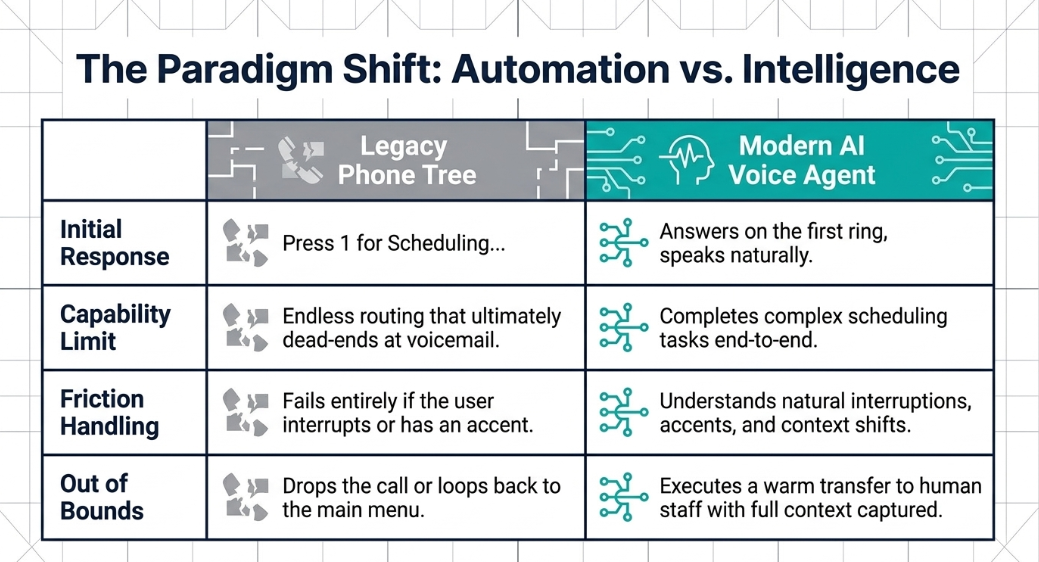
The practical wins are concrete. Around-the-clock scheduling captures the evening and weekend callers who would otherwise drift to a competitor. Reminder and recall campaigns become conversations rather than broadcasts: the agent calls, confirms, and reschedules in one interaction, which directly attacks the no-show problem. Routine questions about hours, locations, preparation instructions, and accepted insurance are answered instantly and consistently from the practice's own approved knowledge base. And when a call is outside the agent's lane, whether a clinical question, an emergency, or simply a caller who wants a person, it transfers warmly to staff with the context already captured, so the patient never repeats themselves.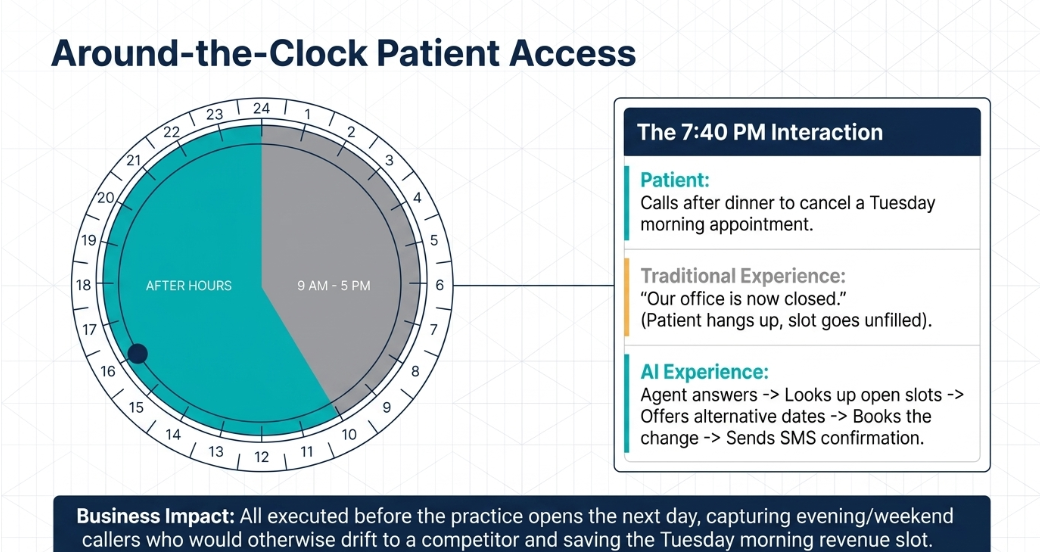
The compliance bar is the real test
Healthcare is where generic AI tools go to fail, because the bar is not "impressive demo" but "defensible under audit." Any voice agent touching patient information must operate inside a HIPAA framework: a signed business associate agreement, encryption in transit and at rest, strict minimum-necessary data handling, and complete audit logging of every interaction so the practice can show exactly what was said, when, and what the agent did about it.
Outbound calling adds a second regulatory layer that many practices underestimate. Reminder and recall calls must respect TCPA rules on consent, calling hours, opt-outs, and identification. A well-built agent enforces these automatically, maintaining consent records and honoring do-not-call preferences without relying on a busy staff member's memory.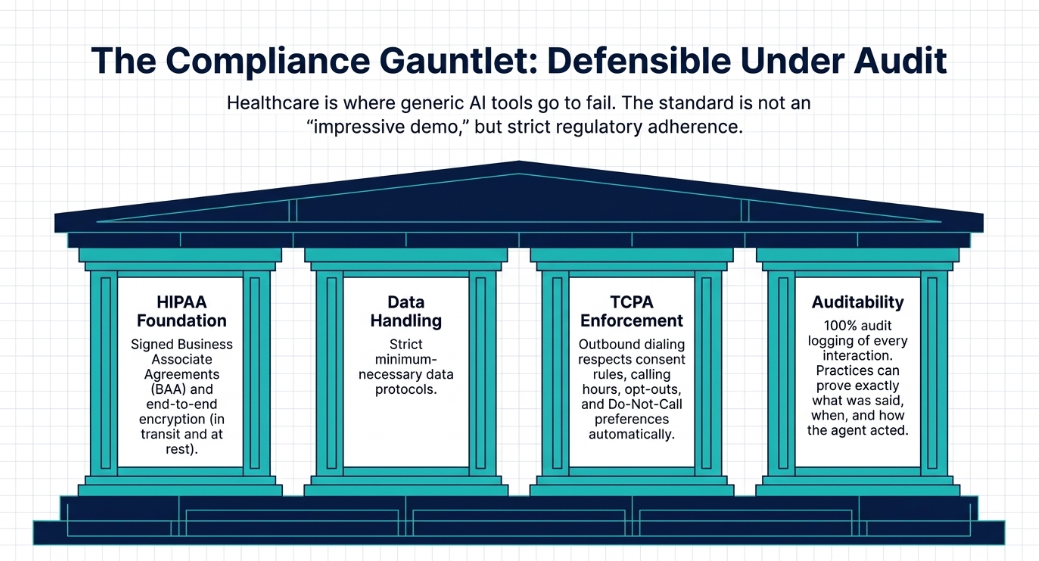
Accuracy matters just as much. A voice agent that improvises answers about clinical preparation or insurance participation is a liability. This is why retrieval-augmented generation with mandatory source citations has become the standard we hold our deployments to: the agent answers only from the practice's verified content, and every answer can be traced back to the document it came from. If the answer is not in the approved knowledge base, the agent says so and routes the caller to a human, which is exactly the behavior a compliance officer wants to see.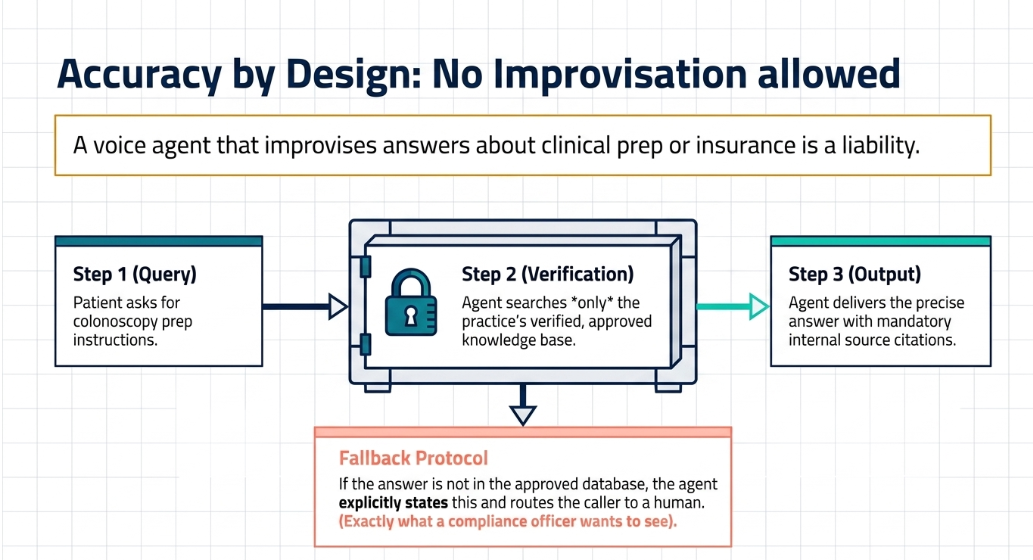
Fitting into the system's practices actually runs
None of this works as a bolt-on gadget. The agent has to live inside the practice's real workflow, which means integration with the scheduling and practice management layer the staff already uses, whether that sits in an EHR ecosystem such as Epic, Oracle Health, athenahealth, or eClinicalWorks, or in a standalone scheduling platform. It also means writing call outcomes back to the CRM, so the practice has one record of every patient touchpoint. In our deployments, single sign-on keeps access controlled through the organization's existing identity provider, and role-based permissions decide who can see transcripts and analytics.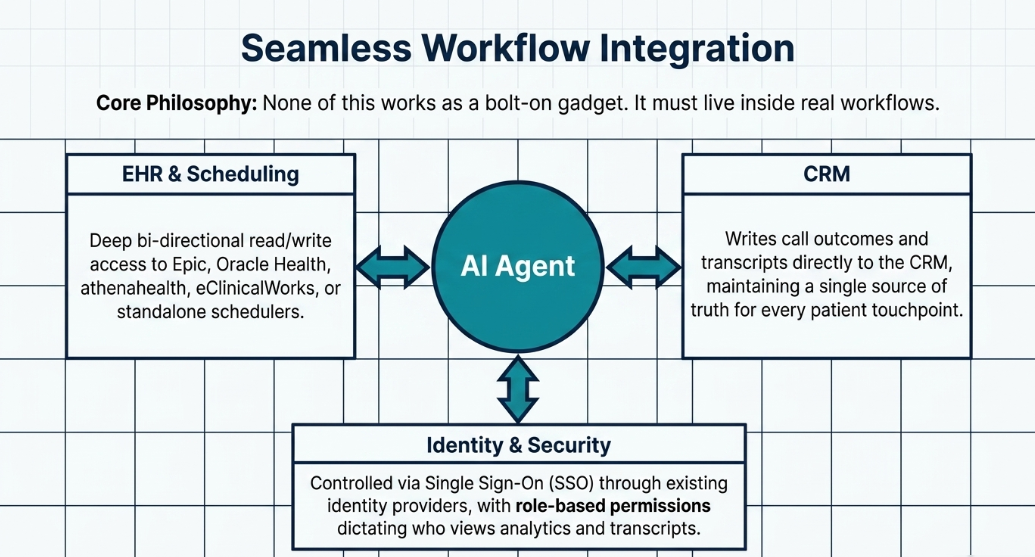
We built our CETRAI platform for exactly these regulated, high-call-volume environments. It orchestrates multiple language models, with Claude as the primary engine, so no single vendor outage takes the front door offline, and it pairs voice with web chat so the same governed knowledge base serves patients on every channel. One healthcare organization we work with came to us after concluding that their after-hours answering service was effectively a voicemail box with a monthly invoice; the shift to an AI agent that could actually book and reschedule changed both their access metrics and their Monday mornings.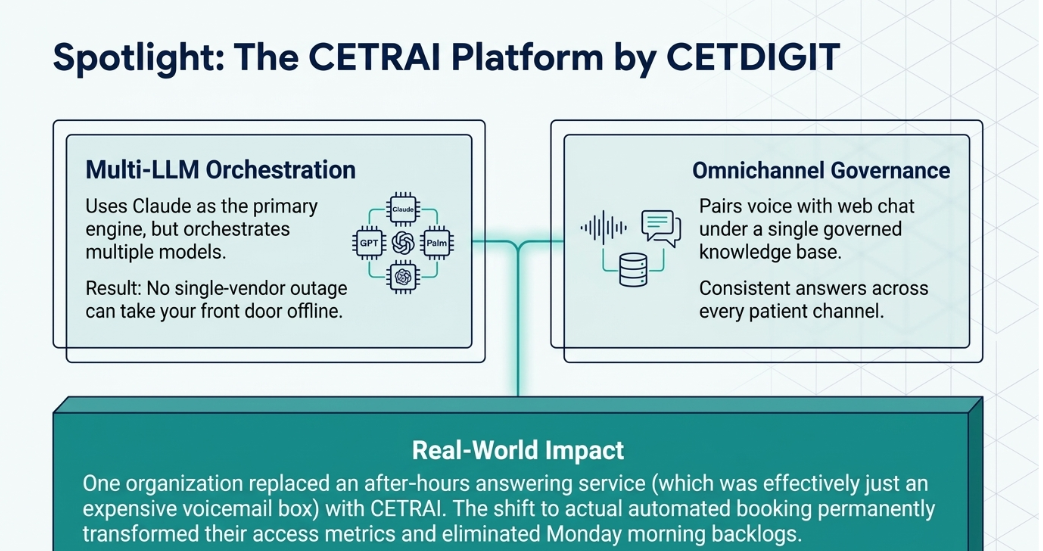
How should practices buy this
The buying process in healthcare is rightly cautious, and the practices that succeed treat this as an operational project, not an IT experiment. Start with a call audit: two weeks of data on volumes, peak times, abandonment, and call reasons. Pick the two or three highest-volume routine call types and pilot the agent on those, with generous human escalation. Measure answer rates, booking completion, no-show movement, and patient feedback, then expand deliberately. Involve compliance from day one, and insist on seeing the audit logs and citation behavior during evaluation, not after signing.
The practices adopting this well are not replacing their front desks. They are finally letting their front desks do the job they were hired for, while the repetitive eighty percent of call volume is handled instantly, politely, and at any hour.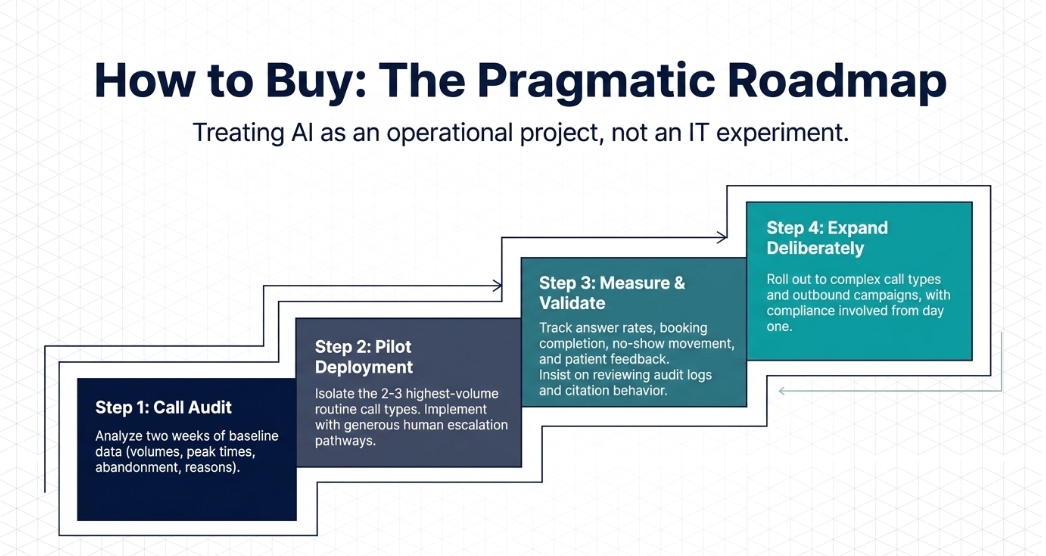
Ready to hear it for yourself?
CETDIGIT, the digital solutions arm of Cetrix Technologies LLC, has delivered more than 300 AI and CRM deployments, and our CETRAI platform was purpose-built for regulated, high-volume environments with HIPAA-aligned safeguards, mandatory source citations, and full audit logging. As a Salesforce Crest Partner and HubSpot Elite Partner, we connect voice AI to the systems your practice already runs. If your phones are busier than your team can handle, schedule a consultation with CETDIGIT, and we will walk you through a live demonstration with your own scheduling scenarios.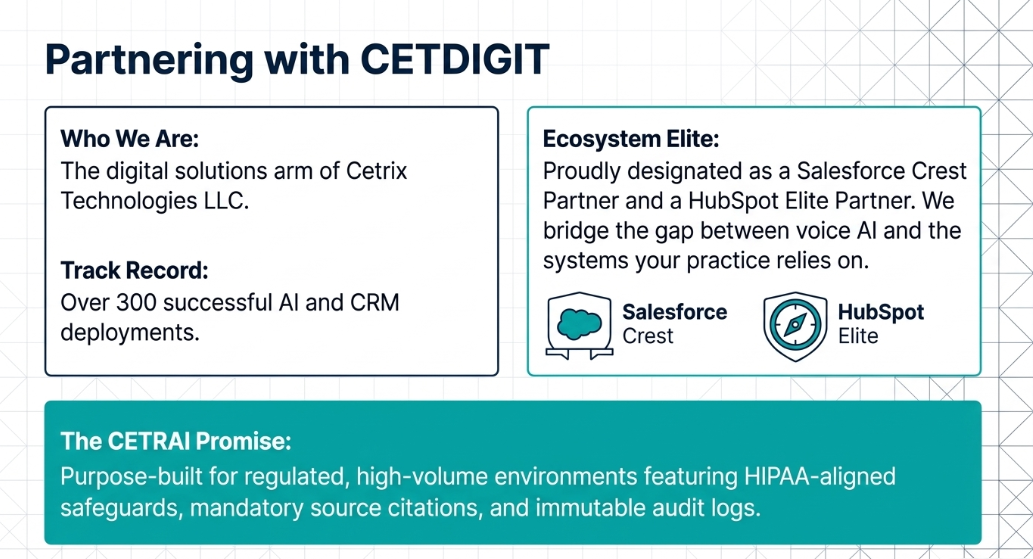
Related Reads
Beyond Standard RAG: How Agentic RAG is Transforming Enterprise AI in Salesforce and HubSpot
Your CRM Already Knows the Answer: How AI Integration Turns Salesforce into an Intelligent Operating System
The Real Cost of Waiting: What Business Owners Lose by Delaying AI Adoption



Leave a Comment