


A commercial lender at a community bank gets a call from a business owner she has banked for eight years. He mentions, almost in passing, that he is selling the company next spring. That single sentence should set three things in motion: a conversation with the wealth management team about the proceeds, a heads-up to treasury services that the operating accounts will change hands, and a note to the branch that the family's personal banking is about to look very different. In most banks, none of that happens. The lender writes it in a notebook, or an email, or nowhere. The core banking system, Fiserv, Jack Henry, FIS, records the balances faithfully and knows nothing about the spring.
That is the quiet structural problem in mid-size financial institutions. The core is a system of accounts, not a system of relationships. It knows every transaction and no intentions. Meanwhile, the actual relationship, the life events, the referrals, the half-finished loan conversations, the reason a fifteen-year member started shopping rates, lives in inboxes, spreadsheets, loan origination systems, and the memories of whoever happens to still work there.
Every line of business, its own island
Walk through how a typical bank or credit union actually operates, and the silos are easy to map. Retail lives in the core and the digital banking platform. Mortgage lives in Encompass or a similar LOS. Commercial lending lives in nCino or spreadsheets and credit memos. Wealth management runs its own book in its own tools. Marketing sends emails from a platform none of the bankers can see. When a member interacts with three of those lines at once, and the most valuable ones always do- no one in the institution can see the whole picture without scheduling a meeting.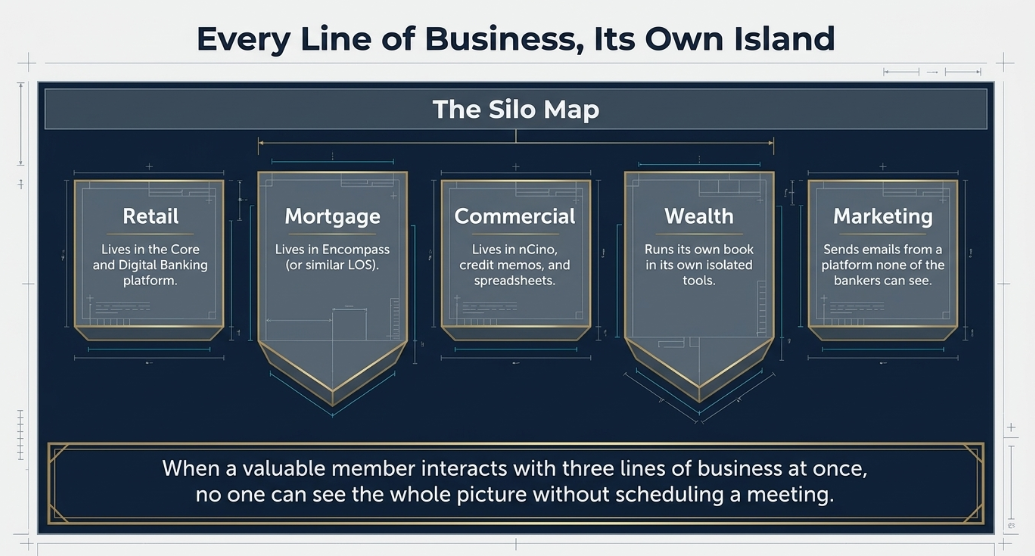
The costs are concrete. Referrals between lines of business are the cheapest growth a bank has, and they die in hallway conversations because there is no system that carries a referral from the teller line to the commercial team with accountability attached. Onboarding a new business account touches KYC checks, document collection, signature cards, and treasury setup across multiple departments, with the customer asked for the same information twice because no one can see what was already gathered. And when an experienced banker retires, decades of relationship knowledge walk out the door, because the institution never had a place to keep it.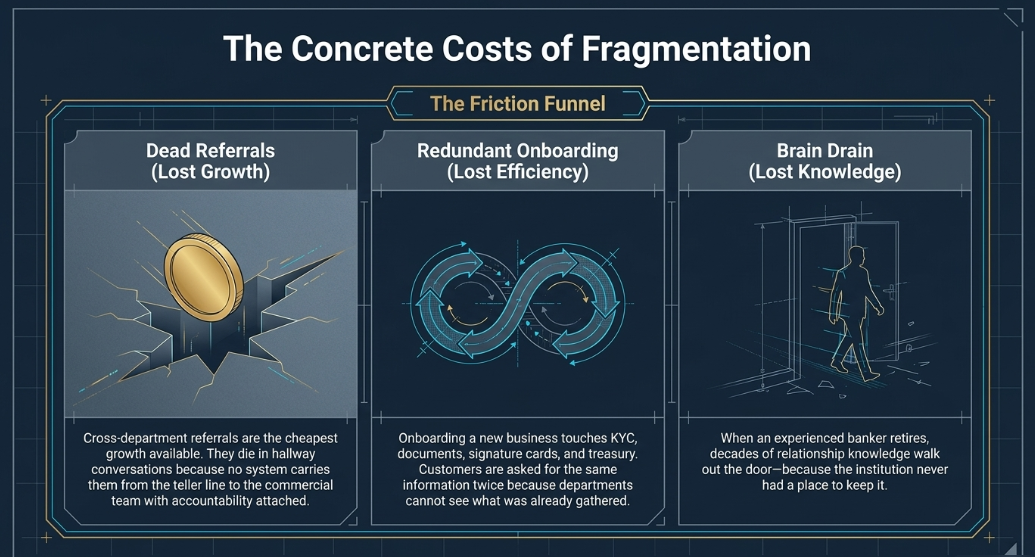
What a real CRM changes, and why implementation is the whole game
This is the problem Salesforce Financial Services Cloud was built for: a single relationship record that spans households and businesses, visible across retail, lending, and wealth, with referrals tracked as first-class objects that someone owns and someone closes. HubSpot plays the same role for institutions that want a lighter footprint, particularly on the marketing and onboarding side. The platform choice matters less than most selection committees think. What decides success is what happens after the contract is signed.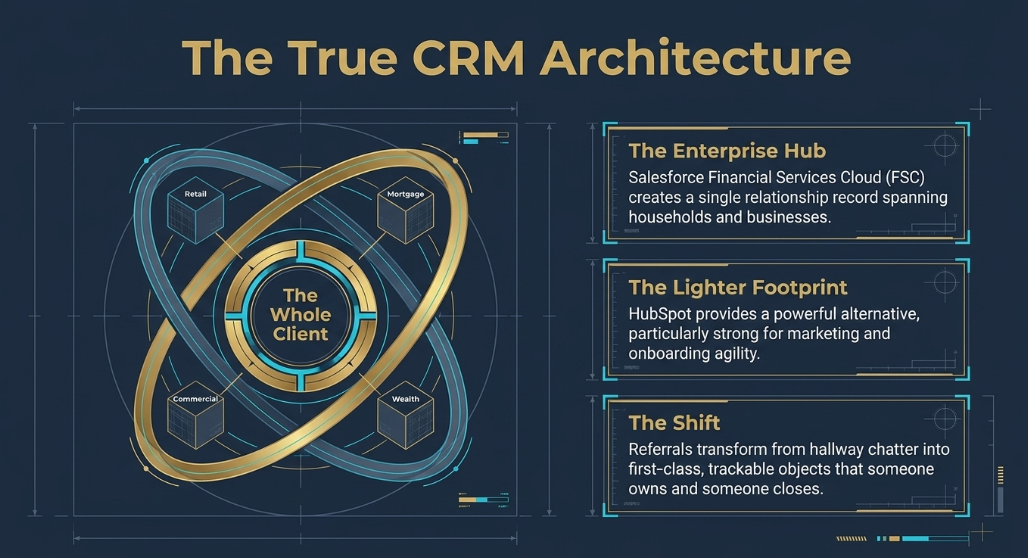
A CRM that is not fed by the core is an expensive address book. The implementation work that matters is the integration: nightly or near-real-time synchronization from the core so every banker sees current accounts and balances alongside the relationship history; the LOS connected so a mortgage in underwriting is visible to the branch; deposit and loan events flowing in as signals rather than surprises. It also means designing for the regulatory reality that banks live in: role-based visibility so lending staff and wealth advisors see what they should and nothing more, audit trails on who viewed and changed what, and data handling that respects GLBA obligations and examiner scrutiny rather than discovering them at the first audit.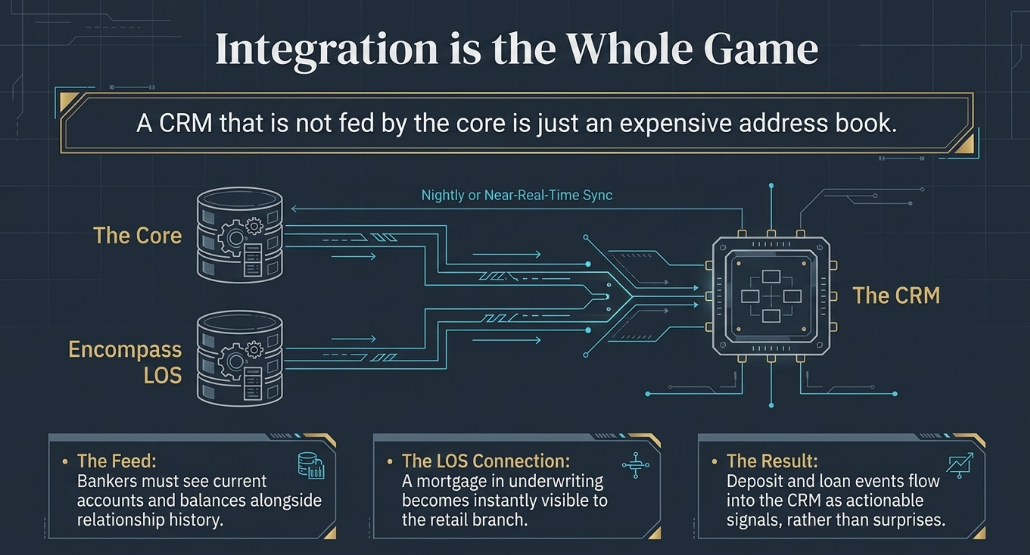
Adoption is engineered the same way. Bankers do not abandon notebooks because a memo told them to. They abandon notebooks when the CRM is the easiest place to see the truth, when it takes fewer clicks to log the call than to avoid logging it, and when the Monday pipeline meeting runs off the dashboard instead of a spreadsheet reassembled every Friday afternoon.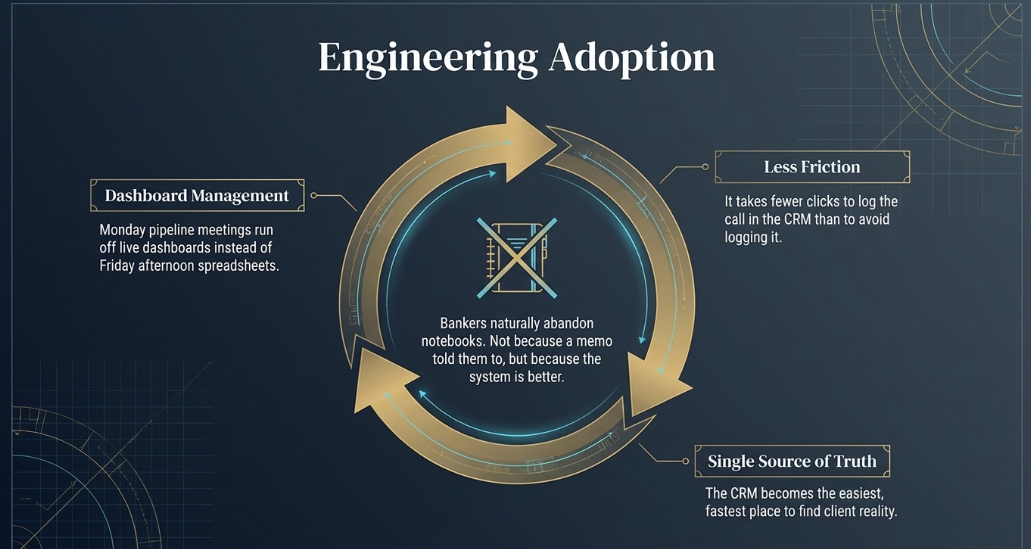
Where AI earns its place
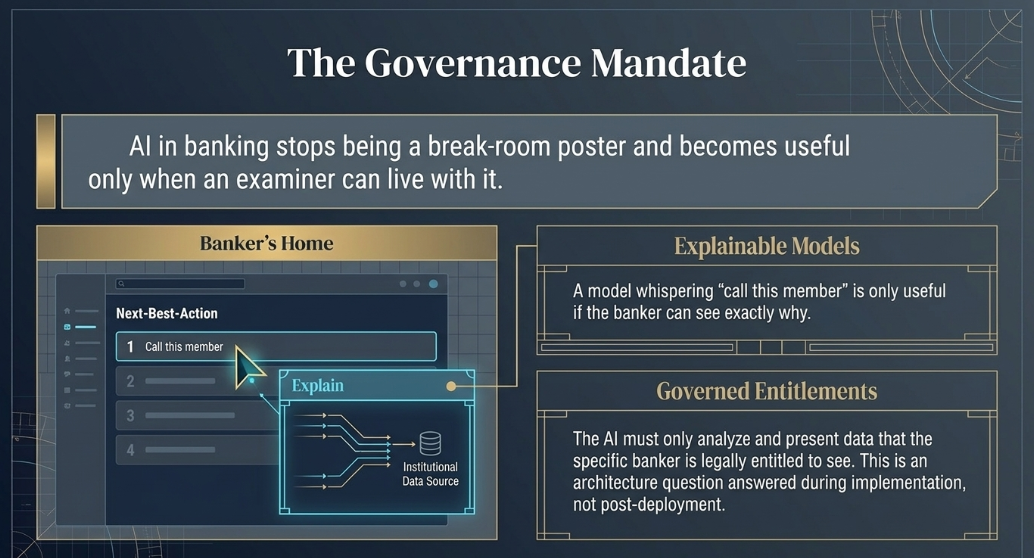
Once the relationship data actually lives in one system, AI stops being a demo and starts being useful in ways an examiner can live with. Call notes and meeting summaries can be drafted automatically and filed against the right relationship, which is the difference between bankers writing things down and bankers not writing things down. Signals hiding in plain sight get surfaced: the business account whose deposit pattern just changed, the member whose CD matures in forty days, the household with a mortgage elsewhere and a growing balance here. Next-best-action stops being a poster in the break room and becomes a ranked queue on each banker's home screen, grounded in the institution's own data rather than a vendor's generic model.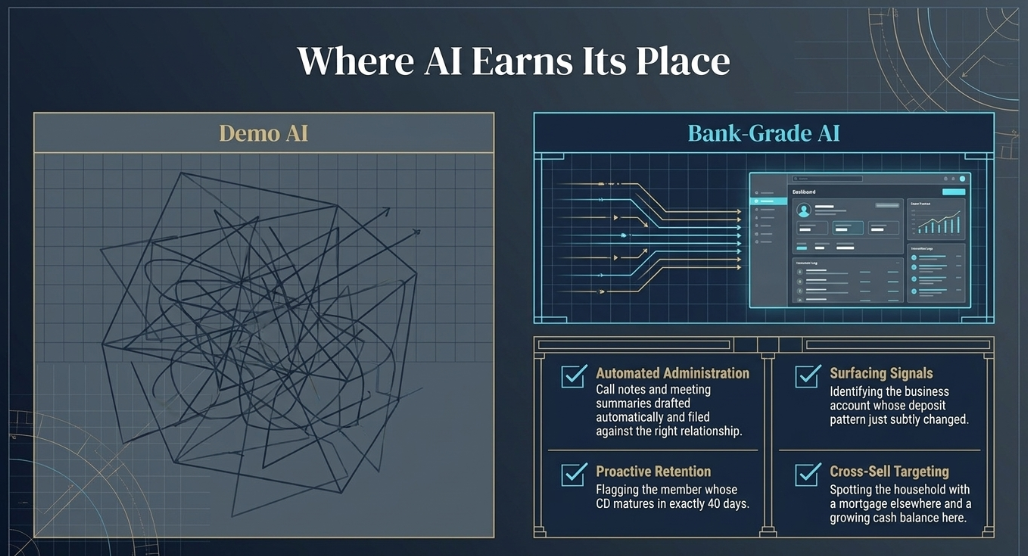
The discipline that matters in this industry is that AI recommendations must be explainable and their data handling must be governed. A model that whispers "call this member" is only useful if the banker can see why, and only acceptable if the data it touched is data that the banker is entitled to see. That is an architecture question, and it has to be answered during implementation, not after deployment.
Start with one journey, not a big bang
The institutions that get this right rarely start with a two-year enterprise program. They pick one journey with visible pain, commercial onboarding, cross-line referrals, or maturing-deposit retention, implement it end to end with the core integration behind it, and let the first working dashboard make the argument to the rest of the institution. Banks are consensus cultures; nothing builds consensus like a line of business that can suddenly see its own pipeline.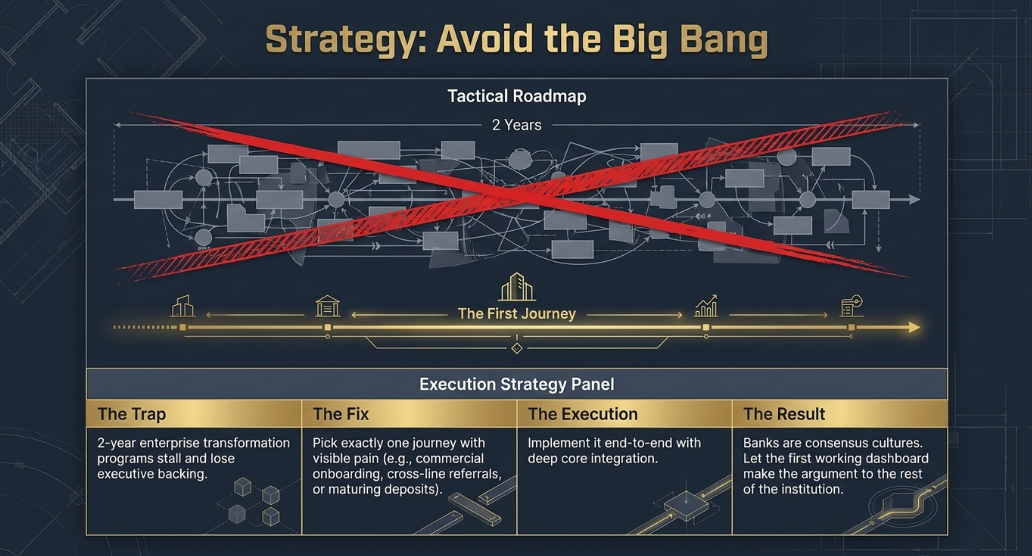
Bring in a partner who has done it before
CETDIGIT (Cetrix Technologies LLC) is an AI solutions builder with more than 300 AI and CRM deployments, a Salesforce Crest Partner and a HubSpot Elite Partner. We work with banks, credit unions, and investment firms to implement CRM as the relationship system of record, core and LOS integration, compliance-aware architecture, adoption design, and the AI layer that makes the data work for your bankers. If your institution can see every balance but not the whole client, schedule a consultation with our team and we will show you what the first ninety days of fixing that looks like.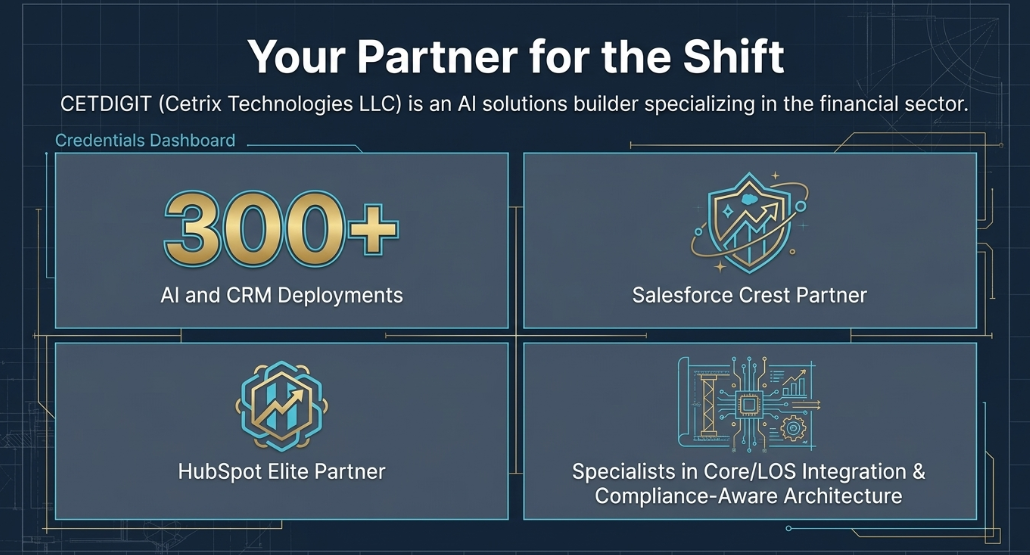
Related Reads
Your CRM Already Knows the Answer: How AI Integration Turns Salesforce into an Intelligent Operating System
Four Systems, One Client: Why Economic Development Agencies Are Retiring the Spreadsheet Stack
Where Is That Endorsement? How Agentic RAG Ends the Policy-Hunting Problem in Independent Insurance Agencies

Leave a Comment